Haarwegskloof declared a Nature Reserve:
A win for renosterveld conservation
In a victory for biodiversity conservation, Haarwegskloof – which includes the largest remaining connected stretch of renosterveld left on Earth – has officially been declared a Nature Reserve.
The declaration, made in April 2025 by Anton Bredell, the Western Cape’s Provincial Minister of Local Government, Environmental Affairs and Development Planning, cements the site’s status as a vital stronghold for one of South Africa’s most threatened ecosystems.
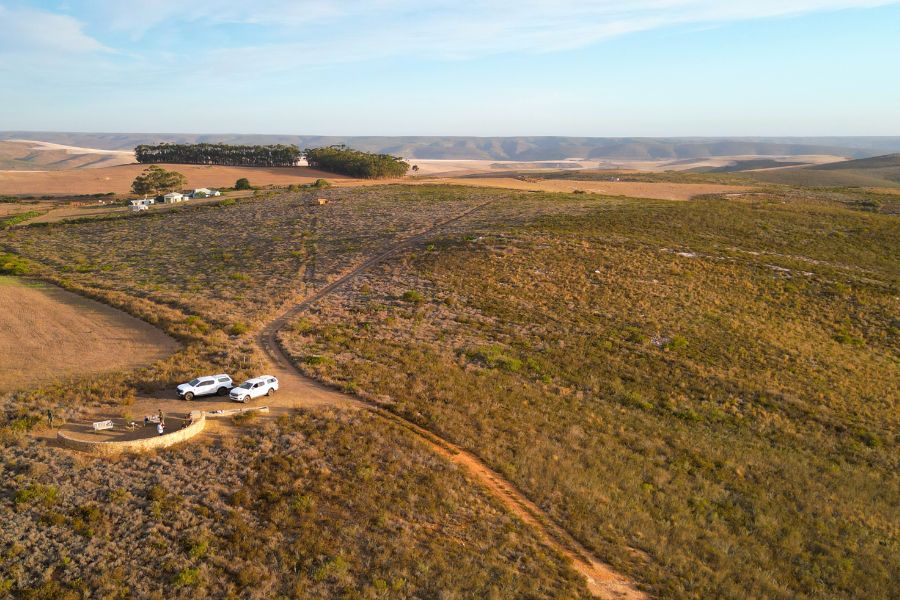
Located between Swellendam and Bredasdorp in the Overberg region, Haarwegskloof Renosterveld Reserve spans 547 hectares of Critically Endangered Eastern Rûens Shale Renosterveld. It’s home to a remarkable diversity of endemic and rare plant species, including Polhillia curtisiae and Lachenalia barbarae. Threatened birds such as Black Harrier and Southern Black Korhaan breed here, and the reserve is a safe haven for many secretive mammals, including Aardwolf and Aardvark.
The reserve is owned by WWF South Africa and managed by the Overberg Renosterveld Trust (ORT), a non-profit organisation dedicated to protecting and restoring the fragile renosterveld ecosystem that once covered large parts of the Overberg.

A major milestone
For Dr Odette Curtis-Scott, CEO and founder of the ORT, the declaration marks a milestone in the journey to protect this irreplaceable landscape.
“Renosterveld is one of the most threatened vegetation types in South Africa, with an estimated 5% of its original extent intact,” said Curtis-Scott. “Much of it has been ploughed for agriculture, and what little remains is highly fragmented, making the formal protection of Haarwegskloof as a Nature Reserve really important.”
The declaration provides the highest level of legal protection under the National Environmental Management: Protected Areas Act. It ensures that the Haarwegskloof Renosterveld Reserve will remain dedicated to conservation efforts, while allowing for scientific research, habitat restoration and low-impact eco-tourism activities. It’s also the home of the Wild & Wise Retreats – weekend getaways for people to learn a new skill, meet like-minded people and reconnect with nature in this serene setting.
Facing extinction
Renosterveld is part of the Cape Floristic Region – a global biodiversity hotspot. Despite its ecological importance, renosterveld has received far less attention and protection than its fynbos counterpart, largely because it occurs on fertile soils that have been extensively converted to farmland.
The ORT has been working for more than a decade to protect the fragments that remain by engaging with landowners to voluntarily sign conservation easements, and then working with committed landowners to restore degraded habitat and address other threats to renosterveld.
Curtis-Scott said, “The declaration of Haarwegskloof as a Nature Reserve is a cornerstone of these efforts. It’s not just a win for conservation, but also for science and for the countless species that call this extraordinary landscape home.”
She said this also serves as a beacon of hope for a globally unique vegetation type facing functional extinction. “We hope our ongoing work with incredible partners and landowners will inspire further protection of renosterveld remnants throughout the region.”


Renewable energy the need for clearer direction
One of the greatest supposed solutions to climate change on a global scale is proving to be one of the greatest conservation challenges facing the Overberg today.
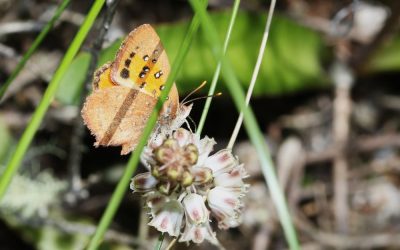
A new renosterveld species discovered at Haarwegskloof
In the heart of the Overberg, within one of the world’s most threatened ecosystems, a renosterveld species has waited for millennia to be officially recognised.
Latest Renosterveld News
Less than 5% of renosterveld remains today. Much of what survives exists on privately owned farmland.