Fiery restoration action across farm boundaries
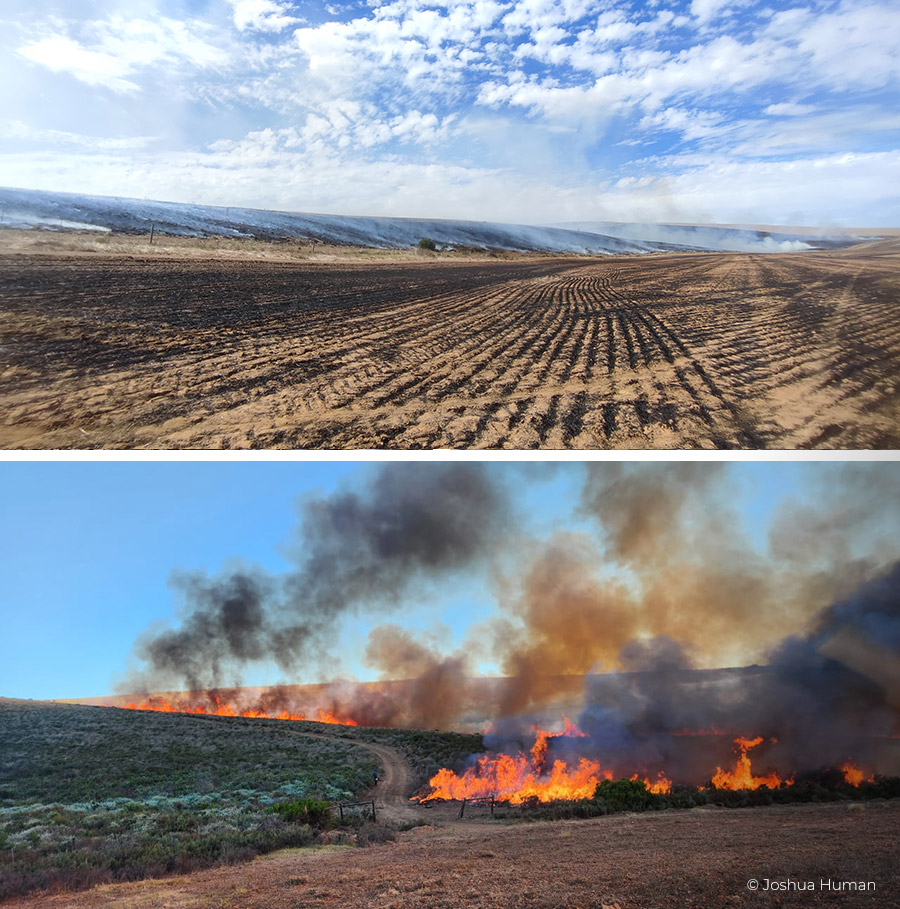
Landscape-level management is possible when a string of properties are committed to conserving one of the rarest vegetation types on the planet. We were able to experience this when one of the first farms to join our Conservation Easement programme, Kykoedie Renosterveld Reserve, and our most recent easement, Soutrivier Renosterveld Reserve, decided to implement a joint ecological burn on a section of very old (meaning it hadn’t burnt for a long time) renosterveld, connected veld along the Soutrivier.
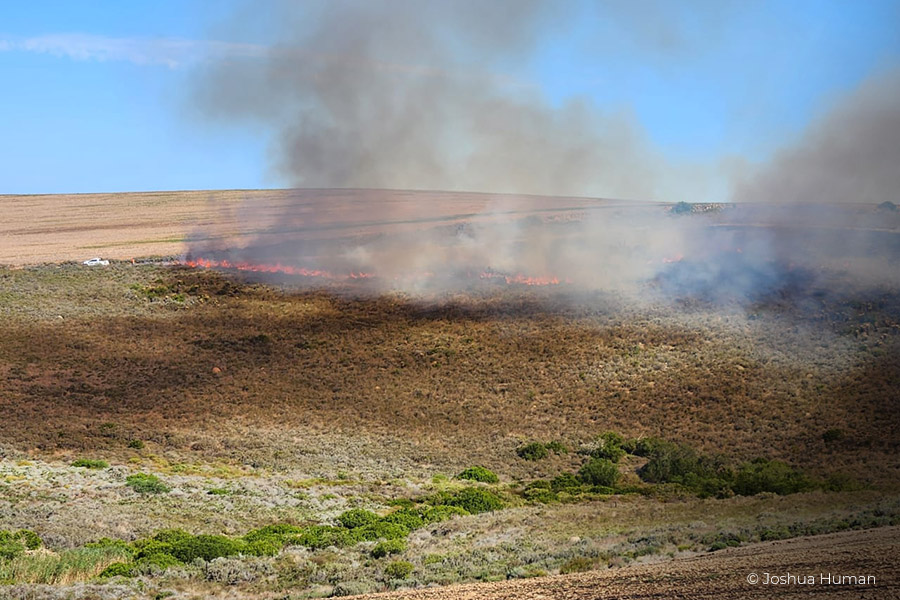
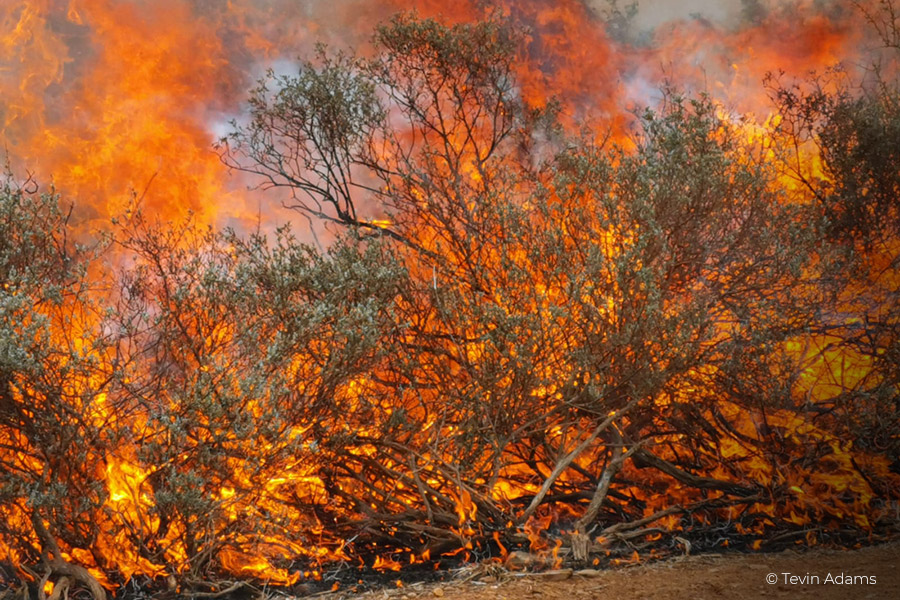
The ORCT and the landowners successfully implemented these controlled burns in mid-March with the support of the Ecosystem Services Team of the Nuwejaars Wetlands Special Management Area (NWSMA). Thanks to the Greater Overberg Fire Protection Association (goFPA), who provided the permits required to burn in a very limited window, we were able to do this at the time that we consider appropriate ecological burns.

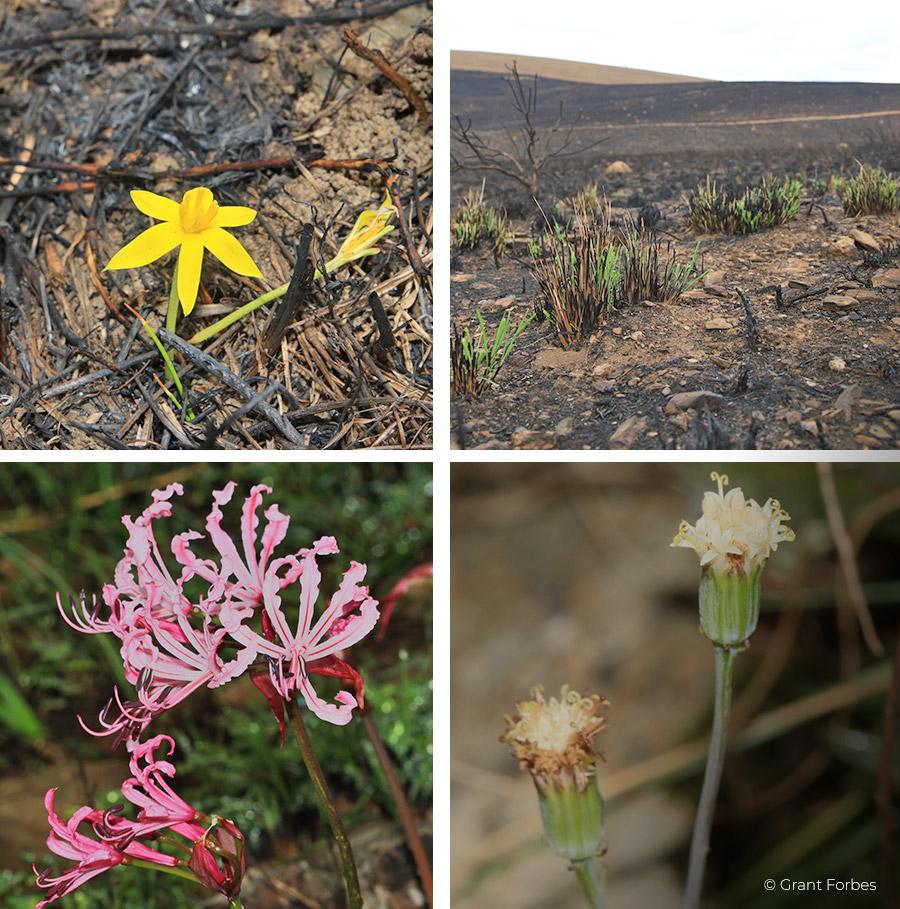
Stimulating renosterveld bulbs and annuals
The section at Kykoedie was burnt 13 years ago and fenced to control grazing by livestock. The section on the Soutrivier easement had also not been grazed for more than 10 years, or burnt in at least 20 years. Old renosterveld tends to become dense, flammable and dominated by only a few asteraceaous shrubs, which then prevent the flowering of many smaller bulbs, annuals and herbaceous plants. Both areas remain protected from livestock, allowing the veld to recover undisturbed. The total area burnt was about 80 hectares.
Fixed Point Photography points have been set up with rapid pre-burn surveys to identify the dominant species. After the burn, camera trap monitoring was initiated with advice from Dr Alistair Potts of Nelson Mandela University and cameras were set to time-lapse mode taking regular images of the recovery process. The area in front of the camera has been marked out to enable observers to record the species’ succession and match these with what is captured in the time-lapse. More to follow in spring when we will visit plots again.

Why the ORT is part of the Overberg Conservation Alliance
That’s why we’re proud to be a founding member of the Overberg Conservation Alliance (OCA), a collaboration between four conservation organisations working across the Overberg.
Regenerative farming: Do you really know your farm?
Speaking at a Regenerative Agriculture Landowner’s Day organised by the Overberg Renosterveld Trust in partnership with WWF South Africa in June
A book for all ages, to bring out the child in you
A new, richly illustrated children’s book is hoping to inspire a lifelong love of nature by telling the story of one of South Africa’s most threatened birds – the Black Harrier, BirdLife South Africa’s Bird of the Year for 2026.