Tracking young Black Harriers reveals a harsh reality
Evey young Black Harrier that leaves the nest faces an uncertain future.
For this endangered raptor, the first year of life is the most dangerous – a time when hunger, predators and wildfire can all prove fatal.
This past breeding season, the Overberg Renosterveld Trust began tracking that perilous journey more closely than ever before. By fitting GPS tags to young Black Harriers for the first time, we are starting to see what really happens once these birds leave the safety of their nests.
The early results are both fascinating and worrying.
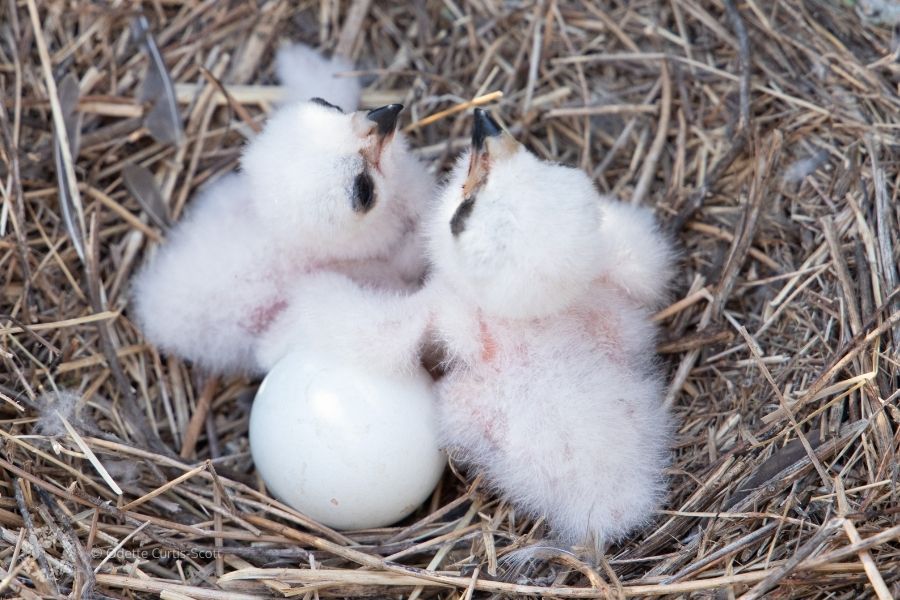
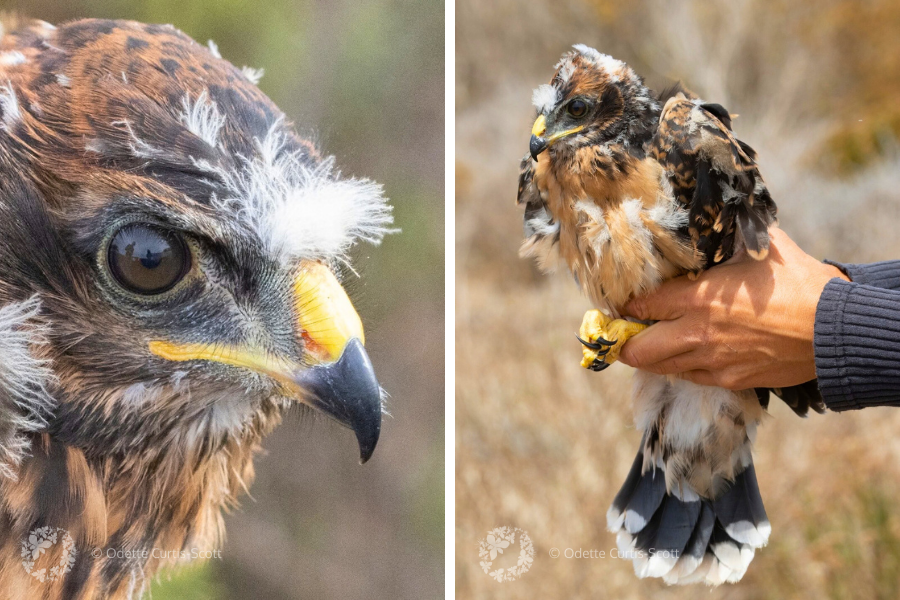
Our ORT team were joined by Dutch ornithologists, Toni Hoenders and Raymond Klaassen, from the Dutch Montagu’s Harrier Foundation. Raymond came out for a couple of weeks to assist us with learning how to fit tags to fledglings (a process similar to that of fitting them to adults, but with some nuances that allow for some additional growth as the young bird builds muscle), while Toni (on her third volunteering stint with the ORT) spent three months mapping and monitoring nests and assisting with trapping and tagging. They monitored the progress of 34 nests across the Overberg between November and January. Of these nests, 31 were located in renosterveld and three in fynbos.
Only 12 nests were successful and 20 failed, while the breeding success of the final two nests were unknown. In total, 26 chicks fledged – an average of 2.2 chicks per successful nest, or 0.8 chicks per nesting attempt.
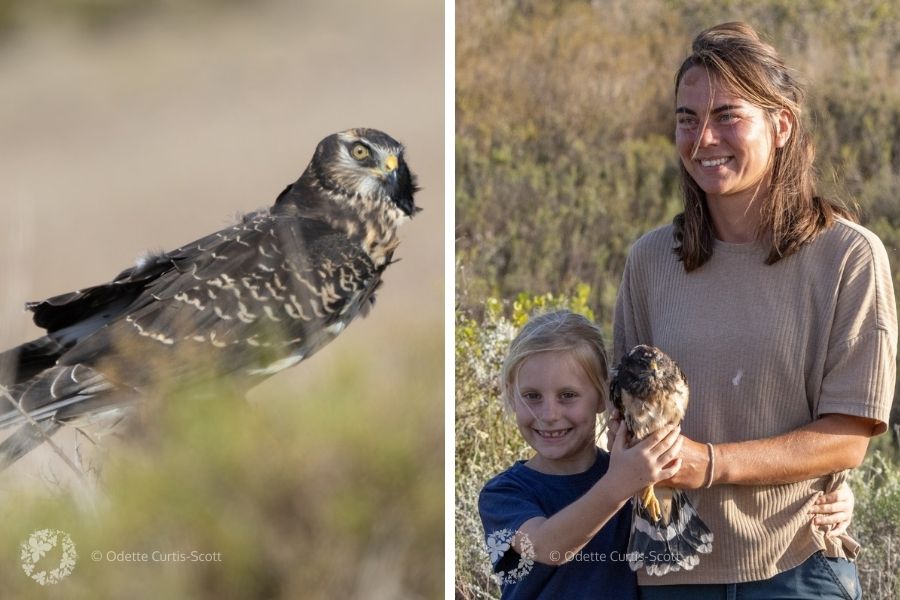
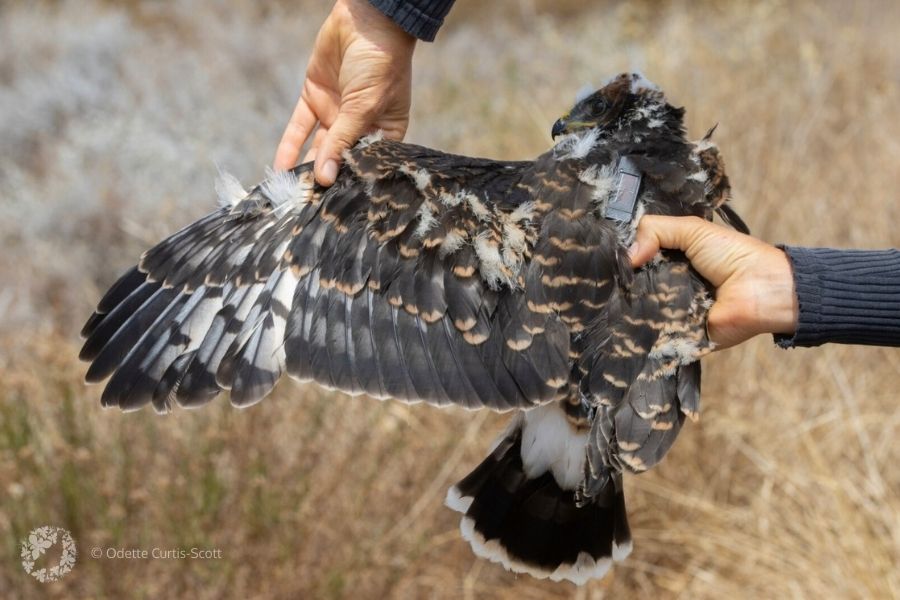
We also fitted GPS tags on four new adults, as well as on 10 fledglings. This is particularly exciting, allowing us to learn a lot about juvenile dispersal and survival, understand how they use the landscape and identify the threats they encounter along the way.
The survival rate of youngsters
We know the survival rate of juveniles is generally low in raptors in their first year. However, these tags are showing us just how low. Of the 10 tagged individuals, four have died, two are missing and presumed dead, and four are currently still online.
What happened to those that died? Three of the four are believed to have starved to death. The first bird that died of starvation, a tagged juvenile named Toothless (named after the dragon in the movie ‘How to Train Your Dragon’), had flown about 40 km from his nesting site, before collapsing. Adonis travelled as far as the Eastern Cape and then returned to the Overberg but perished near Malgas on the Breede River. Hiccup (also named after a character in the movie), another tagged juvenile, died in the Eastern Cape. All three carcasses were retrieved and all birds were significantly underweight. And in December, another tagged juvenile called Harry and his sibling were caught by a predator.
We also found out more about juveniles that weren’t tagged during the past few months. And we found out just how disastrous wildfires at the wrong time of year are for these youngsters. Wildfires in the mountains above the Houwhoek Pass claimed the lives of four Black Harriers in the nest – too young to fly away. It shows us that other wildfires late in 2025 across the Overberg in fynbos and renosterveld likely also claimed many Black Harrier lives.
The survivors
Three of the surviving tagged juveniles have moved out of the Overberg and across the breadth of South Africa and beyond, while one Overberg bird from near Napier returned to the Overberg after a brief loop into the Eastern Cape.
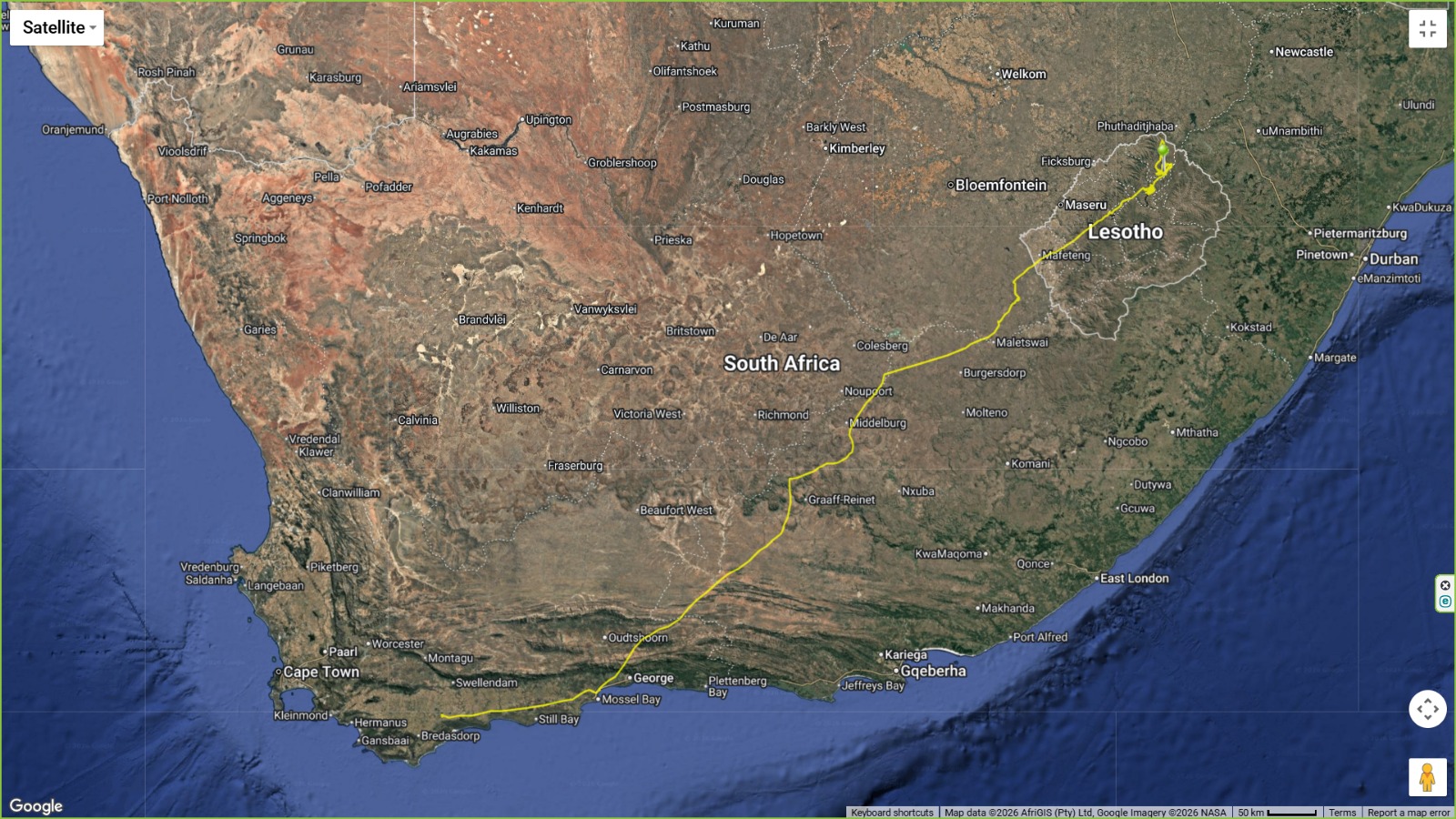
Astrid, a tagged juvenile, made a beeline for Lesotho, where she has been for several weeks.
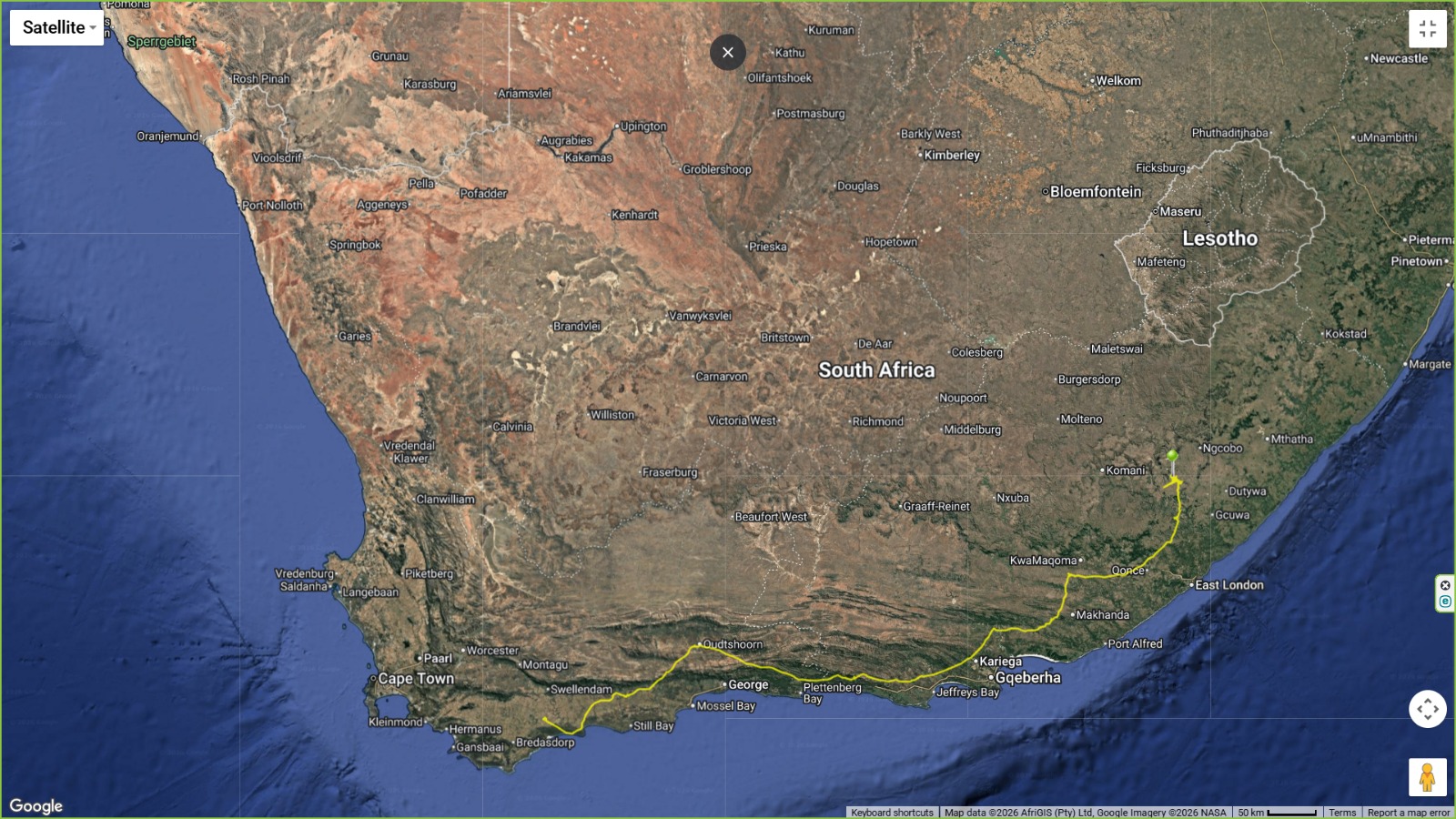
Jack Frost settled in the Eastern Cape where he has been for over a month.

Daisy settled just inside southern Namibia for weeks, where she is obviously taking advantage of the booming mouse populations after excellent rains.
Our tagged adults
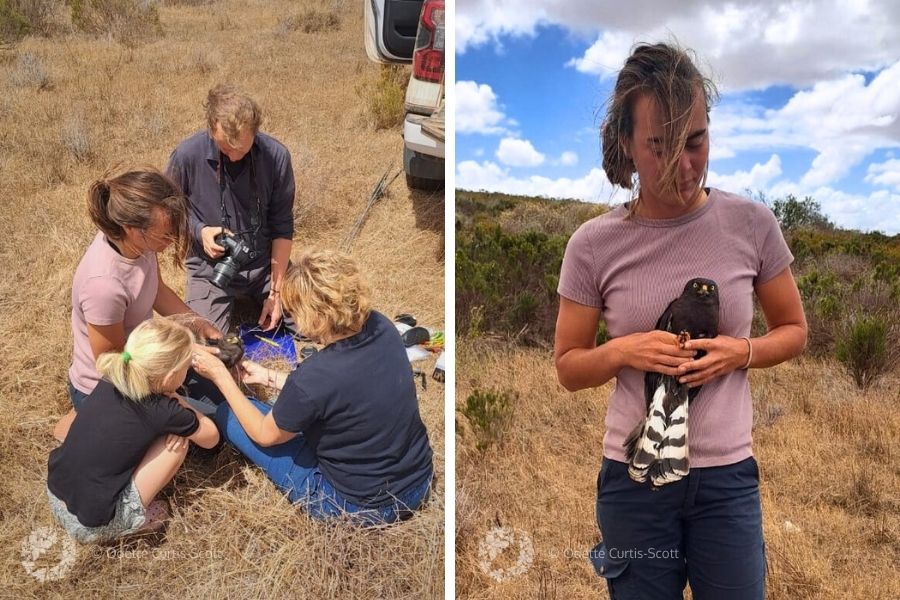
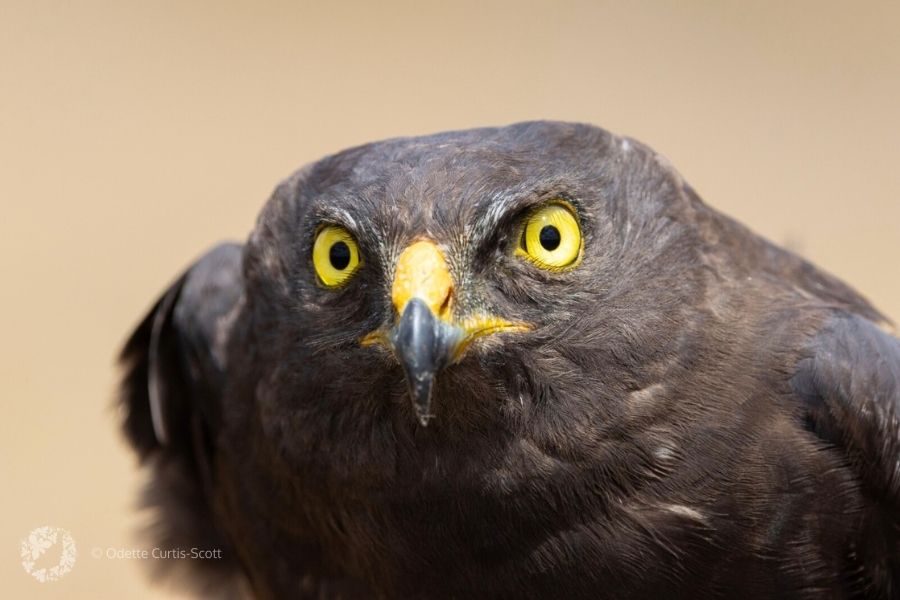
The four adults tagged during the breeding season are providing fantastic data, as are several of our other previously-tagged adults. They were named Alice, Raymond, Amelia and Zag – three of those names chosen by donors, with Raymond named by the ORT to thank Raymond Klaassen for teaching us how to safely fit trackers on young, developing harriers.
Two other adults were tagged by Rob Simmons at the Hopefield Windfarm, where important patterned blade experiments are taking place. They are named Odette (chosen by the Cape Bird Club, who sponsored the tag) and Warwick (selected by Rob Simmons in honour of Warwick Tarboton, a legendary naturalist). All in all, 16 tags were supported through funds raised by the ORT.
We can’t do this without support
Our sincere thanks go to everyone involved in this project. A special thanks goes to Toni and Raymond. Toni walked hundreds of kilometres through dense renosterveld and fynbos in search of nests – and then once she found them, helped to monitor them as they hatched, grew and fledged. And Raymond shared his extensive knowledge on tagging Montagu’s Harriers with us.
A special thank you
To the Cape Bird Club and several individual donors who wish to remain anonymous, for the wonderful donations for GPS tags, as we work to better understand and protect our 2026 Bird of the Year.

Healthy soils depend on the little things
When you think of farming, you might immediately think of crops, livestock, rainfall and pests. But some of the hardest-working members of a healthy farming system are almost invisible.

Latest Renosterveld News
OVERBERG RENOSTERVELD TRUST NEWSNewsletter 40 | April 2026 by Grant ForbesFrom Grant: Conservation, farmers and trust It’s not often that I have the opportunity to pop into your inbox. But with our...

Why the ORT is part of the Overberg Conservation Alliance
That’s why we’re proud to be a founding member of the Overberg Conservation Alliance (OCA), a collaboration between four conservation organisations working across the Overberg.
Thank you to our Black Harrier Project donors

and all our private donors.
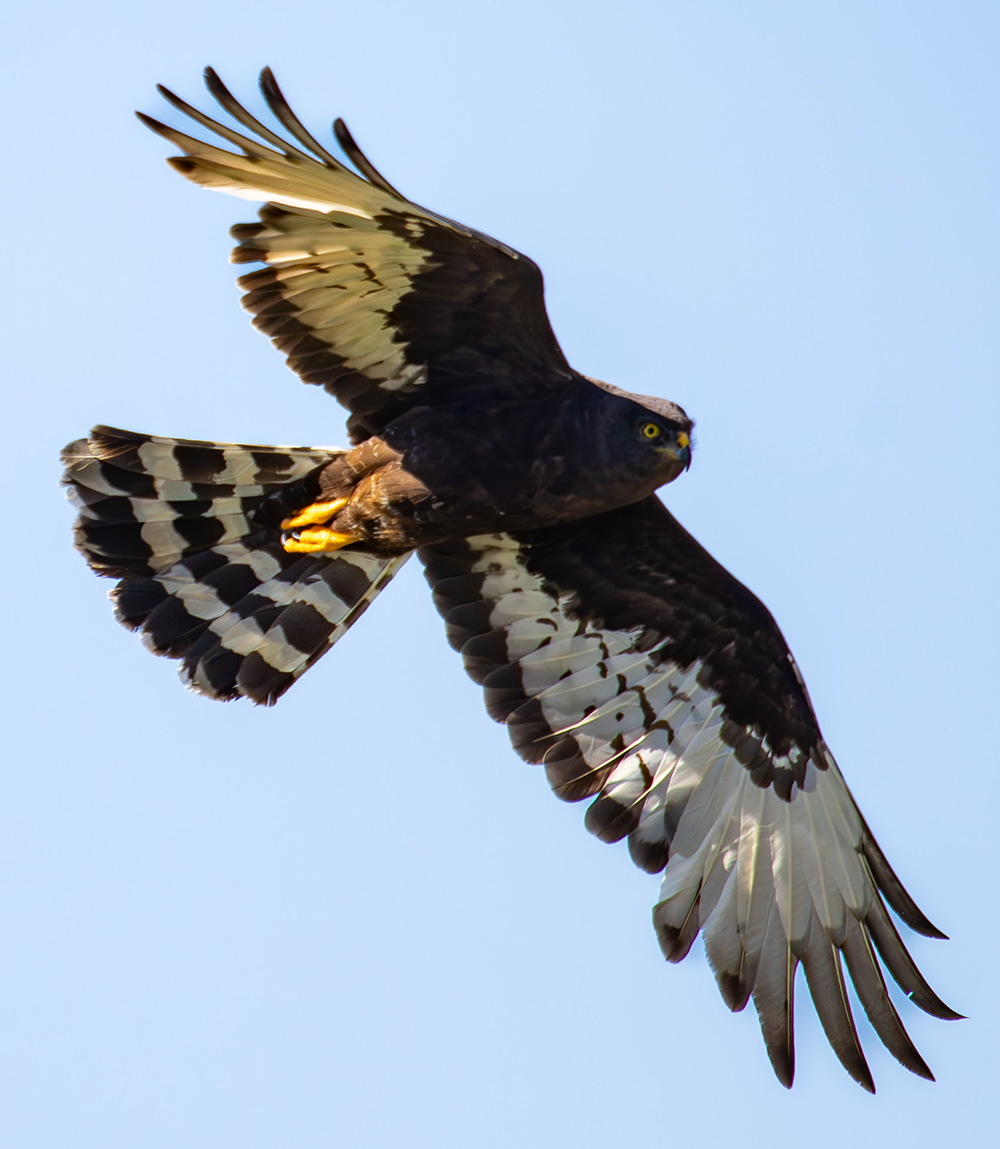
Please consider donating to the Black Harrier Project, either directly via our online donation platforms, or by contacting the ORT directly.
Those who are interested in sponsoring a tag (R25,000) will be able to name ‘their’ bird, and corporate or other sponsors’ logos will be displayed on the ORT’s website.
Odette says, “Black Harriers are rarer than rhinos! With only around 1,300 birds remaining, we could lose the species within our children’s lifetimes. We cannot let this happen on our watch. Please support this critical work.”