Young birders discover renosterveld’s feathered wonders
The outing was organised by the ever-enthusiastic Cape Bird Club, bringing together nine youngsters (aged between 12 and 13 years) for a weekend of birding, learning and adventure. They were guided by our Extension Officer, experienced birder and field guide Eugéne Hahndiek, who helped the group find some of our most sought-after renosterveld species.
Among their highlights were sightings of Agulhas Long-billed Larks, Cape Vultures and even a Barn Owl – just a few of the many species spotted and photographed over the weekend.
Days were filled with walking – including a visit to the lookout point overlooking the largest remaining stretch of renosterveld on Earth. Between birding sessions, the group enjoyed icebreakers, a fun, competitive quiz, drawing and team activities, while an evening braai offered the perfect refuelling before a bit of night-time birding under the stars.
Image: (c) Penny Dichmont


Images above: (c) Odette Curtis-Scott
Exploring Goereesoe: Home of the Black Harrier
On day two, Eugéne led the group to Goereesoe, a neighbouring property recently acquired by the Overberg Renosterveld Trust, in partnership with the World Land Trust and the Mapula Trust.
Goereesoe protects Endangered Eastern Rûens Shale Renosterveld, and is also a stronghold for the iconic Black Harrier, an Endangered raptor with fewer than 500 breeding pairs left. It’s fittingly been chosen as BirdLife South Africa’s 2026 Bird of the Year.
Despite a late and laughter-filled evening, the young birders were eager to depart by 6:20 am, keen to explore this special site. One participant shared,“It was exciting to see our first harrier after about half an hour.”
Goereesoe is a vital breeding site for the species, boasting the highest known density of Black Harrier nests recorded in any given year.
Beyond the harriers, Eugéne introduced the group to the four lark species found here – Red-capped, Agulhas Long-billed, Large-billed and Cape Clapper Larks – a real bonus, according to attendees. And, of course, plenty of LBJs (“little brown jobs”) kept everyone on their toes! Mammals also made an appearance, including the graceful, threatened Grey Rhebuck, spotted grazing nearby. The day also included sketching and painting, which according to organiser Penny Dichomont proved to be a “magical time”.


Above: (c) Ronel Human
Below: (c) Leigh Johnson, Barn Owl (c) Christiaan Human

Highlights from our young birders and organisers
Zach: “Agulhas Long-billed Lark was at the lookout point every single time someone went there. The 20-odd vultures were visible from both the centre and the lookout, as they were feeding on a lamb carcass in the field next to the centre.
The highlight of the evening was a chase to see the Barn Owl in the dark. A huge harvest moon just emerging on the horizon added to the atmosphere. For some, it was their favourite bird of the camp.”
Penny: “I had planned all along to have some time for creativity and quiet – to do some sketching or write about our birding in a journal. I wasn’t sure how well-received it would be… but stuck to my plan.
I had asked Ronel, the mother of one of the boys, who is an amateur artist to encourage one or two campers to try their hand at sketching or painting. I never suggested that they be silent, but for a lot of the time, they were so immersed in what they were doing that they automatically were quiet. A magical time.
The rest of the day included a lovely, peaceful walk up to the lookout point, Part II of the quiz, a braai and a very relevant talk by a parent about Tips for Birders and Birding Ethics.”
Image (c) Penny Dichmont

Plan your own birding adventure
Inspired to go birding or botanising in renosterveld?
You can organise your own visit to Haarwegskloof Renosterveld Reserve – find out more here.
Or contact Sharon for bookings and info: bookings@overbergrenosterveld.org.za

Image (c) Sarah Struys
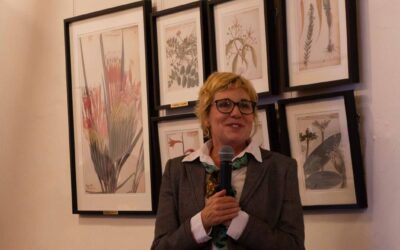
An evening for the Black Harrier: celebrating wings, words and wonder
Around 65 conservationists, researchers, supporters and bird lovers gathered at Vergenoegd Löw Wine Estate on Tuesday 29 September to celebrate one of South Africa’s most striking – and threatened – birds.

Healthy soils depend on the little things
When you think of farming, you might immediately think of crops, livestock, rainfall and pests. But some of the hardest-working members of a healthy farming system are almost invisible.

Latest Renosterveld News
OVERBERG RENOSTERVELD TRUST NEWSNewsletter 40 | April 2026 by Grant ForbesFrom Grant: Conservation, farmers and trust It’s not often that I have the opportunity to pop into your inbox. But with our...
Latest Renosterveld News
An evening for the Black Harrier: celebrating wings, words and wonder
Around 65 conservationists, researchers, supporters and bird lovers gathered at Vergenoegd Löw Wine Estate on Tuesday 29 September to celebrate one of South Africa’s most striking – and threatened – birds.
Latest Renosterveld News
OVERBERG RENOSTERVELD TRUST NEWSNewsletter 40 | April 2026 by Grant ForbesFrom Grant: Conservation, farmers and trust It’s not often that I have the opportunity to pop into your inbox. But with our...
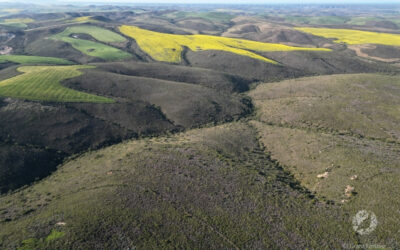
Regenerative farming: Do you really know your farm?
Speaking at a Regenerative Agriculture Landowner’s Day organised by the Overberg Renosterveld Trust in partnership with WWF South Africa in June
0 Comments