How to read the renosterveld landscape:
Four clues to look for
Take a stroll through patches of renosterveld across the Overberg and, at first glance, they may look much the same: vegetation dominated by grasses and shrubs.
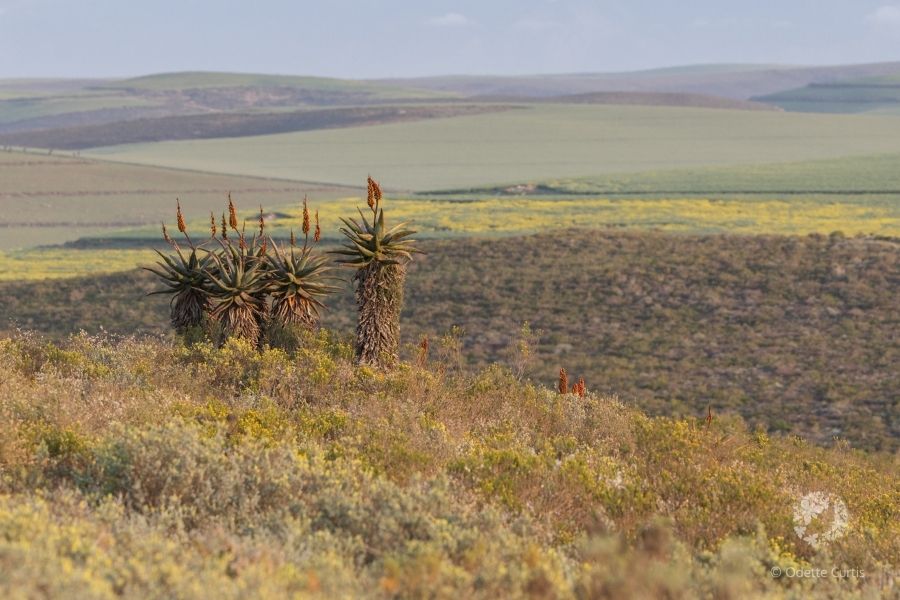
But look a little closer. Are there tall aloes on the hillsides? What trees are growing along the drainage lines? And what about the rocks beneath your feet?
These are all clues that can help you understand the renosterveld landscape.
Four distinct types of renosterveld occur across the Overberg. The three dominant types are Western Rûens Shale Renosterveld (Critically Endangered), Central Rûens Shale Renosterveld (Critically Endangered) and Eastern Rûens Shale Renosterveld (Endangered). The fourth, Rûens Silcrete Renosterveld (Endangered), occurs naturally in smaller, scattered patches, particularly within Eastern Rûens Shale Renosterveld.
Each has its own characteristics, thanks to the differences in rainfall, geology, soils and plant communities.
So how can you start telling them apart? Here are four clues to look for when you’re next exploring the renosterveld.
Look at where you are
Renosterveld changes as you travel across the Overberg. While the boundaries aren’t always obvious on the ground, the following towns provide a useful guide to where the four types occur.
- Western Rûens Shale Renosterveld: Primarily around Caledon and Botrivier.
- Central Rûens Shale Renosterveld: Broadly between Napier and Riviersonderend.
- Eastern Rûens Shale Renosterveld: Around Bredasdorp, Swellendam and Heidelberg.
- Rûens Silcrete Renosterveld: Mostly within Eastern Rûens Shale Renosterveld, particularly around the lower Breede River, although scattered patches occur more widely.
Look at the plants
One of the easiest ways to start telling the four types of renosterveld apart is to look at the plants growing around you. Some species are common in one area but completely absent in another. Others are so specialised that they occur in only a handful of places.
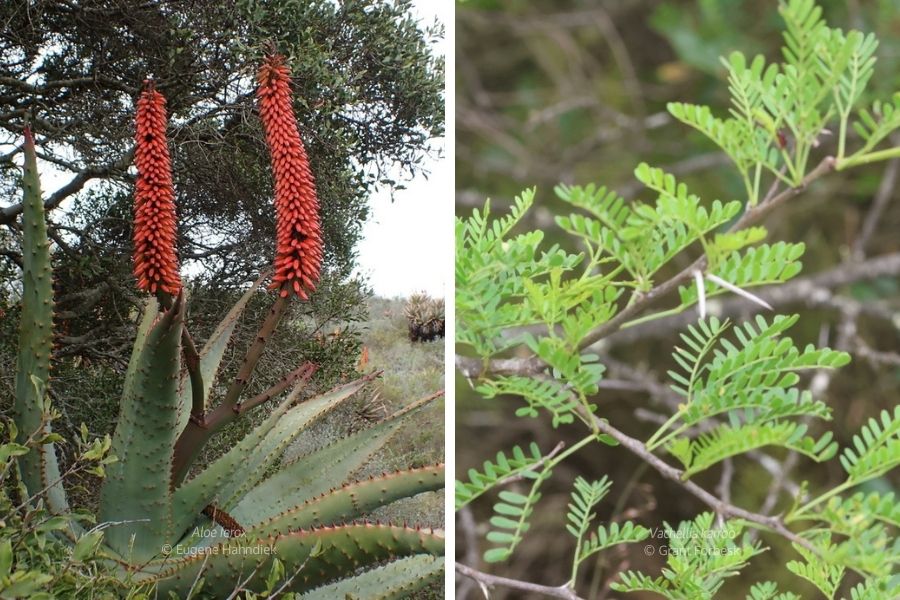
In Western Rûens Shale Renosterveld, the vegetation is generally grassier and richer in bulbs than the renosterveld further east. And one of the biggest clues is actually what you won’t see: neither Aloe ferox nor Vachellia karroo (previously known as Acacia karroo) naturally occurs here.
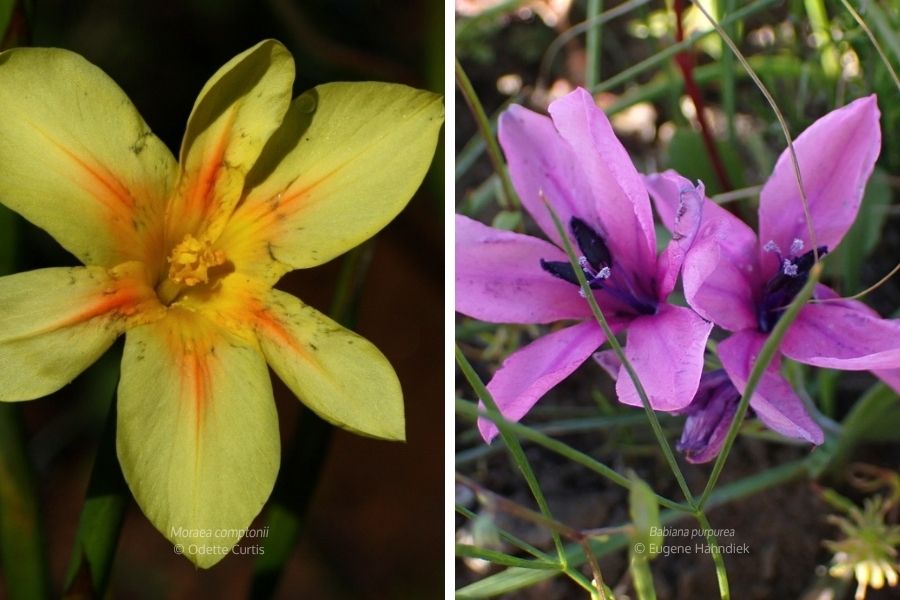
Instead, keep an eye out for some spectacular flowering bulbs, including the rare Moraea comptonii. Other special plants include Babiana purpurea, Aristea biflora and Freylinia helmei.

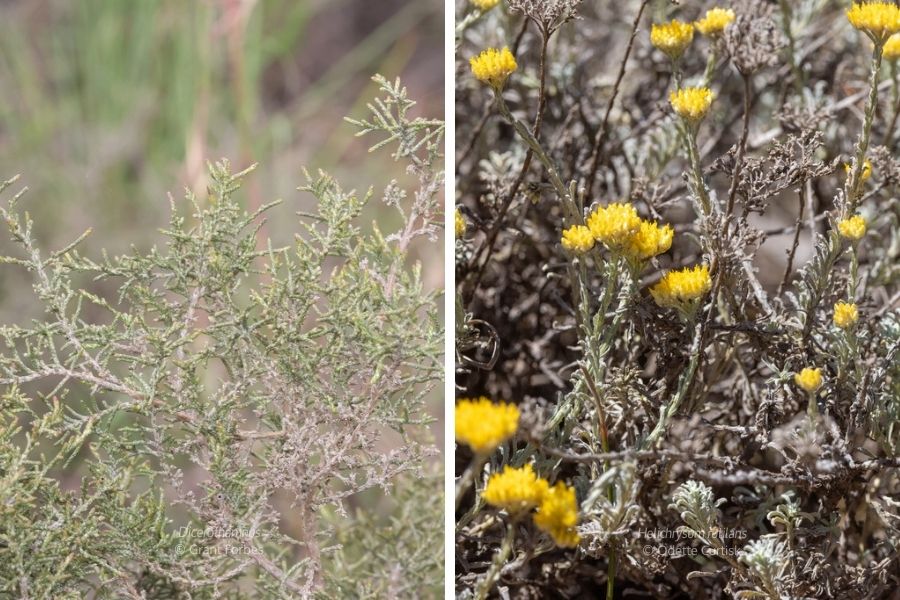
In Central Rûens Shale Renosterveld, you still won’t find Aloe ferox, but Vachellia karroo may begin to appear in some valleys. Watercourses are often lined with Asparagus species and Juncus reeds, while older renosterveld is generally dominated by renosterbos (Dicerothamnus) and kooigoed (Helichrysum).
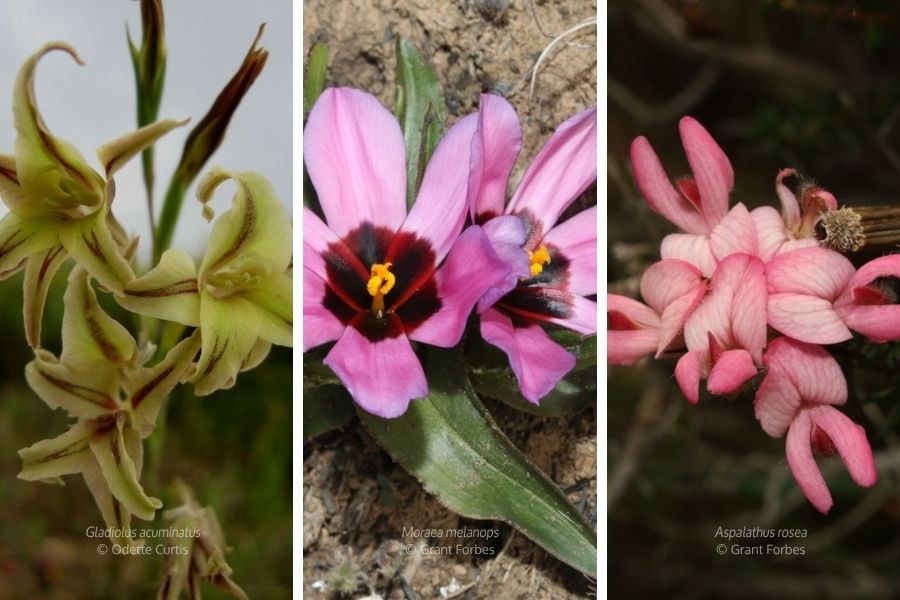
There are also some particularly special bulbs here. One is Gladiolus acuminatus, which grows only on dry slopes in the central Rûens. Other interesting species include Moraea melanops and Aspalathus rosea.
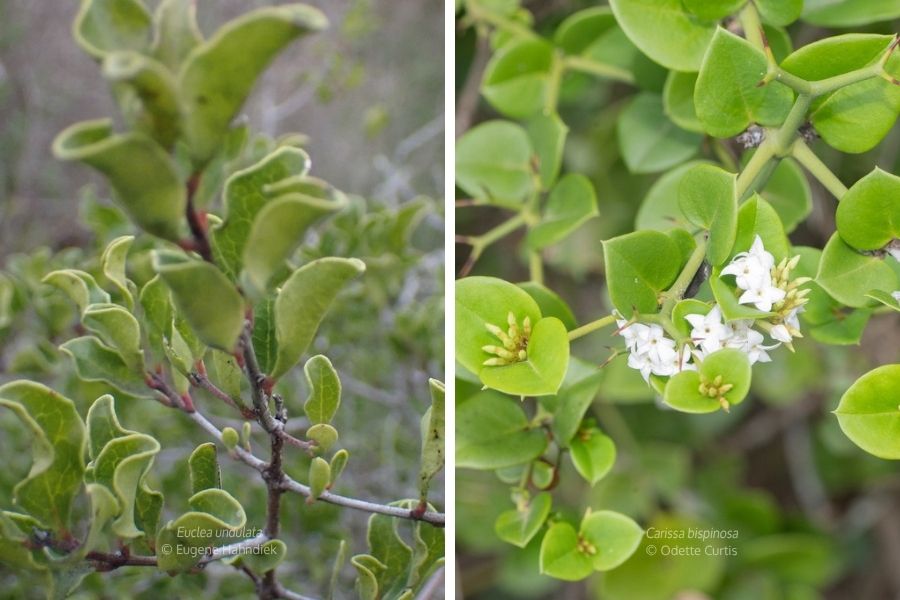
In Eastern Rûens Shale Renosterveld, Aloe ferox and Vachellia karroo can occur in dense stands. You’ll also find more plants associated with thicket and the Karoo, including Euclea undulata and Carissa bispinosa.
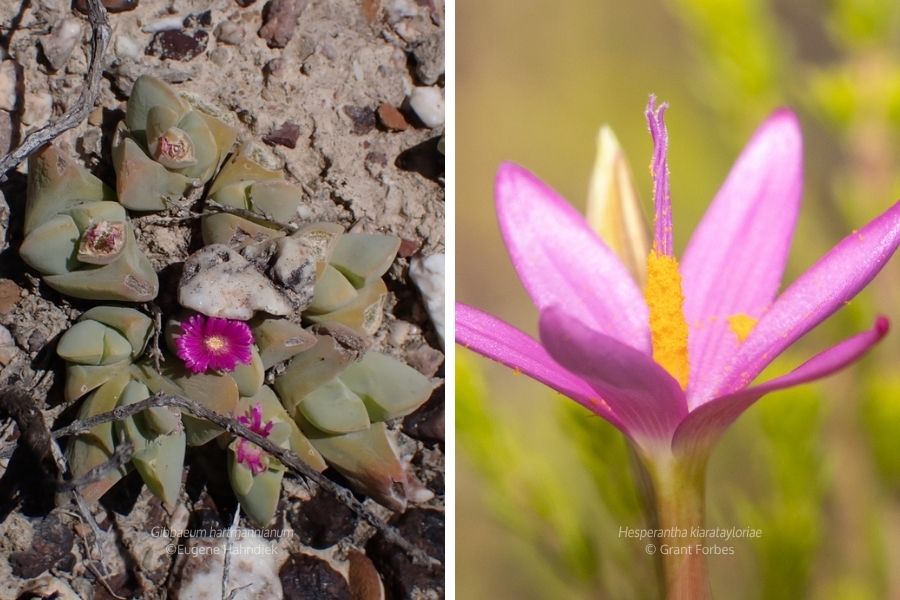
But some of the real botanical treasures are much harder to spot. Scattered quartz patches support rare and threatened plants, including legumes, succulents and some exceptionally rare bulbs. One is Gibbaeum hartmannianum, a succulent belonging to a genus of vygies that, apart from two other species, is confined to the Klein Karoo. Another is the extremely rare Hesperantha kiaratayloriae.
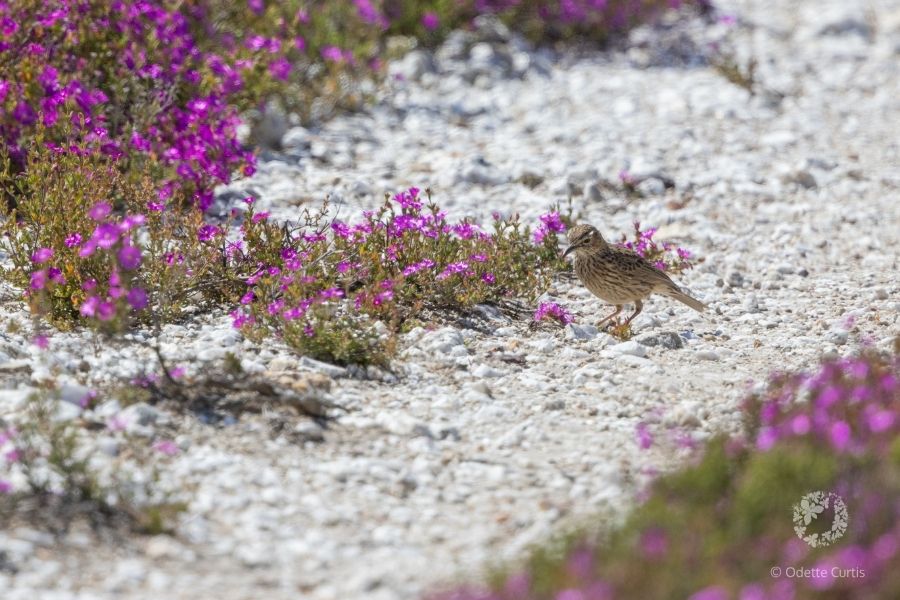
Finally, Rûens Silcrete Renosterveld supports its own botanical specialists, including the rare succulents Acrodon deminutus and Mesembryanthemum napierense. These plants are adapted to the unusual soil and geological conditions found in scattered pockets of this vegetation type.

Consider the rainfall
Rainfall provides another clue, although the differences aren’t necessarily obvious during a single visit.
In the western Rûens, rainfall is more strongly concentrated in winter. Western Rûens Shale Renosterveld also generally receives more rain than its Central and Eastern counterparts.
Moving east, the winter-rainfall peak becomes less pronounced. Central Rûens Shale Renosterveld still receives around half its annual rainfall between April and September, but the seasonal pattern is less distinct.
Further east, Eastern Rûens Shale Renosterveld often receives its highest rainfall in autumn and late spring, rather than in the middle of winter.
Rûens Silcrete Renosterveld follows a similar rainfall pattern to Eastern Rûens Shale Renosterveld, within which most of its patches occur.

Look beneath your feet
Sometimes the biggest clue to the type of renosterveld you’re exploring isn’t the vegetation at all, but rather the ground beneath it.
Quartz, silcrete, shale and different soil types all help determine the plants that grow in a particular area. This is especially noticeable in the eastern Rûens, where many hills have silcrete and quartz caps above exposed shale and clay slopes.
Rûens Silcrete Renosterveld is even more closely associated with particular geological conditions. It occurs in scattered pockets on outcrops, undulating hills and in drainage areas.
In some places, you’ll find shallow soils with hard silcrete caps over pink and orange shales. Elsewhere, the vegetation occurs on ferricrete or among quartz patches. In some drainage areas, large, rounded rocks left behind by ancient river systems are a particularly striking feature.
These differences in the ground create specialised habitats, supporting plants that may struggle to survive anywhere else.
Why these differences matter
Once you start noticing these clues, the renosterveld landscape begins to look quite different. What may initially appear to be the same vegetation across the Overberg is actually a collection of distinct plant communities.
Yet all four vegetation types have something worrying in common: they are all threatened. That’s why protecting renosterveld isn’t simply about conserving enough hectares across the Overberg. We need to protect what remains of each vegetation type, along with the unique plants and ecological communities they support.
And the next time you’re out exploring the renosterveld, take a moment to look a little closer. You may be surprised by just how much the landscape can tell you.
Want to get to know renosterveld even better?
Discover the remarkable plants and animals of this threatened ecosystem with our Field Guide to Renosterveld of the Overberg, available as printed book or a handy field guide app.

Why the ORT is part of the Overberg Conservation Alliance
That’s why we’re proud to be a founding member of the Overberg Conservation Alliance (OCA), a collaboration between four conservation organisations working across the Overberg.
Regenerative farming: Do you really know your farm?
Speaking at a Regenerative Agriculture Landowner’s Day organised by the Overberg Renosterveld Trust in partnership with WWF South Africa in June

A book for all ages, to bring out the child in you
A new, richly illustrated children’s book is hoping to inspire a lifelong love of nature by telling the story of one of South Africa’s most threatened birds – the Black Harrier, BirdLife South Africa’s Bird of the Year for 2026.