Meet the aardwolf: A small but mighty termite-eater
The aardwolf is a fascinating nocturnal mammal that spends its days resting in a burrow and emerges at night to forage. Though it belongs to the hyena family, the aardwolf (Proteles cristata) is much smaller and has a vastly different diet. Unlike its carnivorous relatives, the aardwolf primarily feeds on termites, specifically on Trinervitermes species. In fact, it relies so heavily on these insects that their presence is essential to its survival within an ecosystem.
Fun fact: An aardwolf can consume up to 105 million termites annually!
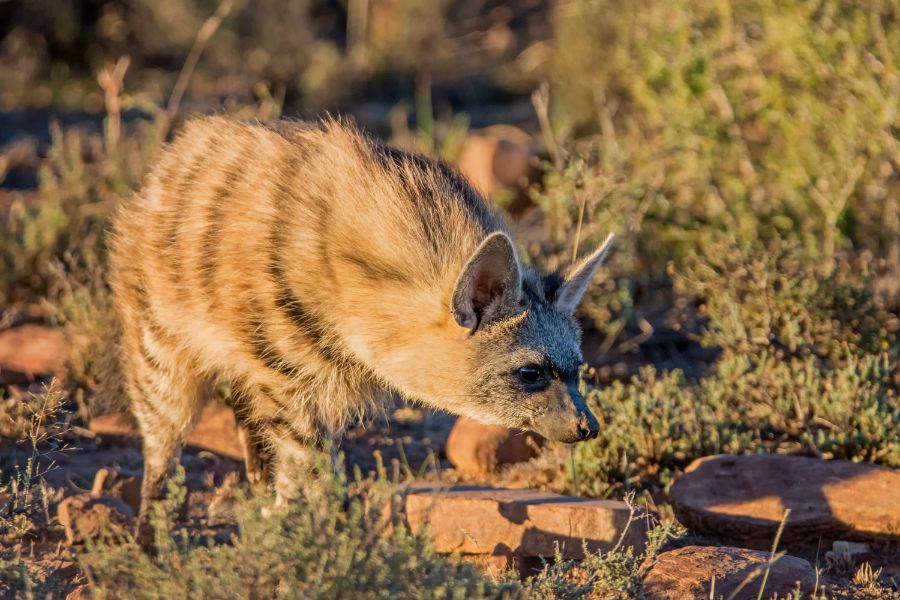
Above: The aardwolf, a termite specialist in the hyena family.
Discovering middens: Hygiene over territory
Aardwolves have long been resident in the Overberg region, including at the Haarwegskloof Renosterveld Reserve. Recently, we were fortunate to gain some insight into their secretive behaviour. While out walking, a guest noticed what appeared to be a midden (a collection of scats from a single species), often used either for marking territory or simply for hygienic reasons. On closer inspection, the scats appeared to contain termite remains, significantly narrowing down the possible culprit.
Curious, I set up a camera trap at the site, even though the scats seemed old, suggesting the midden hadn’t been recently visited. To my surprise, within the week, the camera captured footage of an aardwolf returning to the site and depositing fresh scat. Aardwolf scats are surprisingly big for an animal of its size – reaching approximately 5 cm in diameter, or around 8% of the animal’s body weight per deposit.
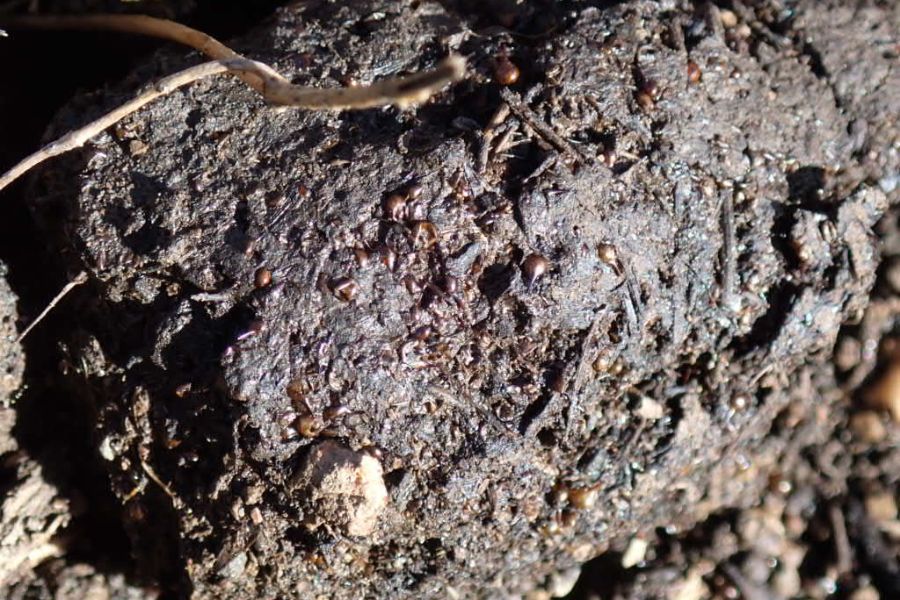
Above: Aardwolf scat filled with termites.
Aardwolves bury their droppings
This explains why the scats on the surface appeared old. Unlike some other species, aardwolves don’t use their scats for territorial marking. Instead, they keep middens to maintain hygiene in their foraging areas.
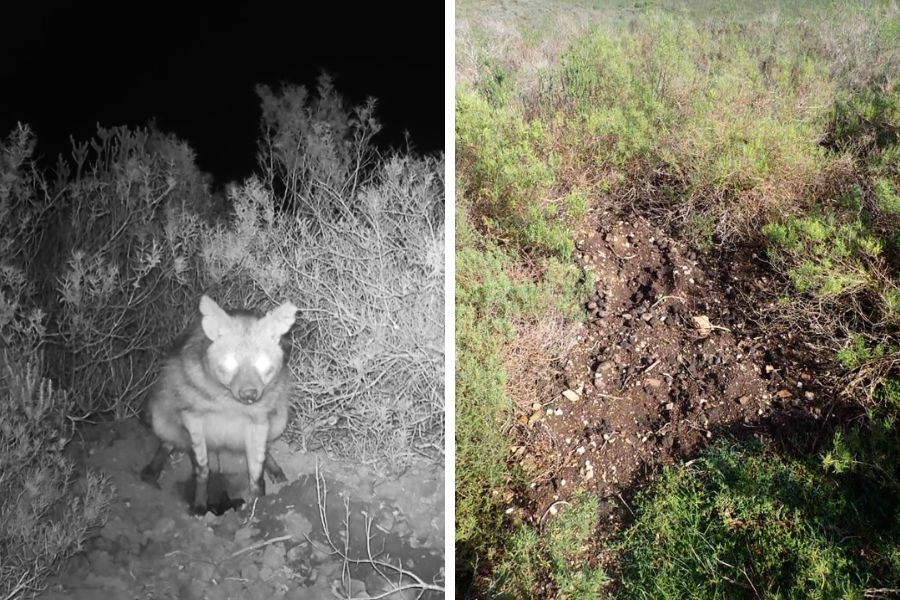
Above: Camera trap reveals aardwolf using a midden.
Marking territory with scent: The art of pasting
Yet aardwolves are territorial, and they have their own unique method for marking boundaries. This behaviour was also captured, by chance, on another camera trap placed elsewhere on the reserve.
Like other hyenas, aardwolves produce a strong-smelling secretion from their anal glands, which they use to mark vegetation. The anal gland is located between the tail and the rectum. It has a muscular lining, allowing the animal to squeeze it outward while performing scent marks. They squat over a branch or grass stalk with the extruded anal gland and perform a distinctive rear-end wiggle to smear a small amount of brownish paste onto the object. This scent-marking behaviour is known as “pasting”.
Each paste acts like a chemical message, conveying detailed information such as the individual’s sex, age, reproductive status, or simply a warning that the area has already been foraged.
These pastings are typically found along the periphery of their territories, especially at frequently used trails or boundary landmarks. Aardwolf territories can range from 100 to 600 hectares, usually shared by a monogamous pair and their most recent offspring. Aardwolves may travel up to 12 kilometres per night while foraging and they will paste between 10 and 20 times per kilometre.
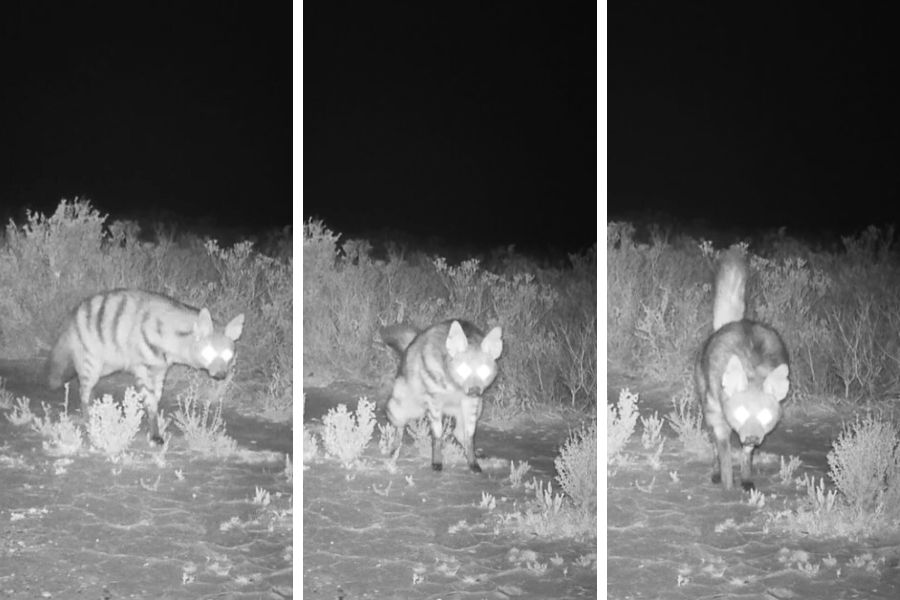
Above: Aardwolves use pasting to communicate and mark territory.
Understanding the secret lives of aardwolves
The aardwolf’s unique behaviours – from its termite-focused diet to its distinctive scent-marking rituals – highlight the incredible adaptations that allow this small hyena to thrive in its environment. Observing these shy nocturnal creatures, especially through camera traps, provides a rare window into their lives and deepens our appreciation for their role in the ecosystem.
As guardians of the Overberg’s biodiversity, understanding aardwolves helps us better protect these fascinating mammals and the habitats they depend on.
Whether you’re a wildlife enthusiast, researcher, or casual observer, the aardwolf’s story is a reminder of nature’s remarkable diversity and the subtle ways animals communicate and coexist.
Our sincere thanks to WWF South Africa and World Land Trust for making it possible for us to capture these moments, by providing funding for our special projects. A special thanks to Ecological Logistics for their advice on choosing the best camera trapping equipment to suit our needs.
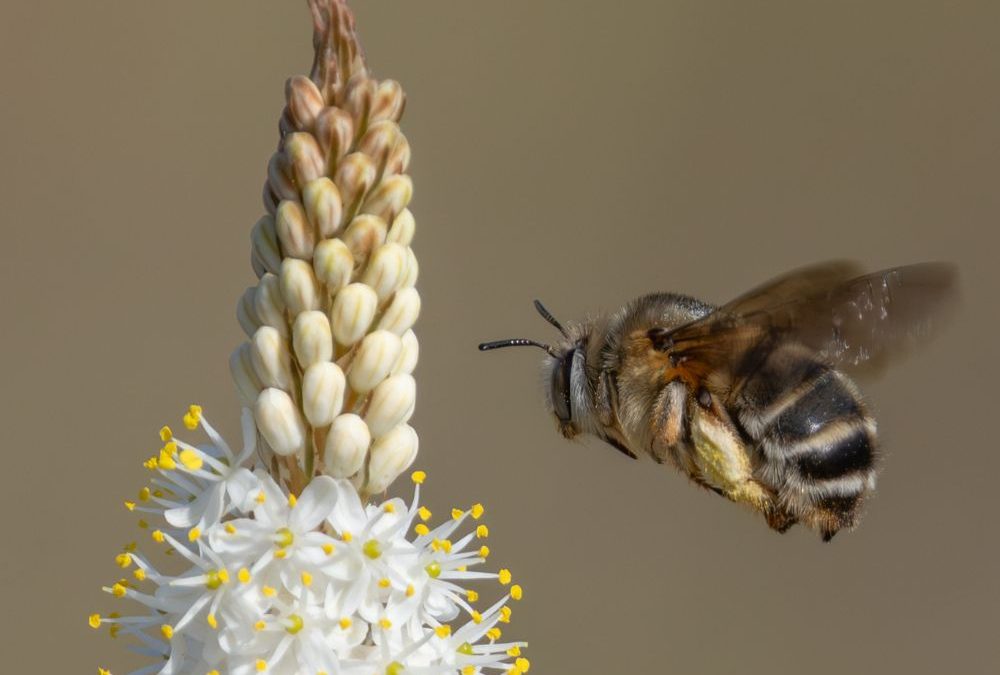
An invisible crisis in renosterveld
The tiny relationships holding everything together. Together with fire, these animals drove the structure of the renosterveld ecosystem and the constantly changing ratios of shrubs to grasses.
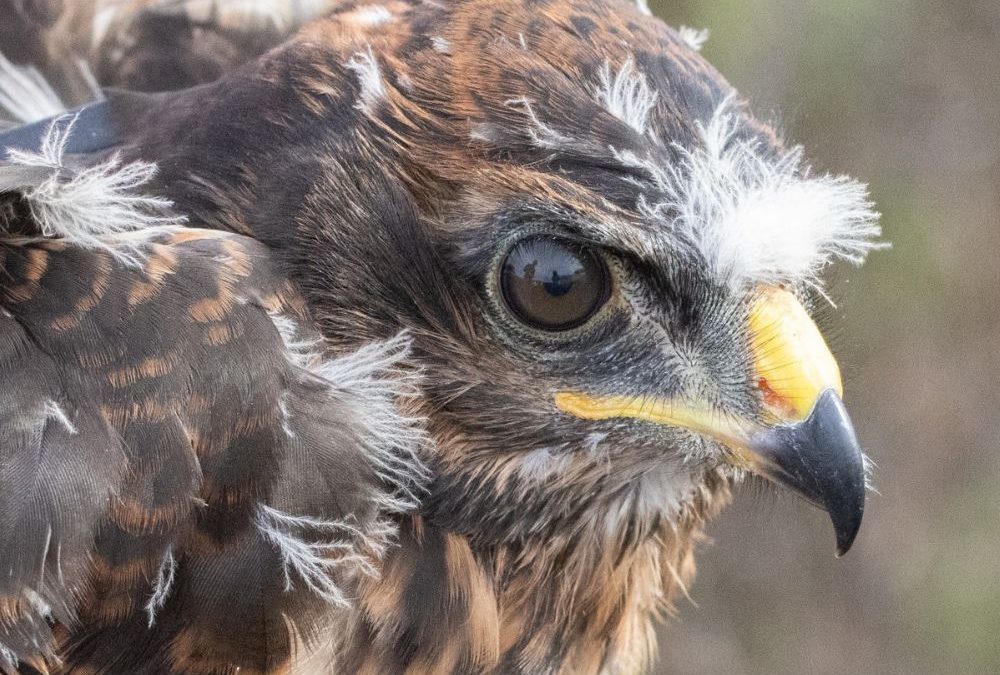
Tracking young Black Harriers reveals a harsh reality
Every young Black Harrier that leaves the nest faces an uncertain future. For this endangered raptor, the first year of life is the most dangerous – a time when hunger, predators and wildfire can all prove fatal.
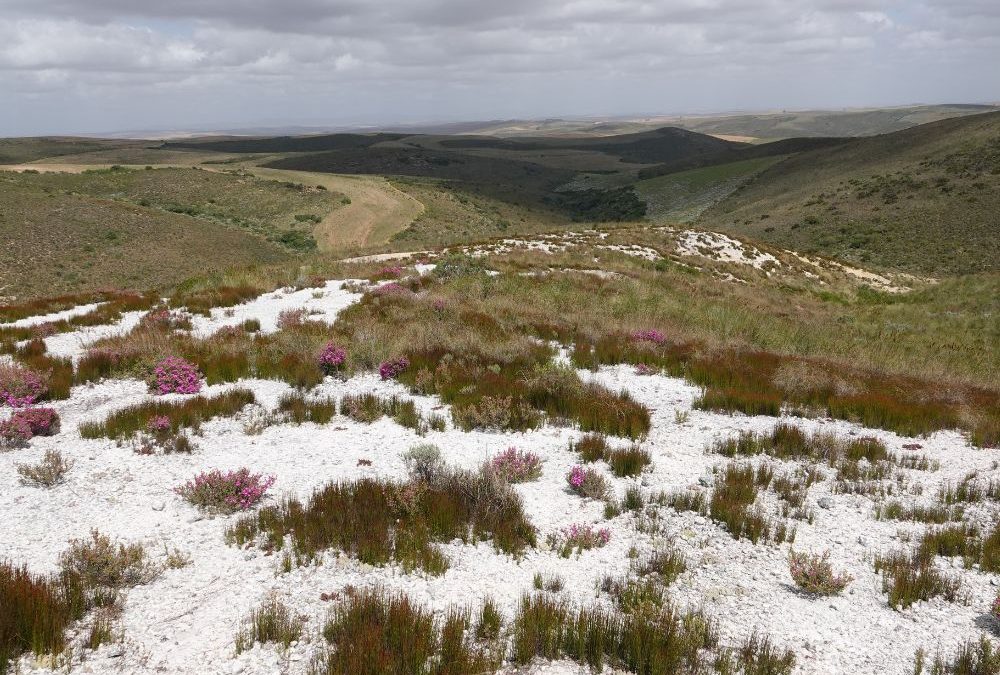
Quartz islands in renosterveld: Small, specialised – and under threat
When walking through renosterveld, your eye may suddenly catch bright white patches shimmering among the green-grey vegetation. These patches look like small islands surrounded by typical renosterveld vegetation – and that is exactly why they are called quartz islands.

A birding weekend not to be missed
Bird lovers and conservation enthusiasts, eager to deepen their birding knowledge and bird with a purpose, converged on our Haarwegskloof Renosterveld Reserve in November, to learn from one of the country’s top conservation biologists.

Latest Renosterveld News
It’s truly awe-inspiring to see what happens when like-minded people come together around a cause that touches their hearts. When that collective energy fuels efforts to protect our natural world, it carries even more meaning.





Latest Renosterveld News
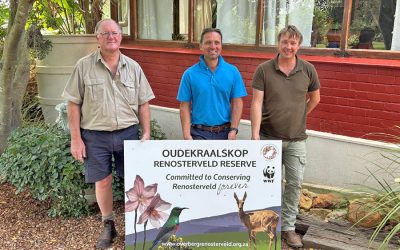
Size matters: A new large-scale renosterveld landscape protected
The newly signed conservation easement, Oudekraalskop, brings Endangered Eastern Rûens Shale Renosterveld and Rûens Silcrete Renosterveld under protection in
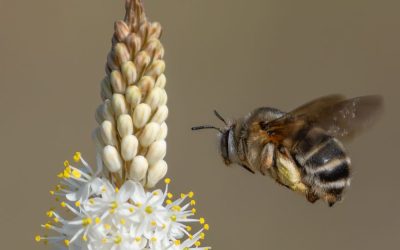
An invisible crisis in renosterveld
The tiny relationships holding everything together. Together with fire, these animals drove the structure of the renosterveld ecosystem and the constantly changing ratios of shrubs to grasses.
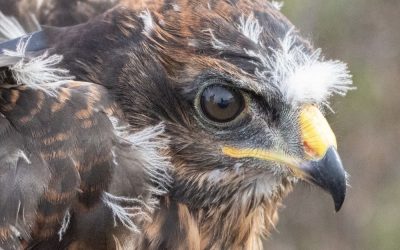
Tracking young Black Harriers reveals a harsh reality
Every young Black Harrier that leaves the nest faces an uncertain future. For this endangered raptor, the first year of life is the most dangerous – a time when hunger, predators and wildfire can all prove fatal.