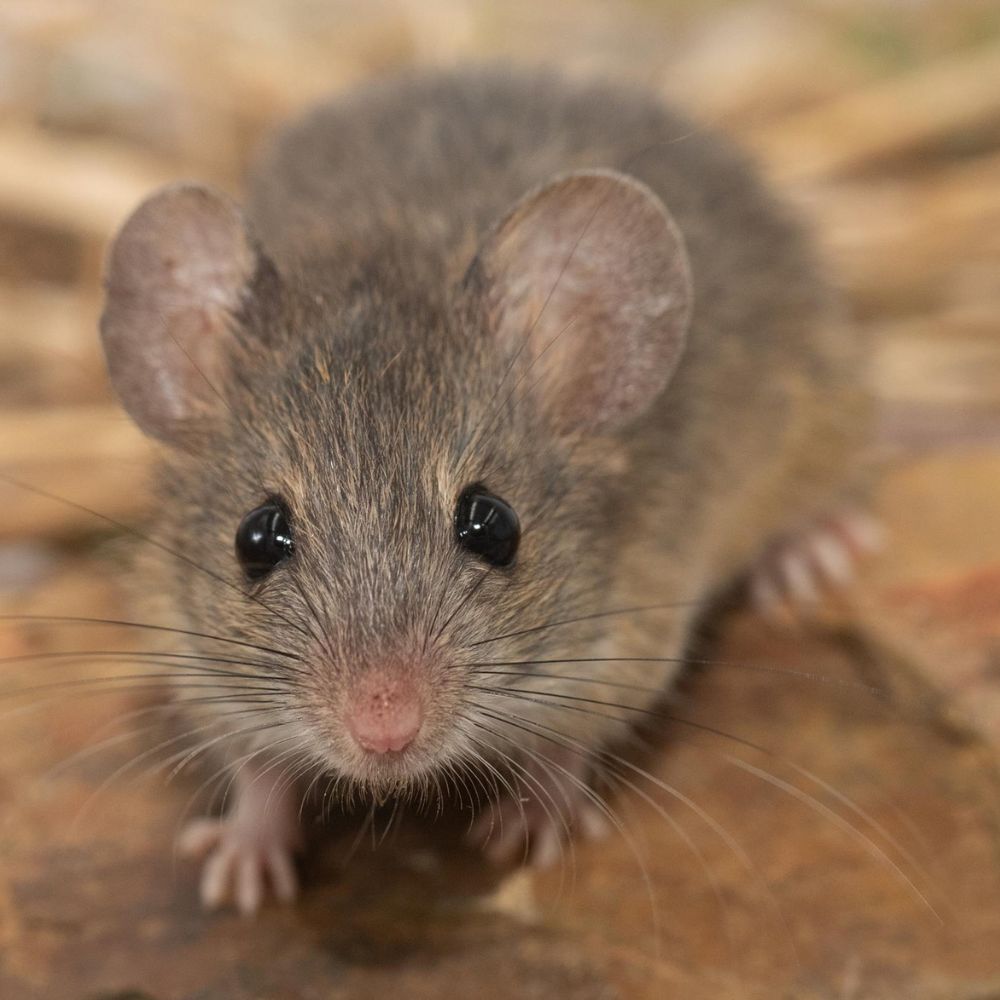
Could these be renosterveld’s cutest residents? Mice and shrews live in our Overberg renosterveld landscapes. And the Overberg Renosterveld Trust is on a mission to learn more about these critical critters.
But this is no easy task. Mice and shrews of renosterveld are quick to disappear when they see any movement. Many also only move around at night. That’s why we’ve teamed up with the expert: Dr Shaun Welman from the University of Cape Town.
Here’s what we know…
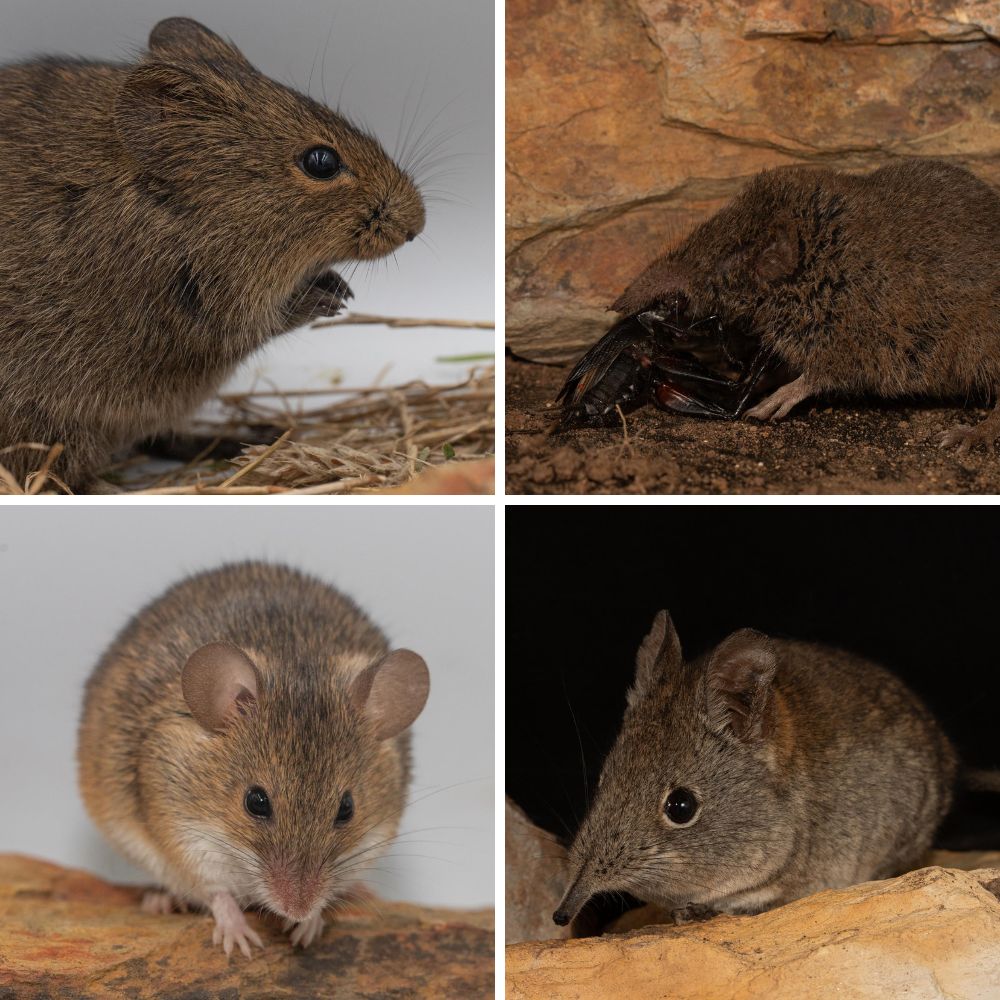
Monitoring over the years has brought to life the tiny mice that you could see here. These include:
– Cape Spiny Mouse
– Namaqua Rock Mouse
– Pygmy Mouse
– Southern Vlei Rat
– Four-striped Grass Mouse
– Grey Climbing Mouse
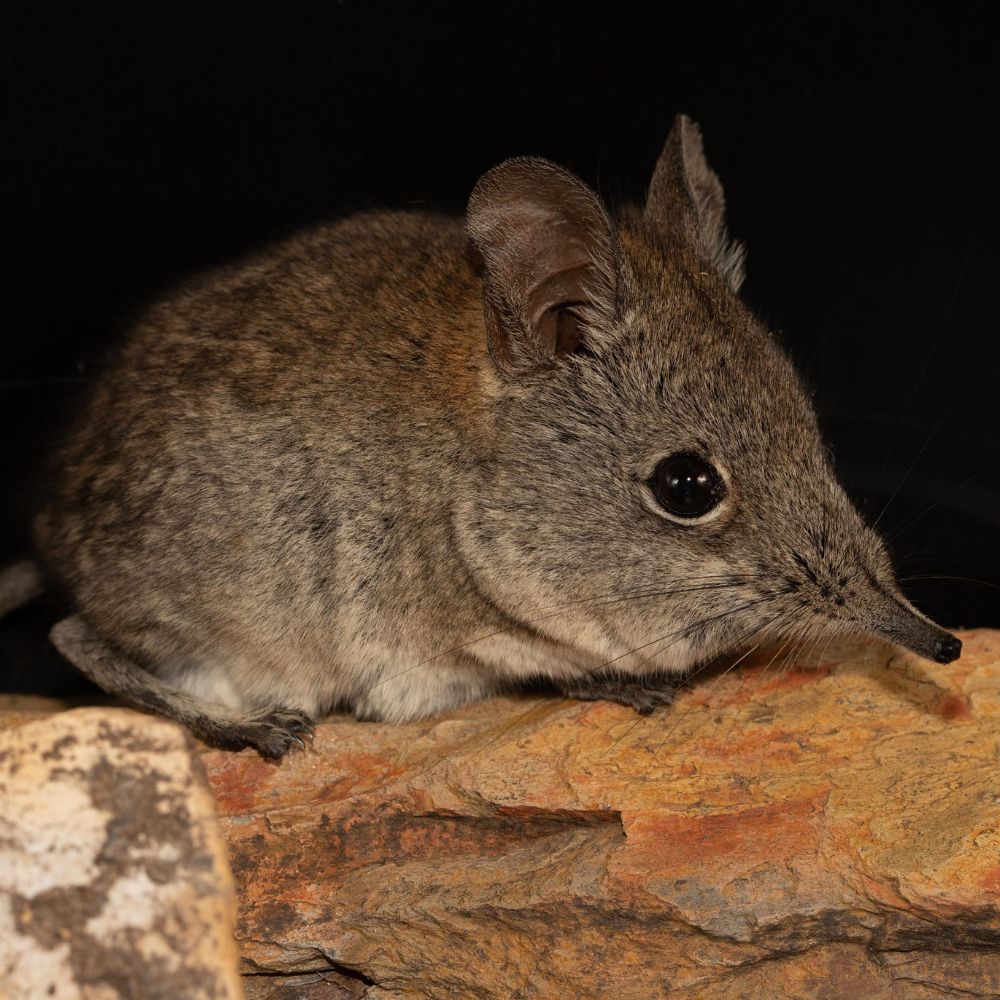
– Cape Rock Sengi
– Reddish-Grey Musk Shrew
– Lesser Dwarf Shrew
Small mammals are a vital component of the renosterveld ecosystem: they are important herbivores, foraging on vegetation and seeds (in the case of mice and rats), and predators of invertebrates (in the case of shrews and sengis), while they themselves are a critical food source for many predators (from small mammalian carnivores like mongooses and African Wild Cats to birds of prey). Some even perform a pollination function, foraging on the musky nectar of some ground Proteas, for example.
The Pygmy Mouse is one of the world’s smallest rodents – weighing ONLY 6g. Striped Mice are an important food source for many raptors in renosterveld, such as Black Harrier and Black-winged Kite, whose diets can be dominated by the species. The diversity adaptations to specific niches are remarkable: for example, the incredibly agile Grey Climbing Mouse has a semi-prehensile tail for climbing grasses and shrubs, and the endearing Sengi has large, rounded ears and an elongated probiscis (nose) for foraging small invertebrates, particularly ants and termites.
Together with Dr Welman and his post-graduate students, we hope to learn a lot more about small mammal populations in the renosterveld in the coming years.
And we’re also testing different methodologies for surveying small mammals.
This will allow us to see which could be the most effective monitoring tools over time.
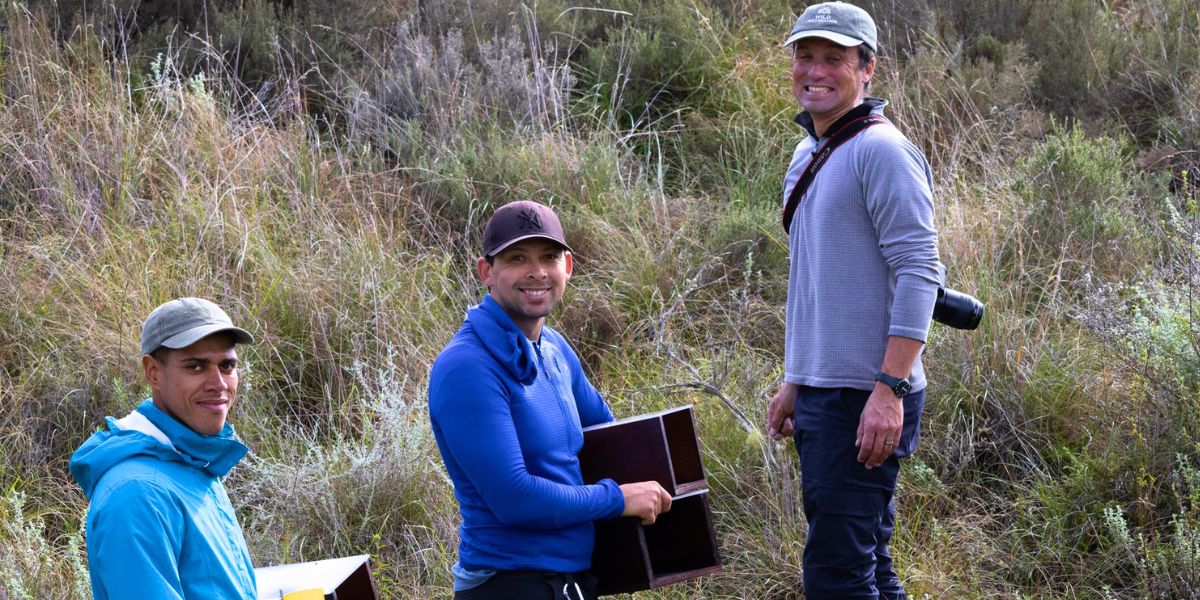
- We’ve now invested in camera traps that have been fitted into small boxes that are baited to attract and photograph these mice and shrews. In order for the cameras to capture these tiny creatures more clearly, a lens from a pair of reading glasses is placed on the camera lens. This helps to capture the details on animals on the pictures so that they can be identified.
- At the same time, we are also putting out live-traps called Sherman traps which catch the small mammals, unharmed. These traps capture the animals by luring them in with bait like droëwors and peanut butter-oat balls. Once the individuals are weighed and marked with a small fur clipping (to measure re-captures), they are immediately released.
The goal is now to build a database of small mammal surveys – including population densities and diversity relative to veld age (i.e. time since last burn) and, as the research grows and develops, we will also look at diversity and population sizes in different veld types, through a series of postgraduate studies.
Our sincere thanks to Dr Welman and the UCT team for working with the ORT on this exciting project. And a huge thank you to the Fynbos Trust for supporting the purchase of the ORT’s Sherman traps to help with our monitoring work.
Images: Odette Curtis-Scott
An evening for the Black Harrier: celebrating wings, words and wonder
Around 65 conservationists, researchers, supporters and bird lovers gathered at Vergenoegd Löw Wine Estate on Tuesday 29 September to celebrate one of South Africa’s most striking – and threatened – birds.

Healthy soils depend on the little things
When you think of farming, you might immediately think of crops, livestock, rainfall and pests. But some of the hardest-working members of a healthy farming system are almost invisible.

Latest Renosterveld News
OVERBERG RENOSTERVELD TRUST NEWSNewsletter 40 | April 2026 by Grant ForbesFrom Grant: Conservation, farmers and trust It’s not often that I have the opportunity to pop into your inbox. But with our CEO, Odette Curtis, away at the moment, I’m joining you in this...
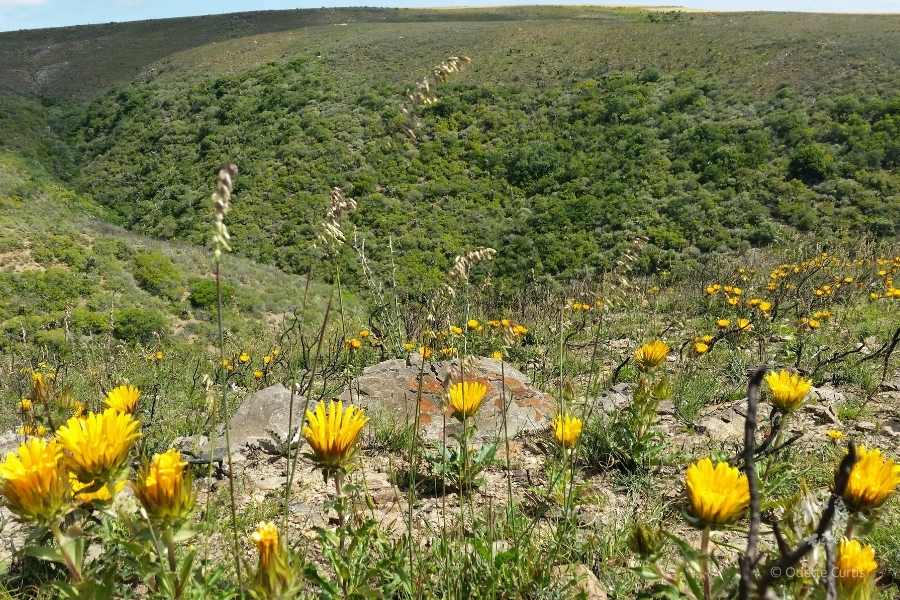
Why the ORT is part of the Overberg Conservation Alliance
That’s why we’re proud to be a founding member of the Overberg Conservation Alliance (OCA), a collaboration between four conservation organisations working across the Overberg.





Latest Renosterveld News
An evening for the Black Harrier: celebrating wings, words and wonder
Around 65 conservationists, researchers, supporters and bird lovers gathered at Vergenoegd Löw Wine Estate on Tuesday 29 September to celebrate one of South Africa’s most striking – and threatened – birds.

Healthy soils depend on the little things
When you think of farming, you might immediately think of crops, livestock, rainfall and pests. But some of the hardest-working members of a healthy farming system are almost invisible.

Latest Renosterveld News
OVERBERG RENOSTERVELD TRUST NEWSNewsletter 40 | April 2026 by Grant ForbesFrom Grant: Conservation, farmers and trust It’s not often that I have the opportunity to pop into your inbox. But with our...