Three years may seem to pass by quickly. But in the world of nature, it’s enough time for real, tangible change to take root. This is especially the case when humans – both as donors and implementers – lend a helping hand. With vital funding support from WWF South Africa, the Overberg Renosterveld Trust has over the past three years been able to implement on-the-ground conservation actions in renosterveld landscapes in the Overberg – with remarkable results.
This partnership has shown how much meaningful progress can be made in what is, in nature’s timeline, a relatively brief moment.
This WWF South Africa-funded project, which is focused on expanding protected areas in renosterveld in the Overberg Wheat-Belt, started at the end of 2021. It concluded at the beginning of this year. This was the second phase of WWF South Africa’s support to the ORT – with a previous project concluding in 2021.
Here’s a breakdown on some of the achievements over the past three years.

Expanding the Easement estate
The ORT’s Conservation Easement Programme grew by 903 hectares across three additional easements during the project period. Given that more than 95% of renosterveld has been lost across the Overberg Lowlands, every hectare conserved and brought under management is important. As part of the Conservation Easement Programme, these hectares are now protected in perpetuity – with the Overberg Renosterveld Trust providing management support to landowners who choose to protect their natural fragments.
Clearing the way for recovery
While invasive alien plants are not the biggest threat facing renosterveld (as opposed to fynbos landscapes), they are still a threat, especially if they are not managed quickly. That’s why the ORT has emphasised removing these plants across threatened renosterveld landscapes and river courses in the past three years. In fact, a total of 2,657 hectares of invasive alien plants were cleared across conservation sites.


Above: The newly acquired Plaatjieskraal reserve, purchased by WWF-SA, ORT and other partners received some
much-needed alien clearing, notably the ‘forest’ of Aleppo Pines that occurred in pockets in the corridor between Haarwegskloof
and Plaatjieskraal. The rest of the reserve was also surveyed and cleared of scattered trees.
This included removing pines and acacias on the recently acquired Plaatjieskraal (see above). The ORT even managed to completely clear invasive plants off the Napier Conservation Easement, on land owned by the Cape Agulhas Municipality. It’s now priority to ensure these gains are not lost. Another Conservation Easement site was also completely cleared of Black Wattle, which had densely infested the natural fragment. Now the site is recovering with the establishment of pioneer species.

Left: By using Google Earth, one can see the scattered and dense infestations of Black Wattle on one of the ORT’s Conservation Easements. Right: Drone imagery shows the cleared area, with recovery and the establishment of pioneer species.
Restoring what has been lost
With WWF South Africa’s backing, the Trust started work on four new restoration sites over the past three years. Maintenance work also continued on sites identified and restored in the first phase of the WWF South Africa support (between 2018 and 2021). Each restoration site represents a long-term investment in healing the land, requiring patience, careful management and ongoing monitoring.
For example, sites that had experienced devastating erosion in the past were actively managed. On one site, our natural resources management team, led by Willie Engel, filled erosion rills with rocks removed from the lands and often left in heaps. These have already successfully slowed down the speed of the water run-off, with some annual plants managing to reestablish themselves.

Above: Take a look at one of our easement sites prior to the implementation of restoration activities. The erosion rills are clear to see. In autumn 2024, our team filled the erosion rills with rocks from the lands. Depending on how the site responds this year, barriers will be installed across the site to slow water flow.

Above: This shows the recovery by spring 2024, with some annuals having been established. However, we have noticed some alien grasses have emerged, which we will monitor and remove.
At one degraded site, the team created restoration hollows, followed by mulching. These hollows created protected environments that facilitated the germination of annual succulents, asteraceae and grasses, reducing erosion risk and improving soil hydration. At another site on the same farm, log erosion barriers were constructed to trap organic material and slow down soil movement, while allowing water infiltration. This provided support for scattered plants and encouraged new recruitment. And the difference is clear to see.

Left: This is an eroded hill in one of our easement sites, pre-implementation in 2023. However, on the right (photo taken in spring 2024) you can see that the work the team has undertaken is slowly showing results. The log erosion barriers have been trapping organic material, slowing soil movement and allowing water infiltration, thereby providing support for the scattered plants and new recruitment.

Log erosion barriers were installed using nearby Eucalyptus stumps and old fence posts.
Fencing fragile landscapes
Fences are an important tool for the ORT to facilitate veld restoration, by helping to better manage the movements of livestock, thereby preventing overgrazing and allowing degraded areas to rest and regenerate. WWF South Africa’s investment enabled the ORT to erect fencing around 642 hectares of land – totalling 27.2km of fencing. This includes a game fence where a landowner is planning to reintroduce bontebok and other indigenous game.
By adopting improved grazing practices, farmers can promote healthier veld and more sustainable agricultural production, creating a win-win situation for conservation and livelihoods.


We fenced a camp on one of our easement sites to manage grazing. This area has recovered substantially after the fencing was put up.
Fire as a tool for ecosystem health
Fire is an essential ecological process in renosterveld landscapes, playing a crucial role in maintaining biodiversity and ecological function. Over the past three years, the ORT conducted four ecological burns, covering 118 hectares. This included an important ecological burn that took place across farm boundaries
These controlled burns were carefully planned and executed to mimic natural fire cycles, promoting the germination of renosterveld plants, reducing the build-up of biomass that fuels wildfires and creating a more resilient and diverse ecosystem. Given the expertise needed to successfully conduct controlled burns, the ORT was fortunate to obtain support from incredible partners other than WWF South Africa, including the Greater Overberg Fire Protection Association, Nuwejaars Wetlands SMA, Enviro Wildfire and the Fynbos Trust.

The corridor between two large remnants was burnt in an ecological burn in 2024 and this was also fenced out to protect the veld from livestock. In both cases old materials were recycled and used.
Beyond renosterveld
The achievements over the past three years have not only delivered ecological benefits but have also had significant social impacts. Clearing alien vegetation, erecting fences and conducting ecological burns all require resources, creating job opportunities in local communities.
Through these activities, the project created thousands of person-days of employment, contributing to rural livelihoods and building conservation capacity in the Overberg region. Many of the people involved in the work have gained new skills in fields such as ecological restoration, fire management and sustainable land management, equipping them for future employment in conservation.
So what next?
Despite the invaluable work that has taken place over the past three years (and also the three years prior to this), the conservation action is far from over. And WWF South Africa, as a key partner in renosterveld protection, recognised this, and is once again supporting the ORT for a further three years.
This continued support and collaboration will be essential to build on these successes, to help secure a thriving future for a highly threatened and irreplaceable ecosystem.
Our sincere thanks to WWF South Africa for the incredible support.

Above: Our hard-working natural resource management team, led by Willie Engel (right).
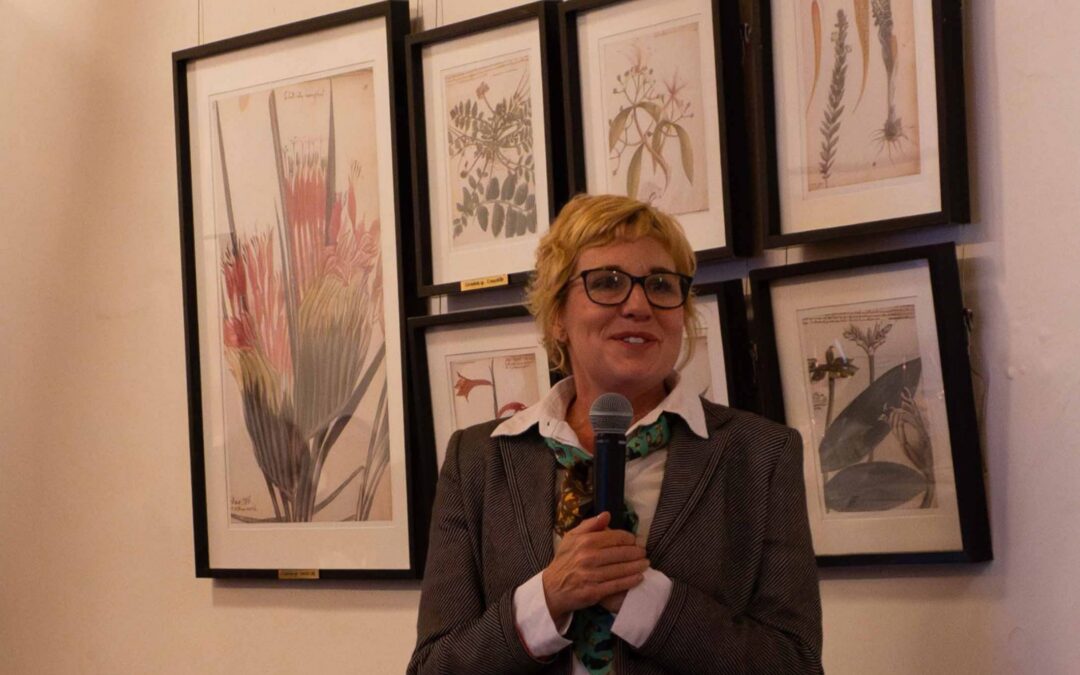
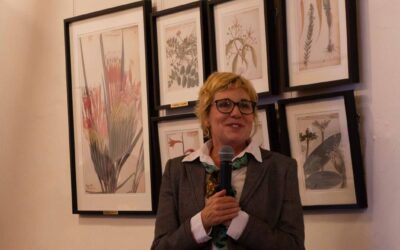
An evening for the Black Harrier: celebrating wings, words and wonder
Around 65 conservationists, researchers, supporters and bird lovers gathered at Vergenoegd Löw Wine Estate on Tuesday 29 September to celebrate one of South Africa’s most striking – and threatened – birds.

Healthy soils depend on the little things
When you think of farming, you might immediately think of crops, livestock, rainfall and pests. But some of the hardest-working members of a healthy farming system are almost invisible.

Latest Renosterveld News
OVERBERG RENOSTERVELD TRUST NEWSNewsletter 40 | April 2026 by Grant ForbesFrom Grant: Conservation, farmers and trust It’s not often that I have the opportunity to pop into your inbox. But with our CEO, Odette Curtis, away at the moment, I’m joining you in this...
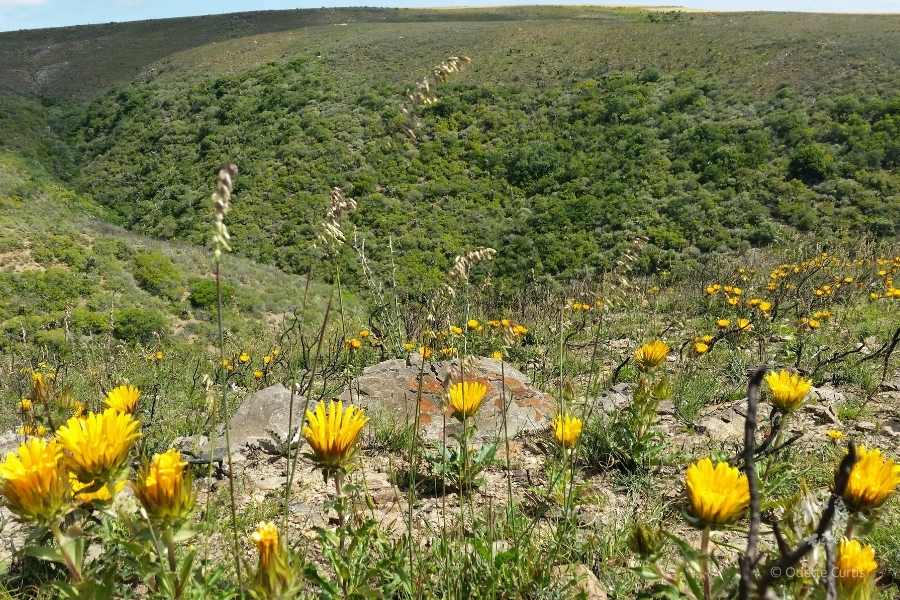
Why the ORT is part of the Overberg Conservation Alliance
That’s why we’re proud to be a founding member of the Overberg Conservation Alliance (OCA), a collaboration between four conservation organisations working across the Overberg.



Latest Renosterveld News
An evening for the Black Harrier: celebrating wings, words and wonder
Around 65 conservationists, researchers, supporters and bird lovers gathered at Vergenoegd Löw Wine Estate on Tuesday 29 September to celebrate one of South Africa’s most striking – and threatened – birds.

Latest Renosterveld News
OVERBERG RENOSTERVELD TRUST NEWSNewsletter 40 | April 2026 by Grant ForbesFrom Grant: Conservation, farmers and trust It’s not often that I have the opportunity to pop into your inbox. But with our...
Regenerative farming: Do you really know your farm?
Speaking at a Regenerative Agriculture Landowner’s Day organised by the Overberg Renosterveld Trust in partnership with WWF South Africa in June