Healthy soils depend on the little things
Springtails, spiders, ants, nematodes, fungi, bacteria and countless other tiny organisms are constantly at work below our feet. And according to Dr Charlene Janion-Scheepers of the University of Cape Town, we are only beginning to fully understand just how important this soil biodiversity is.
Speaking at a Regenerative Agriculture Landowner’s Day organised by the Overberg Renosterveld Trust in partnership with WWF South Africa in June, Janion-Scheepers introduced around 20 farmers at Fairfield Farm to the extraordinary life in the soil – and why farmers should care about it.
“We tend to forget about what’s underground,” she said. “But without what is happening underground, what we see above ground can’t survive.”
Meet the underground workforce
A huge variety of organisms work together within the soil, breaking down organic material and making nutrients available to plants. Some are decomposers, feeding on leaf litter, dung and carcasses. Bacteria and fungi help break down mulch and other plant material, returning nutrients to the soil. Other organisms improve soil structure and water movement, while some help regulate agricultural pests.
Together, this underground community can contribute to better water infiltration, nutrient cycling, soil structure and pest control, while helping to reduce erosion. And some of the organisms we might instinctively consider harmful are actually doing useful work.
Why natural predators matter on a farm
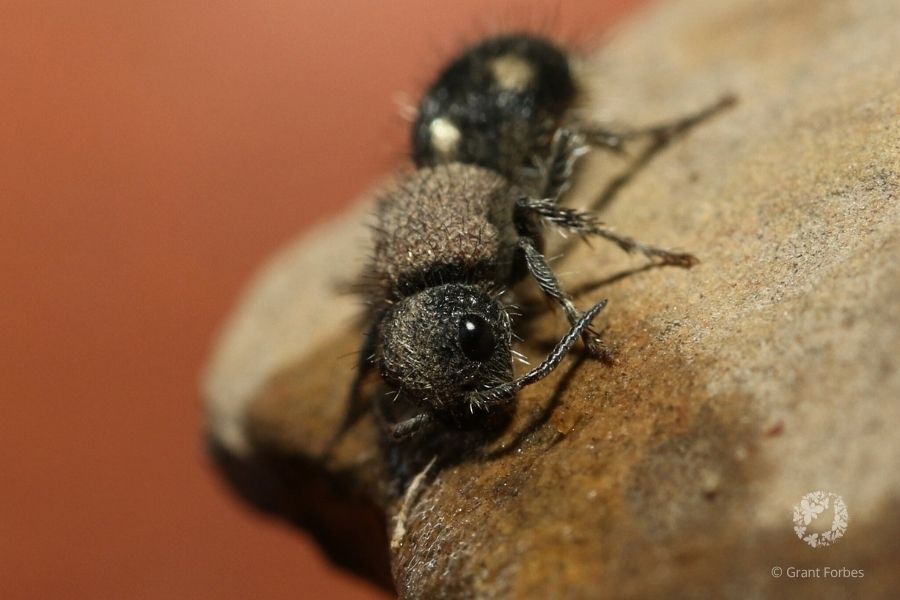
Above ground, insects and other invertebrates provide an important service to farmers: pest control. Ladybirds, spiders and other natural predators feed on agricultural pests such as aphids. But these beneficial species need food and habitat throughout the year if farmers want them around when pest numbers start increasing.
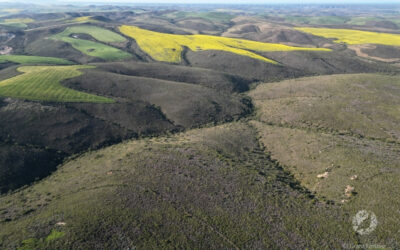
That’s one reason why natural vegetation such as renosterveld can be so valuable within an agricultural landscape. “Natural predators need a diverse diet,” Janion-Scheepers said. “That’s why having natural habitat such as renosterveld is so important.”
The principle becomes particularly important during the dry summer months, when there may be fewer agricultural pests available for predators to eat. If there is healthy habitat nearby, alternative food sources can help predator populations survive these leaner periods. When conditions change and crop pests return, those predators are already present in the landscape and ready to respond.
A big job for springtails
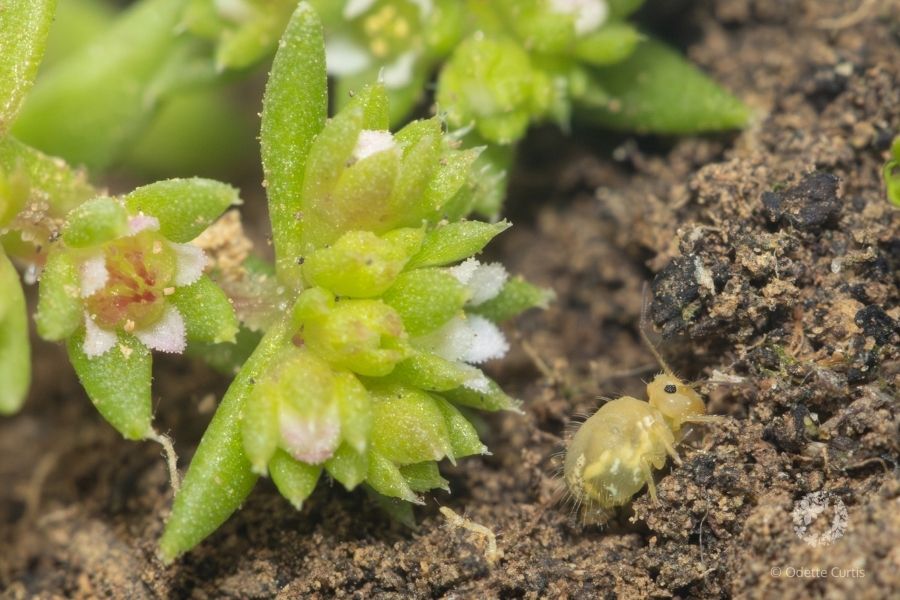
One of Janion-Scheepers’s favourite soil organisms is the springtail – a tiny creature generally only around two millimetres long. Despite often being grouped with insects, springtails are not actually insects. They have been around for hundreds of millions of years and have a remarkable appendage that allows them to spring away from danger – some even performing backflips as they escape predators.
They thrive in healthy leaf litter and soils rich in organic material. They are also an important part of the food web. “Everything eats them,” she said. Spiders, pseudoscorpions and other predators all feed on springtails, making these tiny creatures an important food source for many of the species farmers would like to have around.
Springtails can also tell us something about what is happening beneath our feet. “They’re good indicators of what’s going on in your soil,” she said. “They are a sign of healthy habitat and healthy veld.”
And despite the hundreds of springtail species occurring in South Africa, only one is considered an agricultural pest. There is still much to learn about them too, with many South African species yet to be scientifically described.

What happens when we disturb the system?
Soil biodiversity can be remarkably rich – but it is also vulnerable to the way land is managed. Erosion, frequent fires and soil disturbance can all affect the abundance and diversity of organisms living in and on the soil.
Tillage is one of the most obvious examples. “Tillage is like having a bulldozer go through your home,” Janion-Scheepers told farmers. Conventional tillage physically disrupts the habitat in which these organisms live. By comparison, reduced- or no-till systems can support greater numbers of organisms such as fungi, springtails and beneficial nematodes.
Chemical inputs also need careful consideration. Pesticides and herbicides can kill not only the target pest, but beneficial organisms too. She says this can sometimes have the opposite effect to the one intended.
“Broad-spectrum pesticides can actually trigger a resurgence of pests because you’ve also removed their natural predators.”
Springtails are particularly sensitive to some pesticides and herbicides. If their numbers fall, there can be knock-on effects through the food web, including for the predators that depend on them.
Creating habitat on the farm
The good news is that farmers can actively support this biodiversity. Reducing unnecessary soil disturbance is one part of the picture. Maintaining natural vegetation vegetative cover, using cover crops and introducing crop rotations can also create more varied habitat and food sources.
These practices can help support natural pest control, nutrient cycling and soil fertility – all functions that ultimately contribute to a more resilient farming operation. “Build healthy soils and the natural predators will come,” she said.
The same principle can be seen in natural ecosystems. In fynbos, for example, ants play an extraordinary role in moving and burying seeds. Around a third of fynbos plant species rely on indigenous ants for seed dispersal, showing just how closely connected plants and tiny invertebrates can be.
Farming for resilience
South Africa has exceptionally rich soil biodiversity, including endemic insects, earthworms, spiders and other organisms found nowhere else. Yet much of this diversity remains poorly understood. Scientists are still discovering how these underground communities work and respond to disturbance.
That knowledge is becoming increasingly important as farmers face hotter, drier and more unpredictable conditions. Healthy, biologically active soils are better placed to support functioning farming systems under pressure.
“Soil biodiversity is vital,” Janion-Scheepers said. “You’re actually farming with springtails and spiders. And while we’re understanding more and more about their role and how they respond to disturbance, we know that more biodiversity means more resilient soil.”
Lasting impacts on crops
The Overberg Renosterveld Trust’s Senior Conservation Manager Grant agreed that investigating more integrated regenerative farming practices may increase soil life and directly improve soil fertility, which will have a lasting effect on crops and livestock.
He said, “Soil is our medium for business in the Overberg. That’s why we should not only conserve it through activities such as minimum tillage, but actively understand and engage with it to improve it. That’s how we can build a more resilient landscape — one where agriculture and ecology thrive together, benefiting each other.”


Latest Renosterveld News
OVERBERG RENOSTERVELD TRUST NEWSNewsletter 40 | April 2026 by Grant ForbesFrom Grant: Conservation, farmers and trust It’s not often that I have the opportunity to pop into your inbox. But with our...

Why the ORT is part of the Overberg Conservation Alliance
That’s why we’re proud to be a founding member of the Overberg Conservation Alliance (OCA), a collaboration between four conservation organisations working across the Overberg.
Regenerative farming: Do you really know your farm?
Speaking at a Regenerative Agriculture Landowner’s Day organised by the Overberg Renosterveld Trust in partnership with WWF South Africa in June