OVERBERG RENOSTERVELD CONSERVATION TRUST NEWS
Newsletter 28 | Aug 2022
by Dr Odette Curtis-Scott.
Your overwhelming response to protect Black Harriers, and other ORCT news
It has been an eventful year for the ORCT – as it should be, given that this is a particularly special year for us! Not only are we celebrating a decade of being in existence and conserving Renosterveld, we are also celebrating some exciting achievements for 2022! Topping that list, we have just signed a new and very big easement – we’ve got the details below. We also launched an education programme for local farm children at our new development at our Haarwegskloof Renosterveld Reserve, launched our Bequest Programme for our Endowment fund, and we just concluded a very successful crowdfunder for Black Harriers! I hope you will enjoy the news that we have to share with you, as we feedback on what the first half of this important year has meant for Renosterveld conservation. Thank you, once again, for your continued support of the work we do…. Without our supporters and donors, and the farmers with whom we work, none of this would be possible.

Latest Renosterveld News
Less than 5% of renosterveld remains today. Much of what survives exists on privately owned farmland.
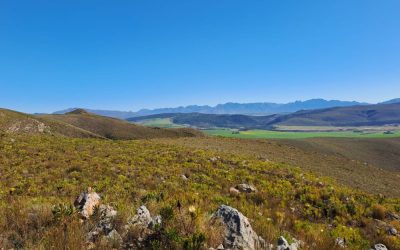
From one to 23: A protected renosterveld network emerges
Protected fragments of renosterveld across the Overberg are starting to form something far more meaningful than isolated patches.
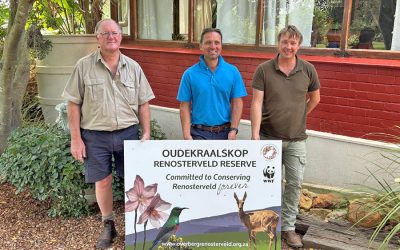
Size matters: A new large-scale renosterveld landscape protected
The newly signed conservation easement, Oudekraalskop, brings Endangered Eastern Rûens Shale Renosterveld and Rûens Silcrete Renosterveld under protection in