From one to 23: A protected renosterveld network emerges
Protected fragments of renosterveld across the Overberg are starting to form something far more meaningful than isolated patches. Instead, thanks to support from WWF South Africa, an ecological network is beginning to emerge across priority parts of the Overberg.
This work – and its timing – could not be more important. Renosterveld is one of the most threatened ecosystems in the world, and what remains today is scattered across a broad, privately owned landscape.


With the support of WWF South Africa, the Overberg Renosterveld Trust secured its first conservation easement in 2017. By the start of 2026, that number has grown to 23 easements, protecting more than 5 000 hectares of renosterveld, along with a further 2 000 hectares of limestone fynbos bordering De Hoop Nature Reserve. That included a new conservation easement called Oudekraalskop, which was signed recently.
Conservation easements are essentially servitudes registered on a property, ensuring that these landscapes are protected in perpetuity. By securing these key areas, the ORT’s Conservation Easement Programme is helping to protect habitat for a range of threatened bird species that depend on intact renosterveld and fynbos systems. These include the Endangered Black Harrier, Vulnerable Denham’s Bustard and Southern Black Korhaan, the globally Endangered Secretarybird, as well as several endemic gamebirds and larks unique to this region.


Consistent hands-on support
While long-term protection is the goal, conservation also depends on consistent, practical management. Over the past six months, 539 hectares of invasive alien vegetation were cleared of emerging invasive alien plants as follow-up clearing took place across seven easement sites. This maintenance prevents previous clearing gains from being lost.
Three fencing projects were also completed at three easements sites – where the ORT continues to support renosterveld management. These upgrades help manage grazing pressure and protect areas under restoration. Wherever possible, existing fencing material in good condition was reused, a practical approach that keeps costs down while still achieving effective site management.
An ecological burn also took place in 2026 at a conservation easement outside the town of Riviersonderend, another along the Stormsvlei road near Kykoedie. Firebreaks were cleared using a combination of machinery and manual work, laying the groundwork for the carefully managed burn that will support the long-term health of the veld, which hadn’t burnt in more than 20 years.


It’s all about relationships
A particularly important development during this period has been the appointment of a new Extension Officer, Eugéne Hahndiek. Having now visited most easement sites, Eugéne is building the relationships with landowners that are essential for long-term conservation success.
These connections form the basis of the ORT’s ongoing conservation work, from management planning and ecological restoration to future easement opportunities.
According to Grant Forbes, the ORT’s Senior Conservation Manager, “Conservation on privately owned land depends on trust, practical support and a regular presence in the landscape – work that often happens quietly, but makes lasting protection possible.”

A caring partnership
He adds, “Securing easements is only the beginning. What really matters is the ongoing relationship with landowners and the management of these sites after signing. WWF South Africa’s support allows us to do both, to grow the network while also caring for the land already under protection, improving the landscape both for nature and the landowner.”

The Overberg Renosterveld Trust is grateful to WWF South Africa for their continued support. Through the Elizabeth Harding Bequest and the Leslie Hill Succulent Karoo Trust, this partnership is helping to secure critical habitat by working with keen landowners in a landscape where extinction remains likely without urgent support and intervention.


Why the ORT is part of the Overberg Conservation Alliance
That’s why we’re proud to be a founding member of the Overberg Conservation Alliance (OCA), a collaboration between four conservation organisations working across the Overberg.
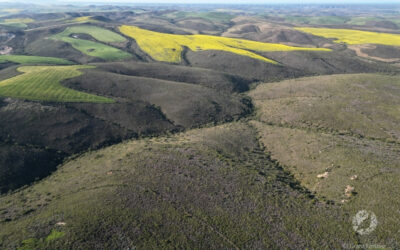
Regenerative farming: Do you really know your farm?
Speaking at a Regenerative Agriculture Landowner’s Day organised by the Overberg Renosterveld Trust in partnership with WWF South Africa in June
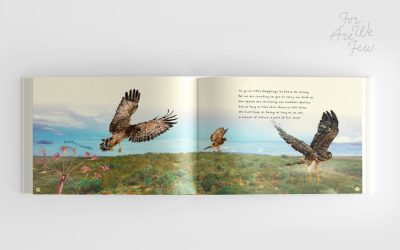
A book for all ages, to bring out the child in you
A new, richly illustrated children’s book is hoping to inspire a lifelong love of nature by telling the story of one of South Africa’s most threatened birds – the Black Harrier, BirdLife South Africa’s Bird of the Year for 2026.