
How frequently should renosterveld in the Overberg burn?
A decade-long study has sought to answer this question. The findings are essential to feed into the conservation efforts of one of the world’s most threatened habitats.
The research was undertaken by Dr Odette Curtis-Scott, CEO of the ORT, as part of her PhD (2013) and Prof William Bond (as PhD supervisor), with Dr Samson Chimphango contributing to some statistical analyses later in the study. All authors are associated with the University of Cape Town. Titled “Diversity of fire responses in Renosterveld, the forgotten relative of fynbos, in southernmost Africa”, it has just been published in the Journal of Arid Environments.
While the impact of fire on fynbos has been well documented, very little is known about the resilience of renosterveld to fire. Odette says, “As a result, land managers have not always had the best science at hand to know how to use fire as a management tool.” There were questions around whether any fire-sensitive renosterveld species could be eliminated by fire. Given the results of the study, Odette and colleagues discussed the implication for determining appropriate fire-return intervals which might preserve or eliminate characteristic growth forms.
In order to answer these questions, this study was started in the wheat-belt of the Overberg in 2007. Six sites were set aside for experimental burns, with a suite of 10m x 10m plots – consisting of one plot on a burn site and one plot in an unburnt site: these paired plots were replicated on north- and south-facing sites. Data were then collected on all species from 1m x 1m quadrants placed within the 10m2 plots at the six sites.
Over the course of 10 years, starting in 2007 before the burn (with the burn taking place in autumn 2008) up to 2017, data were collected on burnt and unburnt plots, at various intervals.

What the research found…
While some authors in the past have advocated frequent burning of renosterveld of three to five years, this research suggested fire-return intervals of 10 to 20 years, or even longer, may be suitable to maintain the diversity of plant and animal species in the fragments of renosterveld that remain in the Overberg.
With frequencies of less than five to six years, many legumes would be eliminated from the system. Legumes play an important role as nitrogen fixers and are a substantial component of renosterveld diversity, so eliminating them should be avoided.
Odette writes, “We recommend that until we understand just how dependent these systems are on fire per se, as opposed to other disturbance mechanisms, and how variable responses to fire are under different rainfall regimes, that management decisions err on the side of caution and manage for longer intervals between burns.”
The authors also emphasise that burning frequencies in fynbos ecosystems are generally considered with a strong bias towards the plants, because this field of research is dominated by botanists. However, when considering burning regimes, particularly in habitats that have been reduced to mere islands, it is important to understand the impacts (negative and positive) on all life, thus the influence of veld age on various animal communities also requires further study.

Renosterveld arguably contains the highest species richness of all Mediterranean shrublands
We knew this, to some extent, from previous studies by legendary ecologists such as Prof Richard Cowling: Renosterveld is super species-rich. And this study confirms it: at the 1m² scale, renosterveld of varying ages in the Overberg matched and even beat some of the richest Mediterranean shrublands in the world. And at the 100m² scale, Overberg renosterveld had higher species diversity than even mountain and coastal fynbos. This places renosterveld amongst the top, if not making it THE top, contender for highest species richness among Mediterranean shrublands globally.
The authors write, “The high species turnover across sites and aspects is important for conservation planning. It indicates that a geographic spread of fragments with diverse aspects must be included in the protected area network, to ensure that conservation areas will be representative of the entire renosterveld system.”
Odette adds that given the loss of renosterveld, with only 5% of the original extent still remaining today, “every single piece of renosterveld is essentially viewed as being worthy of conservation attention, irrespective of patch size.”

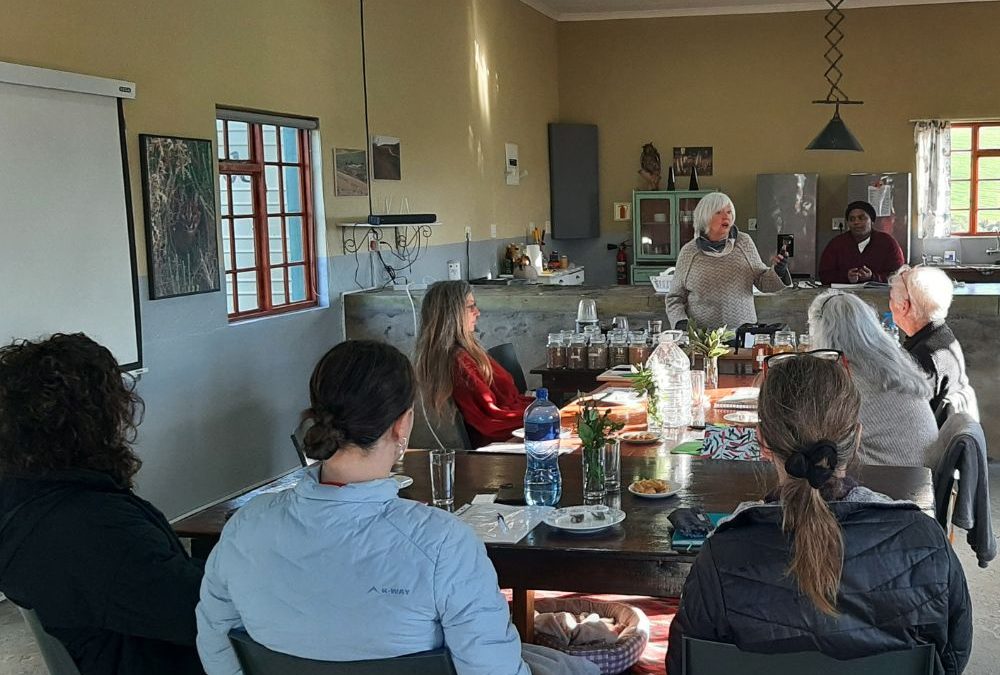
A weekend of fire and spice: Our first retreat at Haarwegskloof
The first Wild & Wise Retreat at Haarwegskloof Renosterveld Reserve unfolded under a soft winter sun during a June weekend.
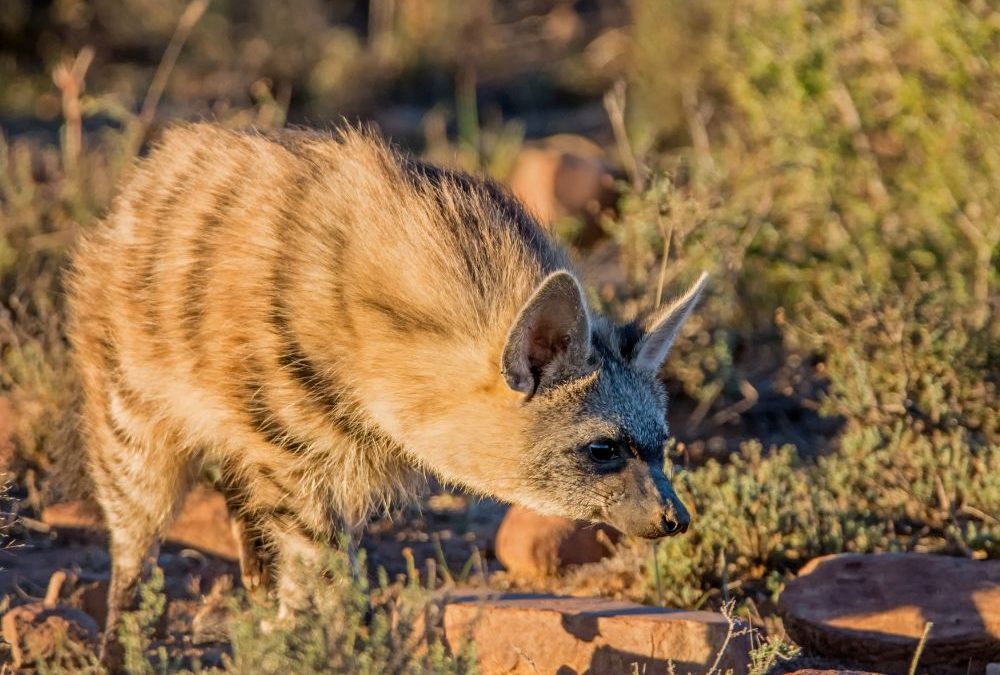
A rare look into the nocturnal life of the aardwolf
Aardwolves have long been resident in the Overberg region, including at the Haarwegskloof Renosterveld Reserve. Recently, we were fortunate to gain some insight into their secretive behaviour.
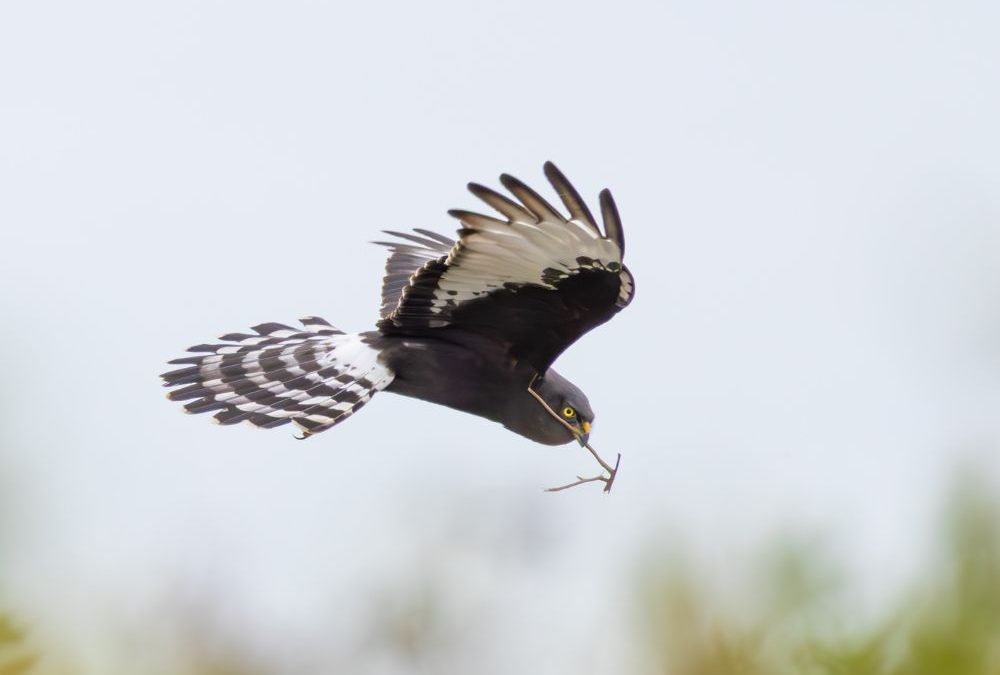
Critical renosterveld site acquired by the ORT – a breeding hotspot for Endangered Black Harriers
In the heart of South Africa’s Overberg, a stretch of Endangered Eastern Rûens Shale Renosterveld is now under conservation protection.
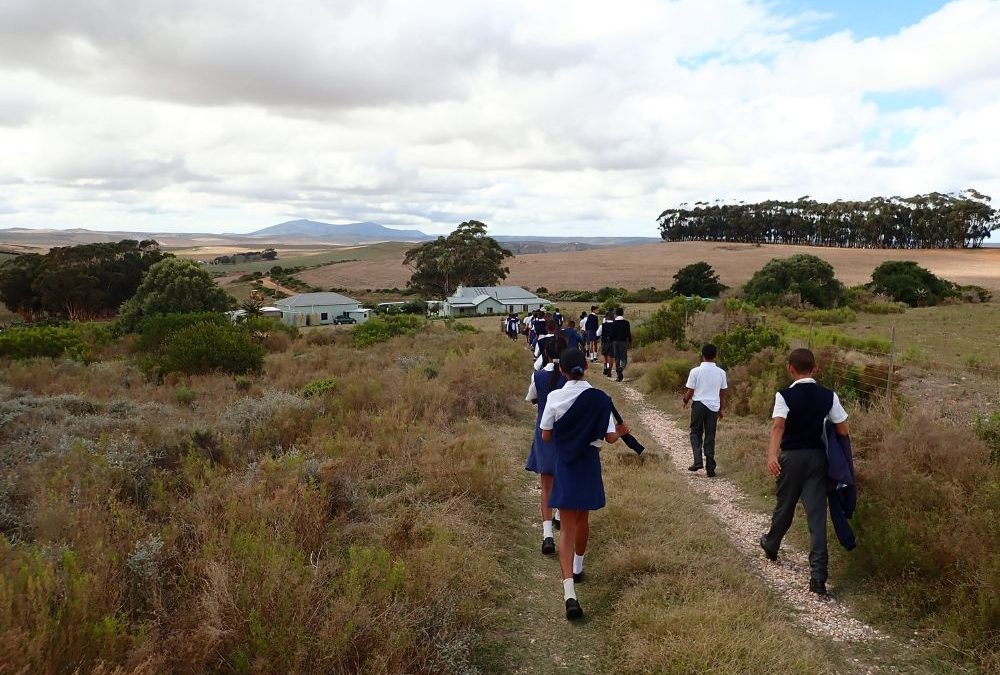
Nature comes alive for farm kids on Haarwegskloof
Our Environmental Education programme, called the Veld School, offers hands-on learning experiences that connect children to the land. It’s held on our Haarwegskloof Renosterveld Reserve.
Latest Renosterveld News

The fynbos fish of the Kars River officially recognised at last
It began with a surprise discovery in the murky waters of the Kars River, in the heart of the Overberg renosterveld. Seven years later, that unexpected find has officially been named and described: the Agulhas redfin (𝘗𝘴𝘦𝘶𝘥𝘰𝘣𝘢𝘳𝘣𝘶𝘴 𝘢𝘨𝘶𝘭𝘩𝘢𝘴).

A bright new renosterveld daisy for the Overberg
A new species has just been added to the Cape Floral Kingdom, and more specifically to renosterveld. And it’s one that can only be found in the Overberg.

Seeing nature through new eyes
You don’t need expensive camera equipment to move from an average photographer to a skilled one.