An invisible crisis in renosterveld: the tiny relationships holding everything together
By Odette Curtis-Scott
It is well known that we have lost about 95% of our lowland renosterveld habitats and that what remains are generally small, isolated relics of an incredibly diverse ecosystem that was once teeming with large mammals, most notably several megaherbivores (including a diversity of antelope, Black Rhino, Zebra, etc.). Together with fire, these animals drove the structure of the renosterveld ecosystem and the constantly changing ratios of shrubs to grasses.
Less than 300 years ago, the larger mammals were eradicated from the landscape, while the large-scale transformation of the renosterveld ecosystems for agricultural lands was a more recent occurrence, most of which took place over the last 50-100 years.
Despite the removal of the habitat shapers and the obliteration of so many hectares, the plant diversity appears, at least superficially on the remaining remnants, to have remained relatively intact. For now.
Renosterveld’s recent ‘shock’
In evolutionary terms, the ‘shock’ of what the renosterveld ecosystems experienced was one that only took place ‘recently’. For species that have evolved to deal with high levels of disturbance over tens of thousands of years, several decades is not very long. This is particularly true for things like geophytic plants which can survive underground for many years, reappearing annually to flower and put out their leaves, sometimes only when conditions are favourable (e.g. fire / grazing / sufficient rainfall).
Thus, we might be fooled into thinking that despite the immense loss imposed on this ecosystem, all is well from a botanical perspective, with recent studies boasting unmatched species diversity in the remaining 5% of renosterveld, compared with any other Mediterranean ecosystem on Earth.
The illusion of survival
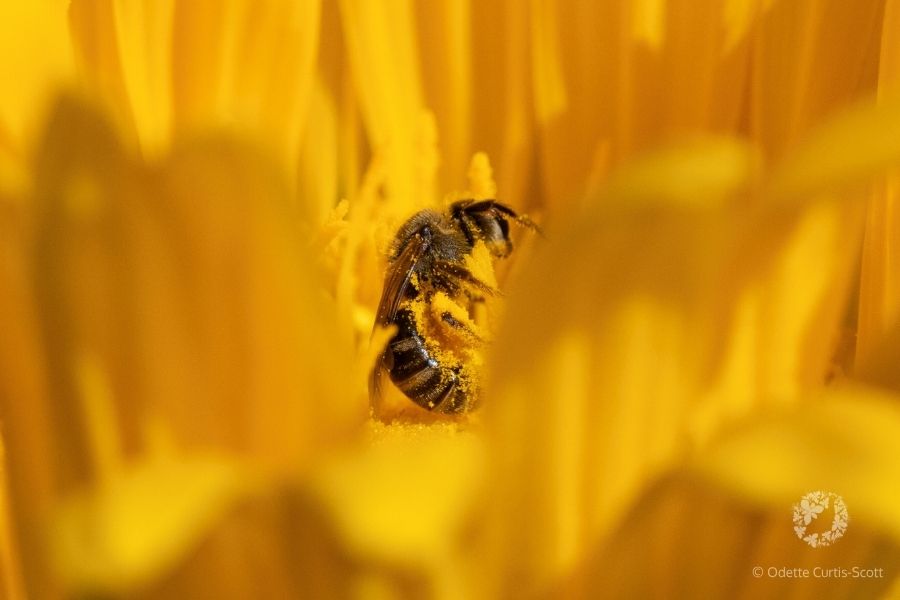
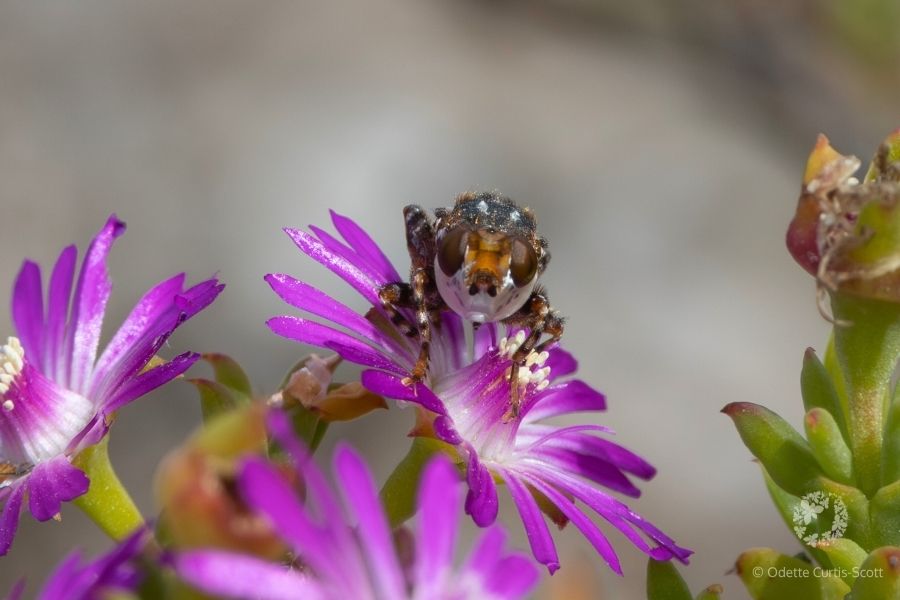
However, we are only observing a tiny window in time and extinction can take longer, due to lags in responses. For example, a certain species might still be growing on a patch, but its pollinator has long since disappeared and therefore, the individuals remaining are no longer ‘productive’ (producing babies), and unless the plant can self-pollinate, it will inevitably go extinct. This delayed response is known by scientists as a habitat ‘paying its extinction debt’. A pretty depressing concept; a theory that needs to be tested for renosterveld.
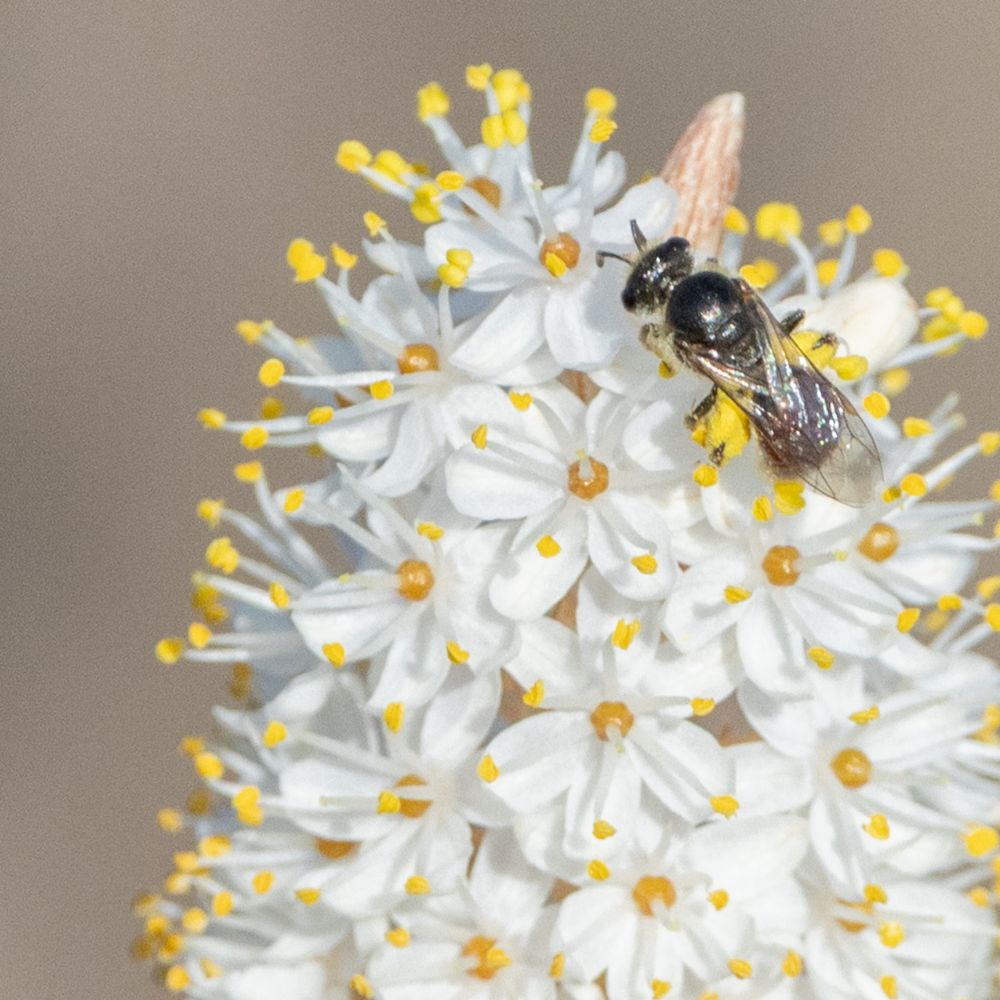
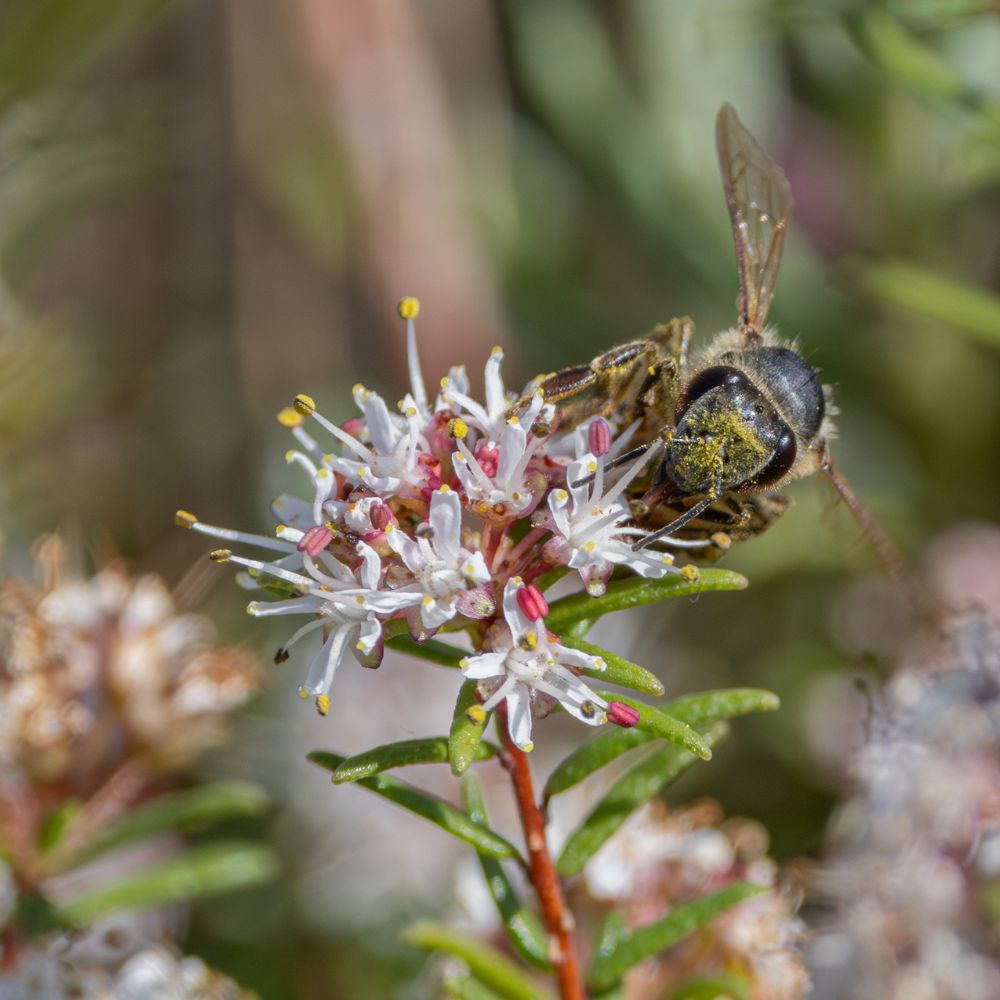
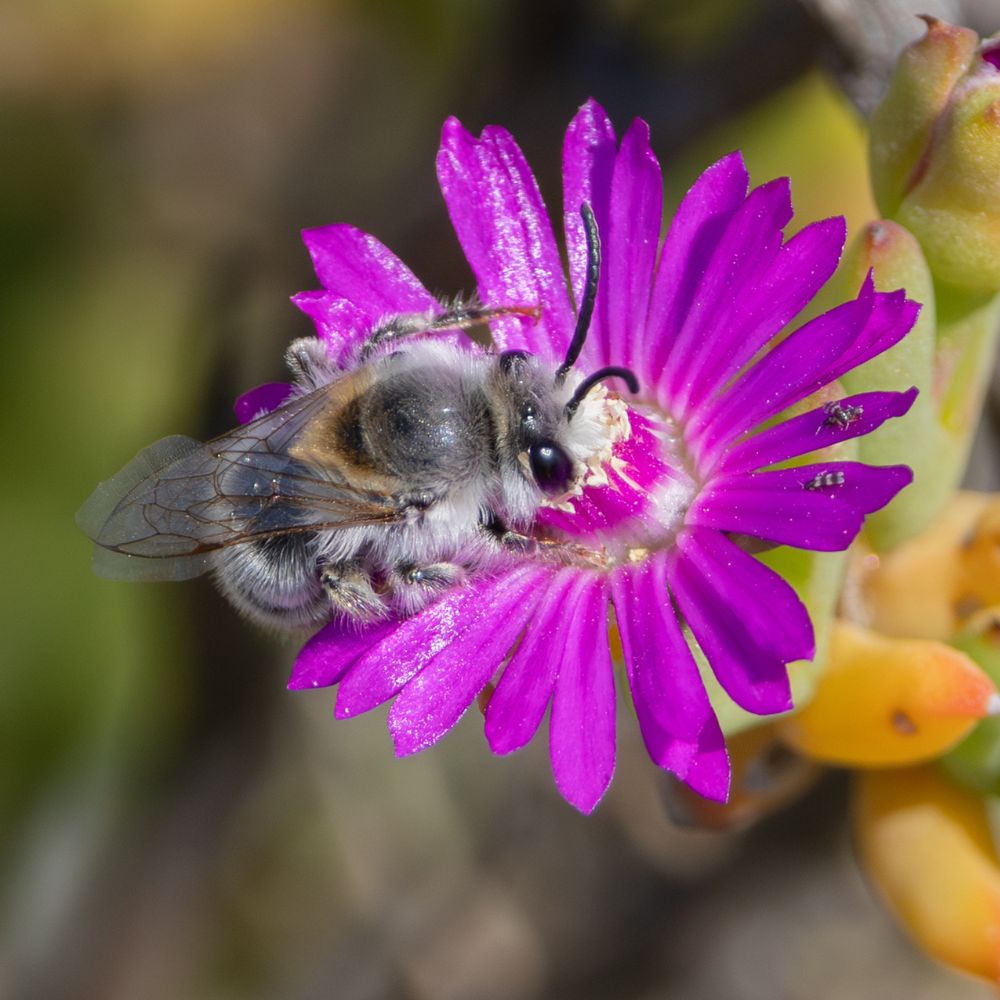
This kind of theory-testing requires a detailed understanding of the complex web of life that supports renosterveld diversity – something which in itself, we know so little about. In lieu of ten fully funded PhD projects (still a goal for the ORT!) that set out to identify the relationships between the plants and their pollinators, as well as the various life-stages of the pollinators and the plants or hosts on which they depend through these life stages, we decided to at least start attempting to observe, record and wherever possible, photograph species’ interactions: The ultimate aim being to gradually build a database of plant-pollinator interactions, that could form the basis of future studies that examine how tenuous these relationships are, and if there is anything at all that can be done to mitigate these.
Not all visitors are pollinators
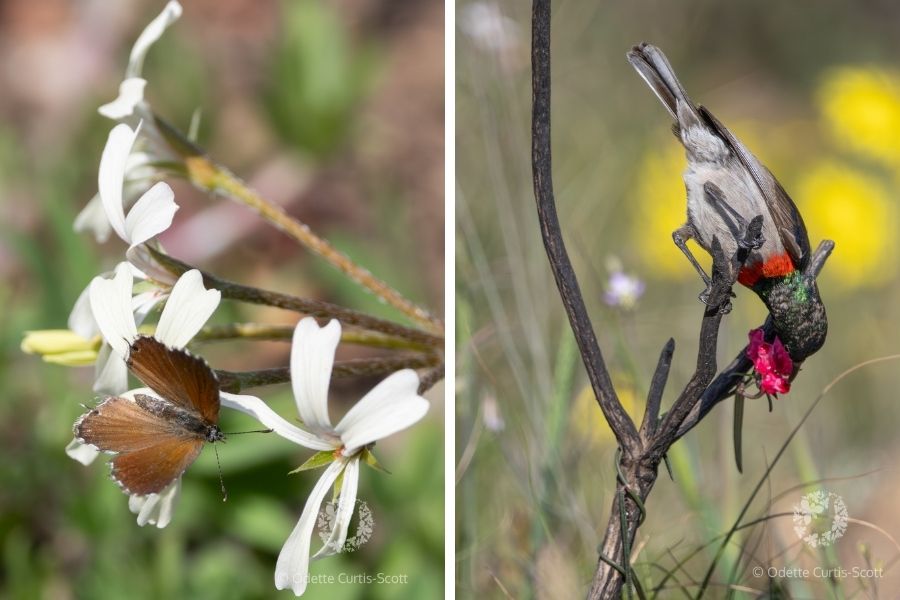
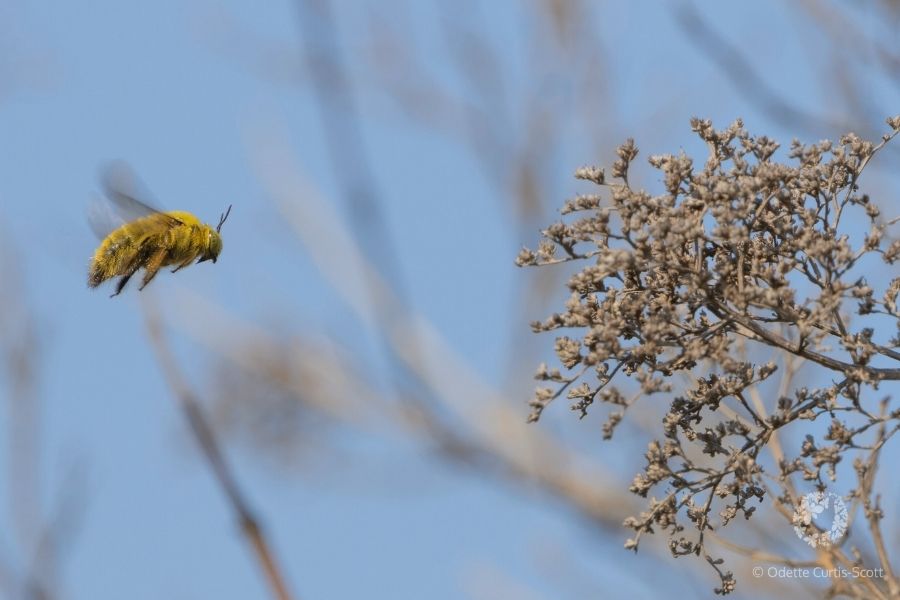
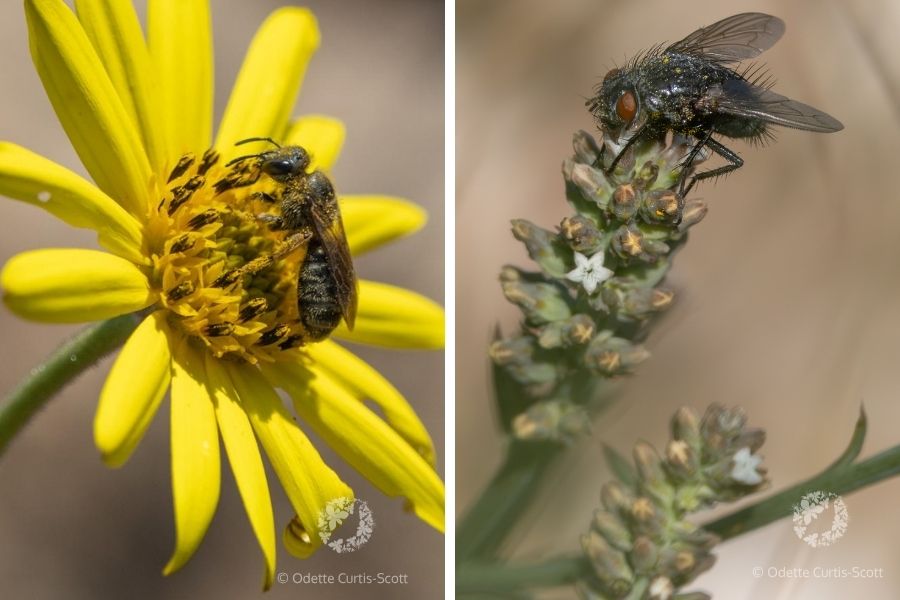
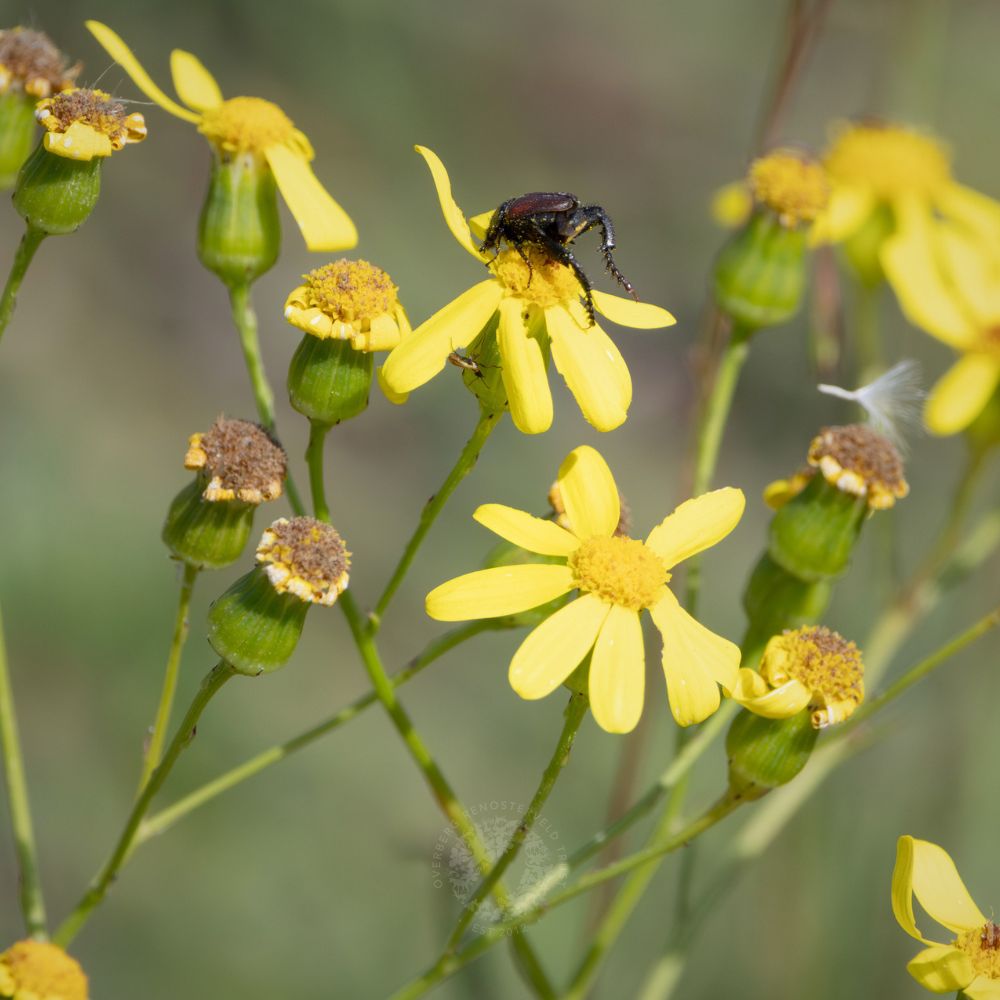
Of course, the issues are complex: some insects only visit or ‘steal’ nectar without contributing to the pollination process, thus we cannot assume that an insect observed on a flower means that the plant is being pollinated successfully. One needs to look at fruit- and seed-setting post flowering and also be able to control for those that are able to self-pollinate.
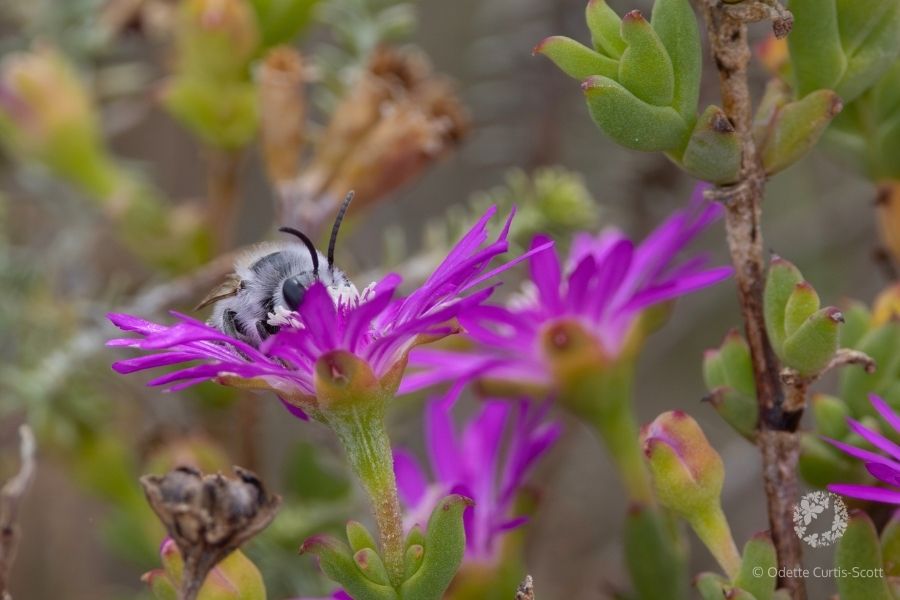
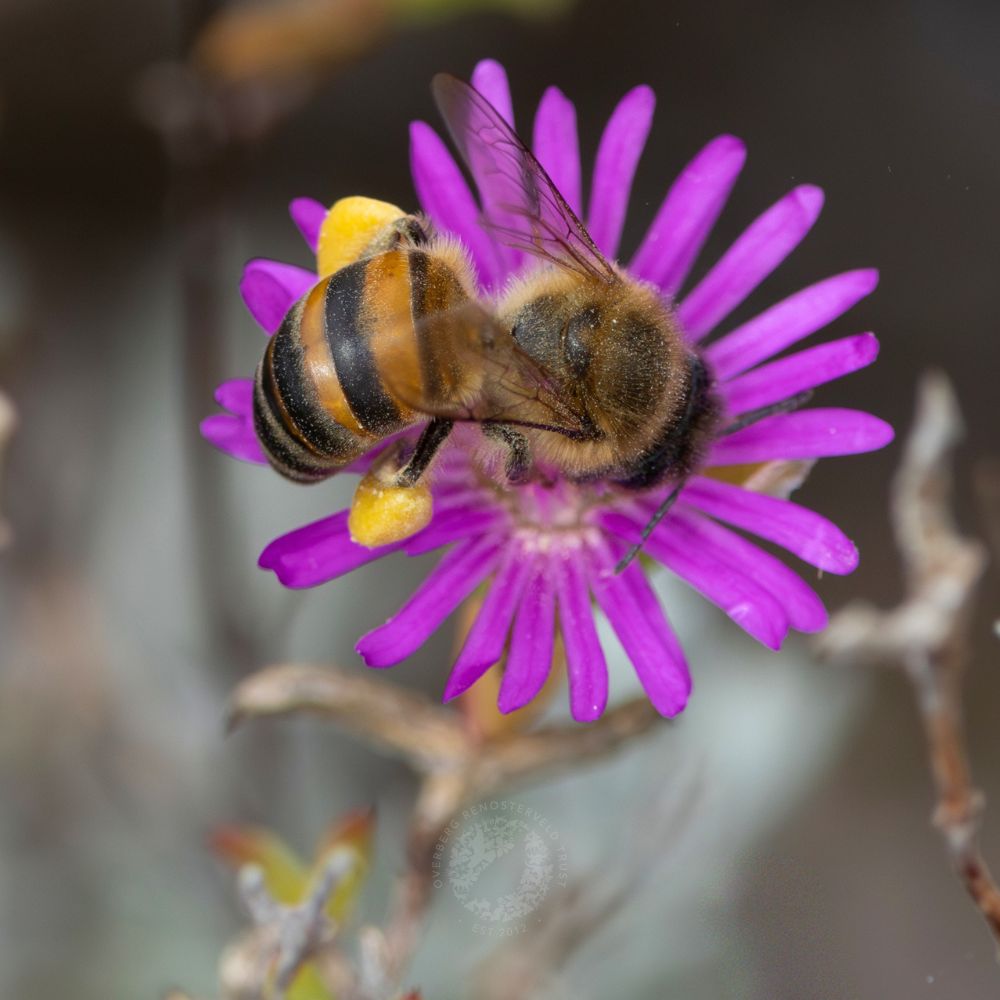
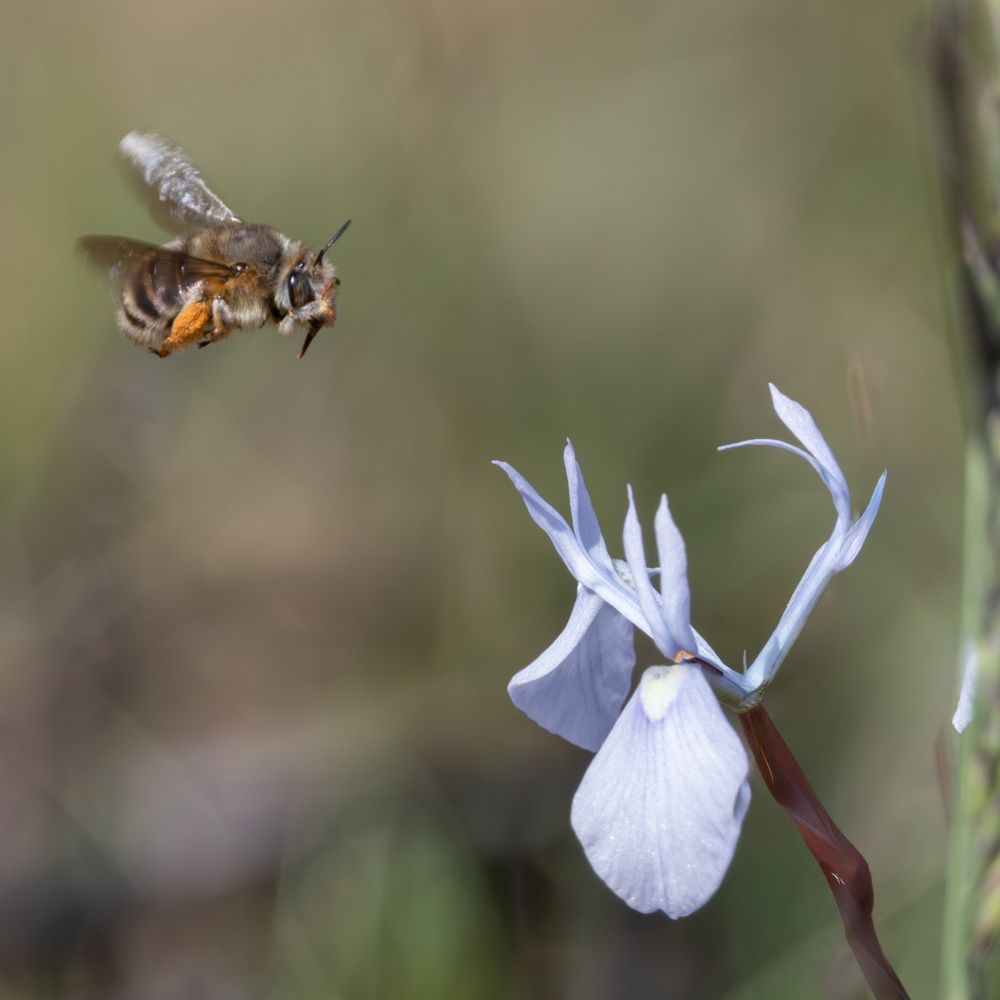
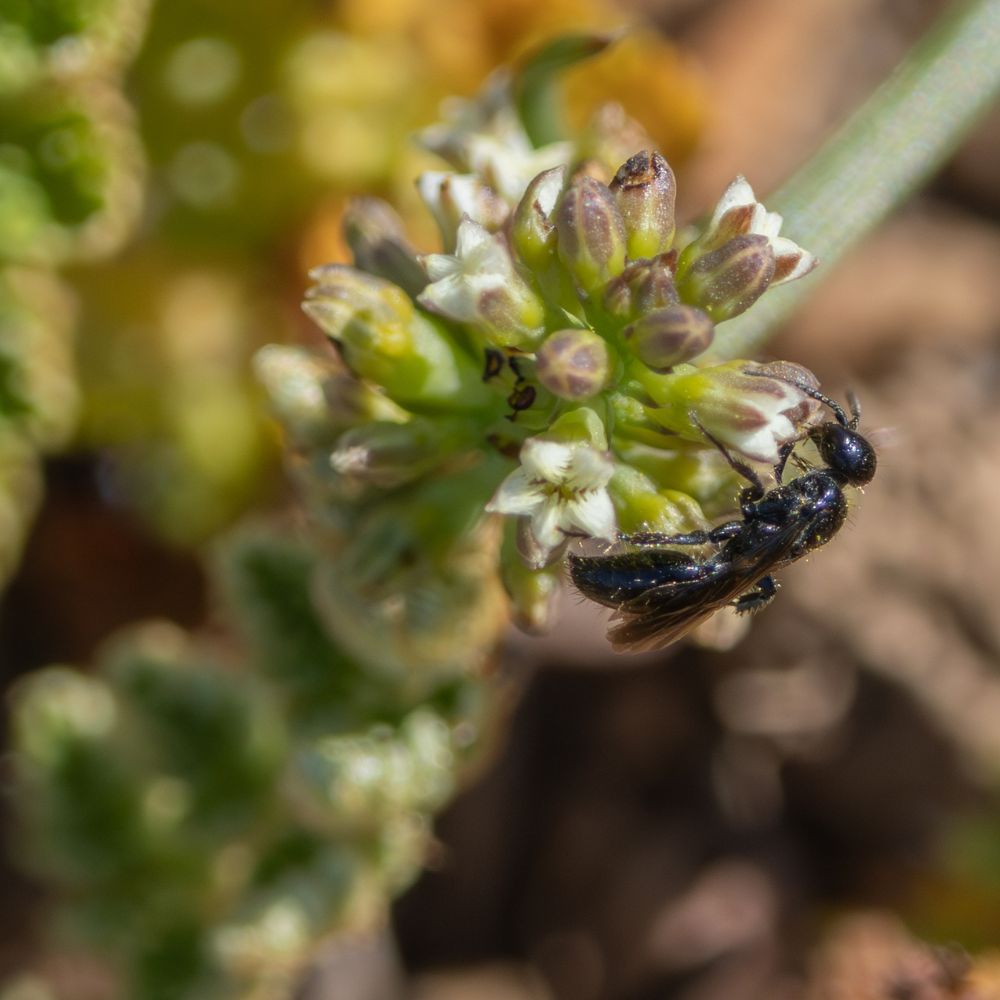
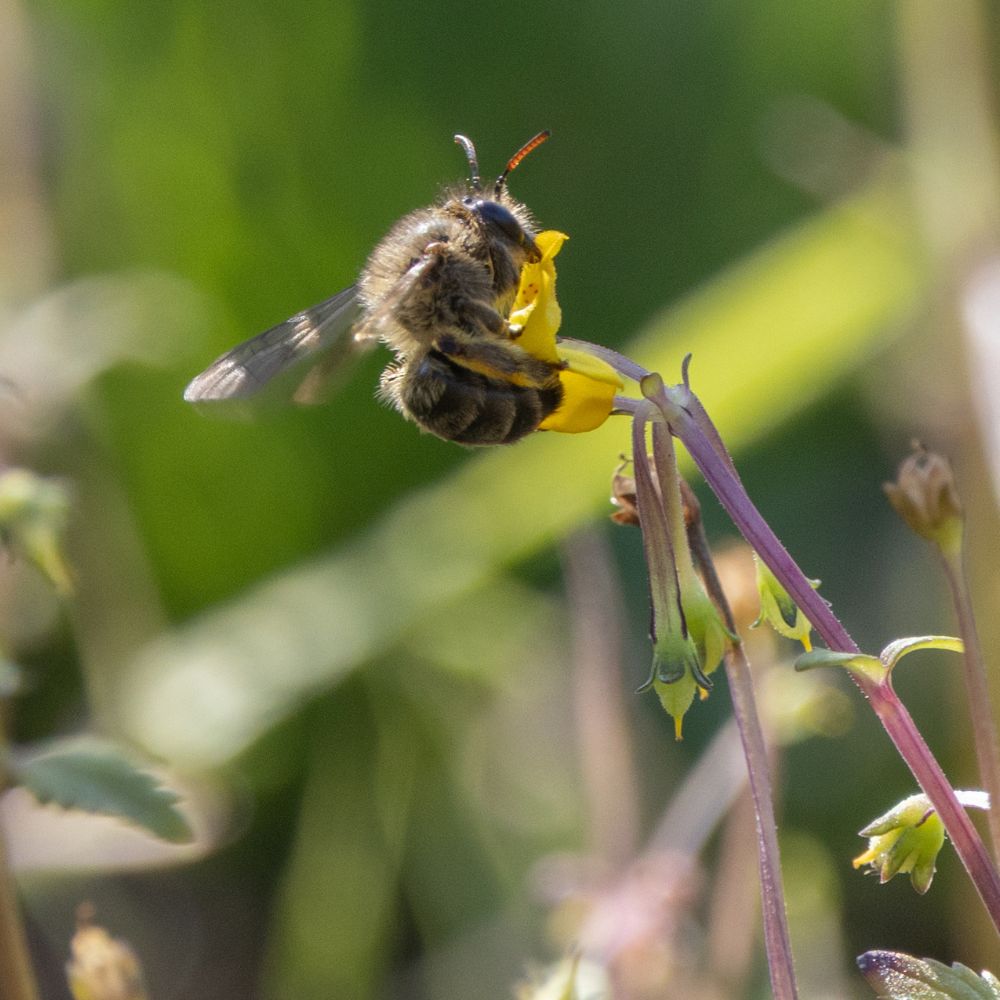
And then there are a suite of other complications, given the sometimes lengthy and complex life cycles of some invertebrates. Some are predatory or parasitic in their larval stages, but feed on nectar as adults (e.g. several wasps, Small-headed Flies), while others are herbivorous as larvae (caterpillars) but nectivorous as adults, and others are predatory through all life stages (e.g. lacewings & antlions). As larvae, solitary bees are entirely reliant on nectar and pollen, fed to them by their provisioning parents. Some are super-specialised, like the oil-collecting Rediviva species that specifically target specialised oil-producing annuals such as Hemimeris and Diascia from which they collect, with their specially-adapted, long forelegs, oil and pollen which they mix together and feed to their larvae.
When one species disappears, others follow
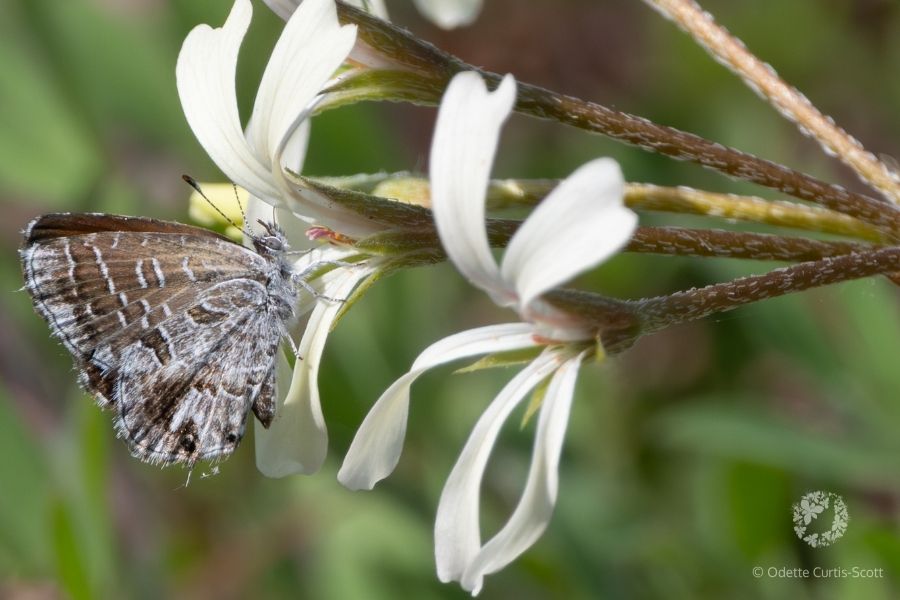
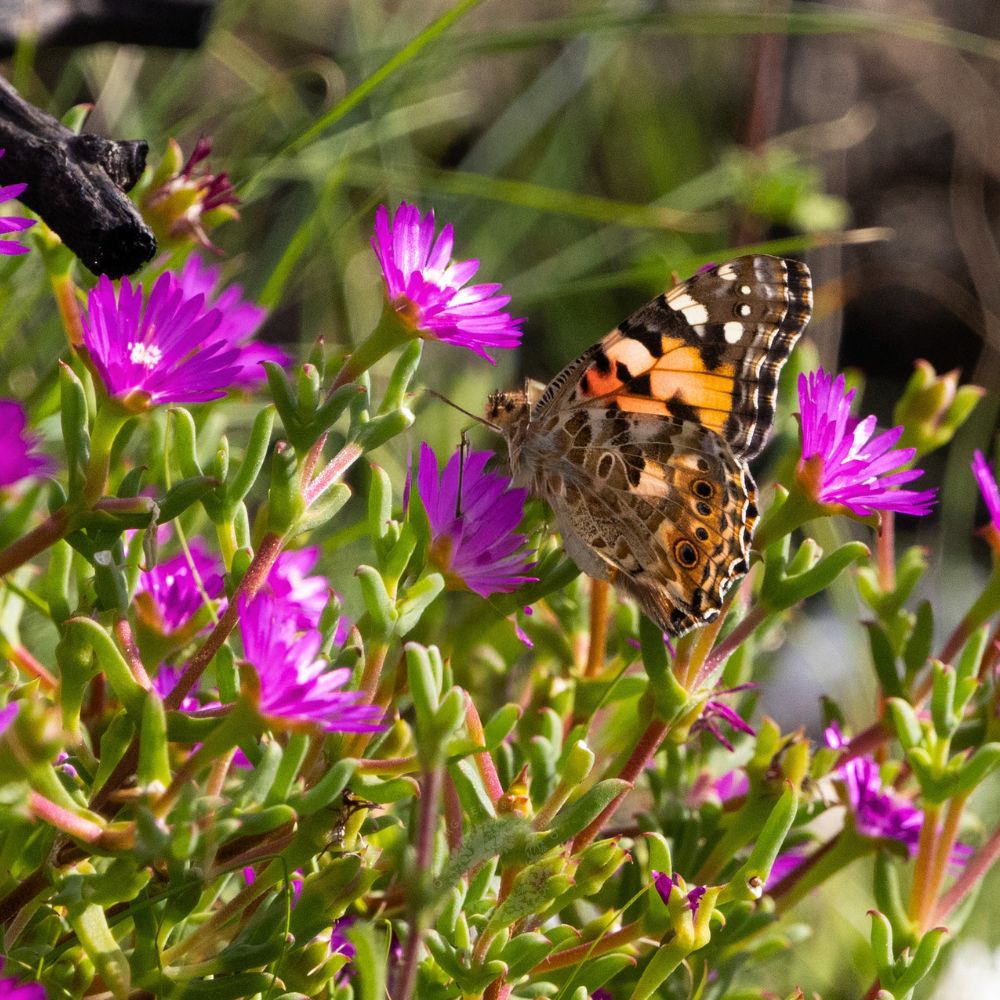
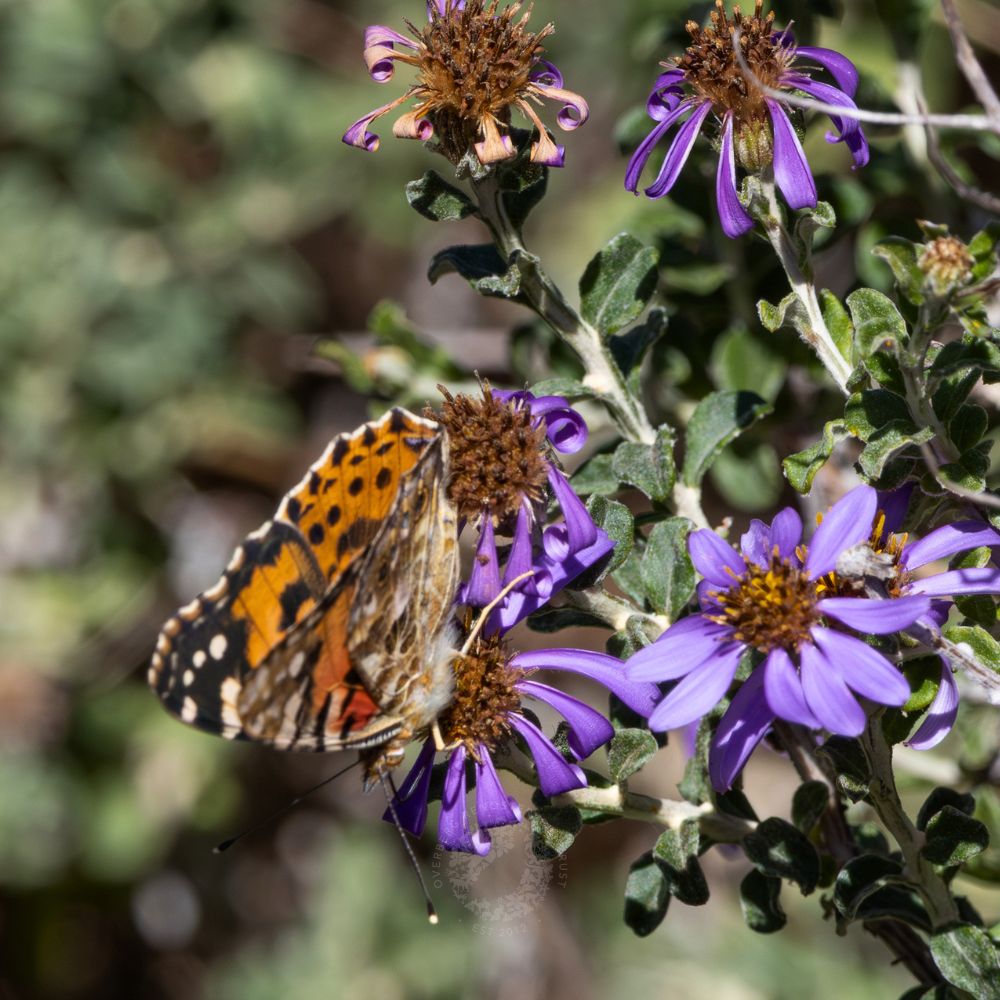
Many insects that feed on vegetation as larvae such as butterflies, moths and several flies, are host-specific, meaning they only feed on a single plant species. Without this plant, they are unable to grow and develop into adults, which are often crucial pollinators; in some cases, the single pollinator of a particular plant (e.g. a Tsitana butterfly is the only known pollinator of the Critically Endangered Hesperantha kiaratayloriae).
Other species like the stunningly beautiful, rarely-seen jewel beetles take up to 30 years to complete their entire life cycle, with a very prolonged larval stage, ending with the emergence of some of the most gorgeous, but short-lived, beetles. A wildfire at the ‘wrong’ time of year, or a fire that ravages an entire renosterveld island, or constant overgrazing by livestock all have the potential to wipe out a local population of these critical creatures by destroying all larvae or pupae.
The intricate network of connections and relationships about which we know so little, is a reminder of the fragility and vulnerability of our incredible natural ecosystems. Knowing that a single event or a localised extinction can have a devastating, cascading impact on so many others, is another reminder on how critical it is to keep these refuges safe from further degradation.
Documenting during a dry season
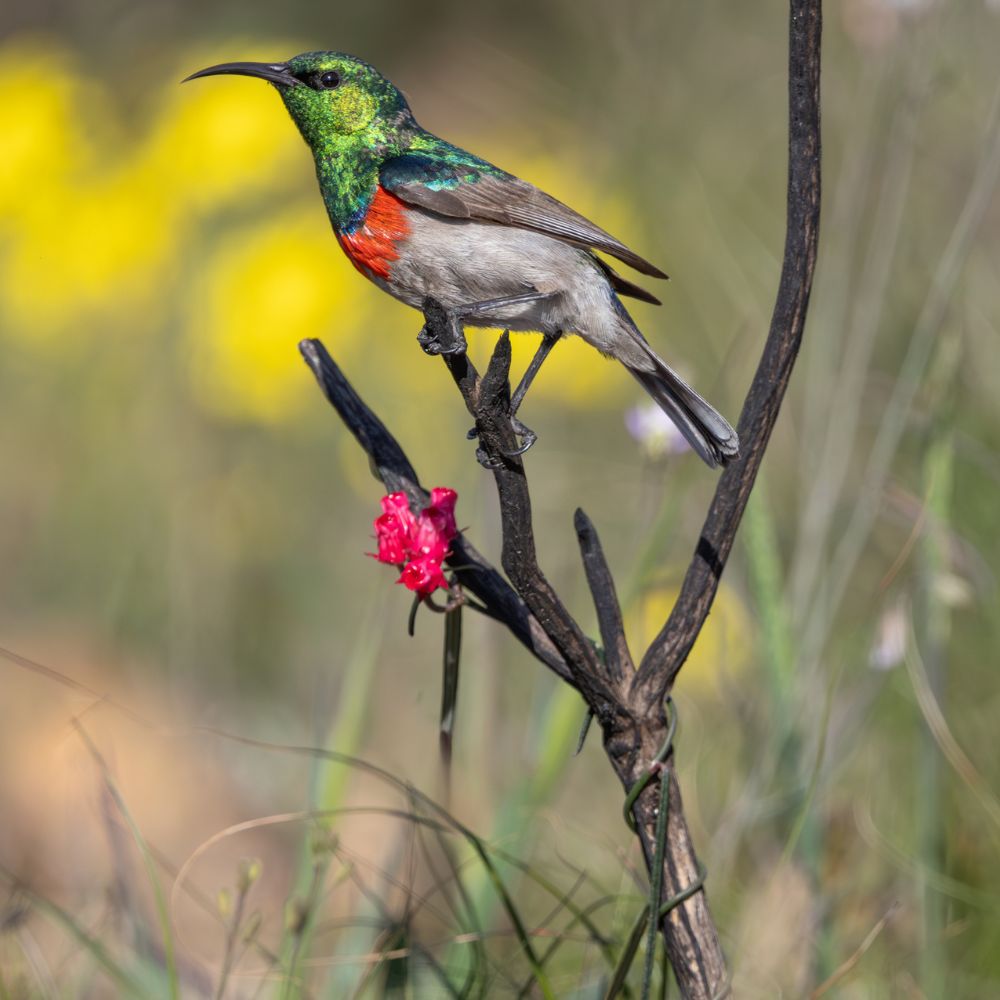
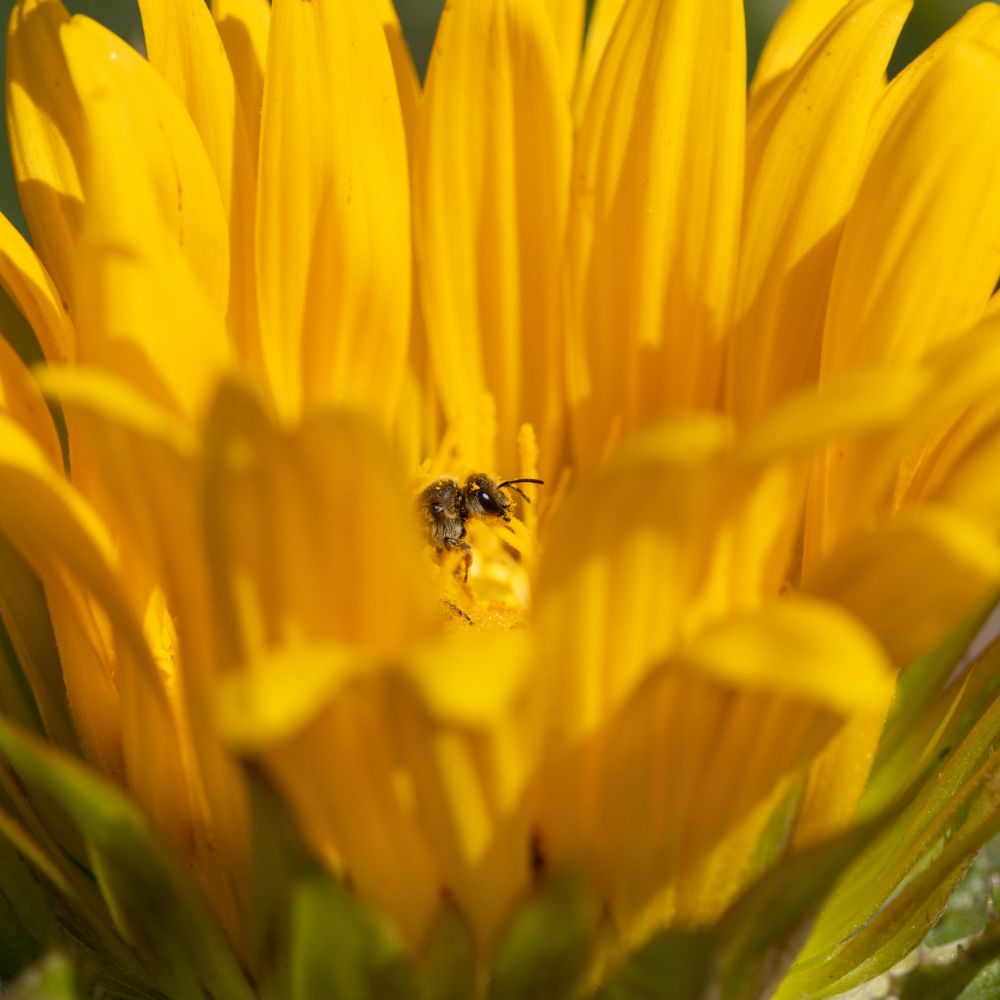
The photographs in this blog were taken through a very dry 2025 spring. We hope 2026 will be blessed with a wetter winter and therefore a longer, more productive spring, allowing us to document a lot more of these observations. Renosterveld never disappoints and the diversity of solitary bees, flies and other overlooked critters, continues to entice and leave us awestruck.
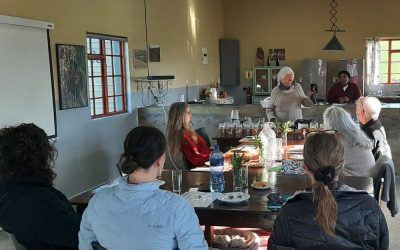
A weekend of fire and spice: Our first retreat at Haarwegskloof
The first Wild & Wise Retreat at Haarwegskloof Renosterveld Reserve unfolded under a soft winter sun during a June weekend.
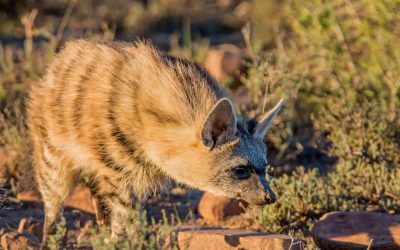
A rare look into the nocturnal life of the aardwolf
Aardwolves have long been resident in the Overberg region, including at the Haarwegskloof Renosterveld Reserve. Recently, we were fortunate to gain some insight into their secretive behaviour.
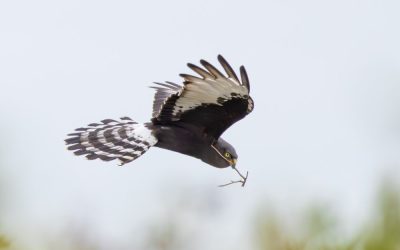
Critical renosterveld site acquired by the ORT – a breeding hotspot for Endangered Black Harriers
In the heart of South Africa’s Overberg, a stretch of Endangered Eastern Rûens Shale Renosterveld is now under conservation protection.
Latest Renosterveld News
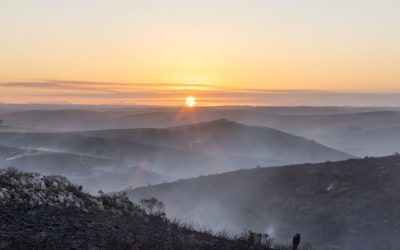
A fire photoblog: How Haarwegskloof’s renosterveld responds to burning
Renosterveld, like fynbos, is a fire-adapted ecosystem – but one with its own distinct rhythms and responses.

Calling conservation practitioners: Addressing eco-anxiety together
It is said that ‘It is both a blessing and a curse to feel so deeply’. As an ecologist, on the ‘coalface’, I resonate strongly with this well-known quote.
Latest Renosterveld News
Some good and bad renosterveld news this Earth Day. Not many know about a major new windfarm that has been approved in the Overberg. It’s to be situated along the N2, close to Swellendam. And it will be South Africa’s largest, privately-owned windfarm.