Reversing biodiversity loss through restoration
By Grant Forbes
While big goals are set on international platforms to prevent further loss of biodiversity, organisations like the ORCT are working tirelessly to halt and reverse the loss of biodiversity at ground level with landowners and stakeholders.
With the support of WWF South Africa and other partners, the ORCT has secured a number of conservation easements and together with landowners, we are changing the trajectory of these sites, ensuring that these corridors and remnants continue to function and become more resilient. The resilience of these areas is very important in the face of global change and the consistent anthropogenic impacts from surrounding land use.
The ORCT has been implementing site management with landowners since 2015. This includes restoring degraded areas along watercourses. Watercourses are well-known as biodiversity corridors in fragmented landscapes.
The story of the Ouka River
One such story revolves around the lovely Ouka River, west of Swellendam in the Overberg. Restoration started on the site in 2017 and was ramped up since 2020 to test and determine viable methods to restore degraded areas. A number of novel low-tech techniques are being piloted, and we are seeing some good preliminary results.

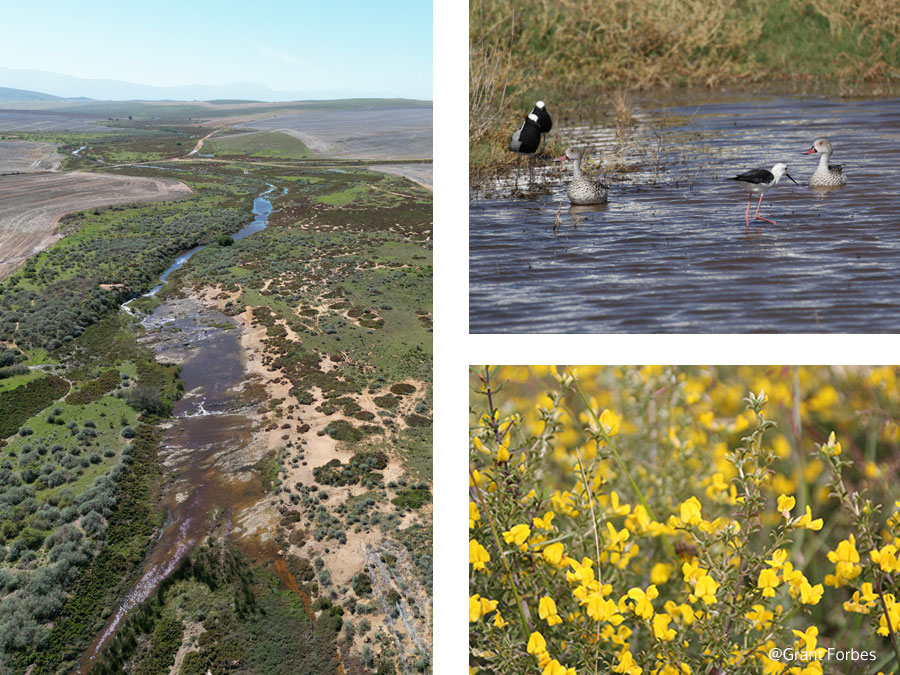
Based on restoration in other similar habitats, we have used restoration hollows (similar to swales), brush packing and testing different soil covers with varying results. The restoration hollows, used widely in the Karoo, allow the soil to rehydrate, capturing up to 50 L of runoff water per rainfall event. These hollows are then brush-packed with local material which traps seeds, provides cover for seedlings to germinate but also helps with the retention of moisture. Hollows are seeded with a mix of local pioneer grasses and shrubs.
Restoration in a harsh environment
The Rûens of the Overberg receives much less rain than the adjacent mountains, making it a brittle and challenging environment in which to do restoration. But together with the landowners, we are excited to see that these hollows are now providing a suitable microclimate where plants can establish, preventing further habitat degradation and restoring habitat continuity, under relatively harsh conditions.
We have just completed work on the second site this year and are now looking forward to spring and summer to see how our hollows have fared.
This is one of the few ways in which the ORCT supports landowners to leave a legacy, helping reach conservation targets and addressing management of one of the most threatened habitat types in South Africa and the world.
Latest Renosterveld News
Renosterveld doesn’t follow a calendar. This year our renosterveld landscapes in the Overberg seemed convinced that spring had already arrived early in August.

Supporting landowners for a better farm: What we do
When the Overberg Renosterveld Conservation Trust signs an easement with landowners in the Overberg, it’s only the start of the journey – and the work.
World’s first renosterveld app launched – your ideal outdoor partner
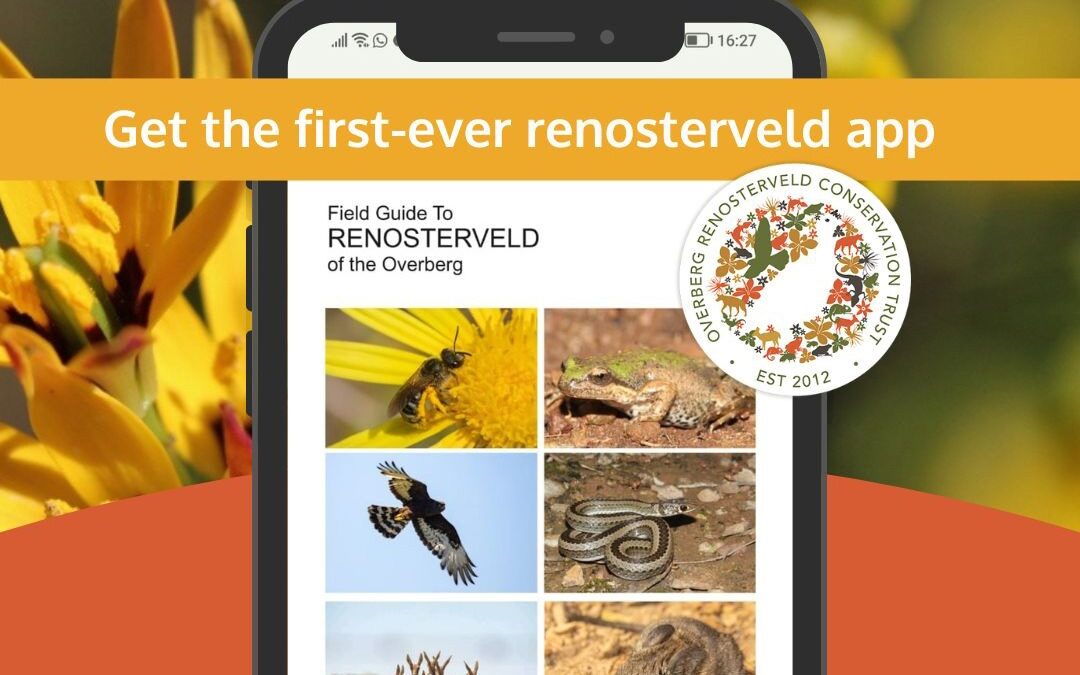
The Overberg Renosterveld Conservation Trust (ORCT) has launched the world’s first renosterveld mobile phone app, called Field Guide to Renosterveld. This allows you to identify 1 600 plant and animal species during your renosterveld adventures, all in the palm of your hand.
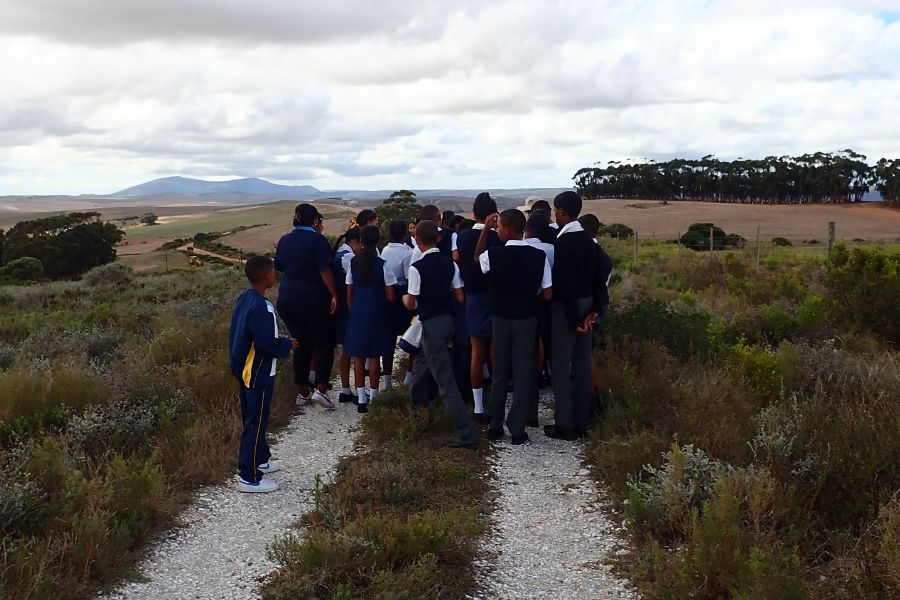
Veld School: “Breathing in nature, to live it”
Our Veld School is a project close to our hearts. Launched back in 2022 with support from the National Lotteries Commission and ENGIE (formerly known as BTE Renewables), the programme invites tomorrow’s botanists, scientists and conservationists into the field to teach them about our natural environment.