Over 1,000 specimens strong: Growing our renosterveld herbarium
by Petra Broddle
The collecting of specimens is where a suspicion of an interesting plant becomes the physical reality of a new undescribed species. Good progress continues to be made with the steady collection of specimens by Grant Forbes. Herbarium specimens are only as good as their collection, pressing and curation; and these have been of the highest quality.


There were two herbarium working sessions during the 2024/2025 reporting period. During the first visit in mid-April 2024, 279 plant specimens were examined, identified or sorted for further identification and prepared for mounting. The list of plant species for future collection in the field was also updated.
During the second visit in November 2024, we did the following:
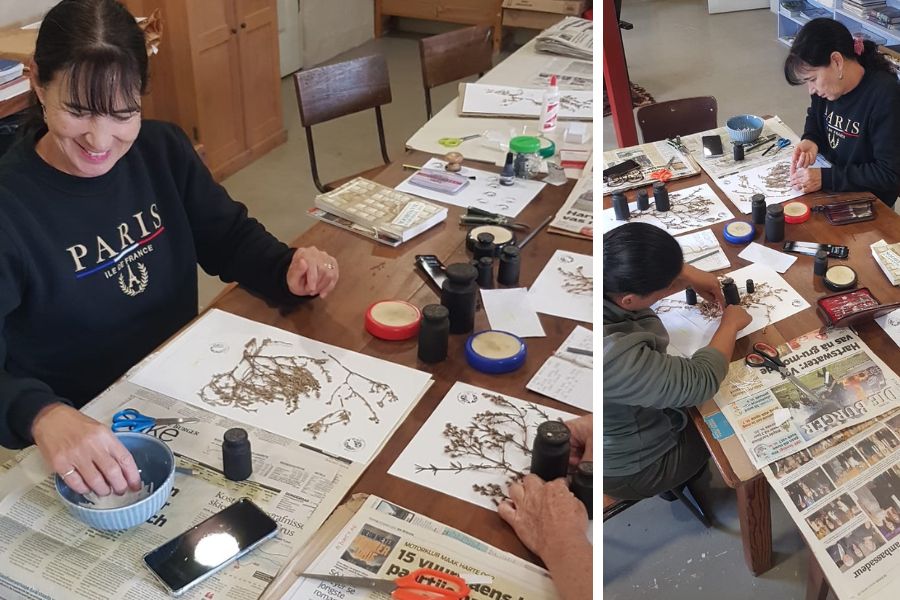
· Volunteers mounted the plant specimens
· We laid away specimens into the cupboards
· We curated the folders
· And we updated the herbarium database and individual collecting books.


A Zen-like experience
Two volunteers cancelled at short notice and two of the four volunteers left early due to unforeseen circumstances at home. This unfortunately did impact on the number of specimens mounted but we added 211 specimens to the collection. For three of the volunteers, mounting was a new experience, whilst our fourth volunteer has visited our herbarium on five occasions.
I asked her why she has returned so many times and she replied, “I came to Haarwegskloof the first time shortly after my husband and I moved to nearby Napier. I really wanted to learn more about the unique renosterveld I was now living amongst. Volunteering at the fledgling herbarium was an excellent opportunity to do so under the trained eye of experts while learning a new skill – i.e. mounting herbarium specimens. The almost Zen-like experience of studying, handling, learning and displaying each specimen had me hooked. The knowledge that my little bit of volunteering is contributing to the preservation of this tiny treasure of Overberg Renosterveld called Haarwegskloof has me returning.”
Increasing our storage capacity
The curation of specimens, post mounting, impacts on the longevity of the specimens. When the naturally uneven bundles are compacted into limited shelving, unnecessary movement of plant material occurs at the stress points on the sheets. Over time this stresses the brittle and fragile dried plants, leading to specimen degradation and fragmentation. So it was with the greatest pleasure and delight that the herbarium acquired two more purpose-made beautiful wooden storage cupboards, increasing doubling our storage capacity. When specimens handle comfortably then specimens last.
This year, the herbarium has seen the addition of many Iridaceae and Amaryllidaceae plant species. These are some of our larger, showier plants that come with great big bulbous parts. The 1,021 sheets in the herbarium represent 871 species, with an estimated 483 – 690 plant species still to be collected in theory.


A bright new renosterveld daisy for the Overberg
A new species has just been added to the Cape Floral Kingdom, and more specifically to renosterveld. And it’s one that can only be found in the Overberg.

Seeing nature through new eyes
You don’t need expensive camera equipment to move from an average photographer to a skilled one.
Latest Renosterveld News
OVERBERG RENOSTERVELD CONSERVATION TRUST NEWSNewsletter 37 | Aug 2025 by Dr Odette Curtis-ScottRenosterveld breakthroughs: A double dose of good news If you’ve been following us on social media,...